Tesla Semi Rolls Off Nevada Line, Signifying a Major Shift in Commercial Transport
After years of anticipation and a development journey punctuated by both excitement and delays, Tesla has officially commenced production of its revol...
Editorial Team
World Of EV
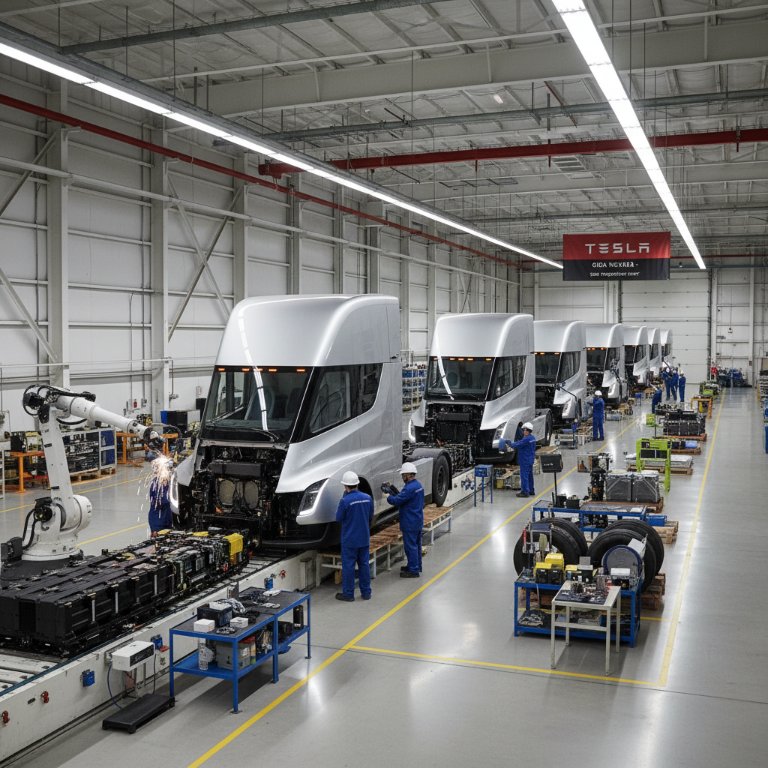
After years of anticipation and a development journey punctuated by both excitement and delays, Tesla has officially commenced production of its revolutionary Semi electric truck at its Gigafactory in Nevada. This pivotal moment marks Tesla's forceful entry into the heavy-duty commercial vehicle market, promising a significant new revenue stream and a profound disruption to the logistics industry. For savvy EV enthusiasts and fleet operators alike, this isn't just news; it's a tangible step towards electrifying the backbone of global commerce.
Production Begins: The Long-Awaited Arrival
Tesla's Gigafactory Nevada is now actively producing the Semi, a testament to the company's persistent vision for sustainable transportation across all sectors. Initially unveiled in 2017 with ambitious targets, the Semi’s path to production has been closely watched, with early reservations from major players like PepsiCo highlighting the immense industry interest. The commencement of production moves the Semi from a concept to a market reality, showcasing Tesla’s capability to not only design groundbreaking vehicles but also to bring complex manufacturing to fruition.
Configurations and Strategic Pricing
Tesla offers the Semi in two distinct versions, catering to varying operational needs and range requirements. The standard range model is priced at an estimated $260,000, while the long-range model starts at $290,000. These price points position the Semi as a premium offering in the trucking segment, but one that promises significant long-term operational savings through reduced fuel and maintenance costs compared to traditional diesel alternatives. For fleet managers, the upfront investment is a critical consideration, but the total cost of ownership (TCO) over the vehicle's lifespan will be the true differentiator.
Why This Matters:
This development is far more than just another vehicle launch; it’s a strategic maneuver that could redefine Tesla's financial trajectory and accelerate the decarbonization of heavy freight.
New Revenue Frontier: For Tesla, the Semi represents a colossal opportunity to tap into the multi-trillion-dollar global trucking market, diversifying its revenue streams beyond passenger vehicles. This is critical for sustained growth, especially as competition intensifies in the consumer EV space.
Industry Disruption: The Semi challenges established players like Daimler, Volvo, and Traton Group, many of whom are also developing electric or hydrogen-powered heavy trucks. Tesla's brand recognition and integrated charging infrastructure could give it a significant edge, pushing traditional manufacturers to accelerate their own electrification timelines. Who wins? Early adopters seeking TCO benefits, and potentially Tesla, if it can scale production efficiently. Who loses? Traditional diesel truck manufacturers who are slow to adapt.
Total Cost of Ownership (TCO) Focus: While the initial sticker price is substantial, the true value proposition lies in the projected savings on fuel and maintenance. With volatile diesel prices and increasing environmental regulations, the Semi offers a predictable, lower operational cost model that could be incredibly appealing to large logistics companies and private fleets. This signals a shift in purchasing decisions from upfront cost to long-term operational efficiency.
Infrastructure Impact: The widespread adoption of electric trucks necessitates robust charging infrastructure. Tesla's Megacharger network, designed specifically for the Semi, will be a critical enabler and further solidifies Tesla's ecosystem approach, much like its Supercharger network for passenger vehicles.
The initiation of Semi production signals that Tesla is not merely an automotive company; it's a full-spectrum sustainable energy and transportation entity. The trucking industry has been a notoriously difficult sector to electrify due to demanding range, payload, and charging requirements. The Semi's arrival suggests a viable solution is now at hand, promising cleaner air and quieter highways.
The Tesla Semi's official entry into production marks a pivotal moment for both the company and the broader electric vehicle movement. As these trucks begin to hit the road, the real-world data on performance, reliability, and cost savings will undoubtedly shape the future of freight, pushing the entire industry towards a more sustainable and electrified tomorrow. The road ahead for long-haul electrification is still long, but Tesla has just firmly planted its flag.