Tesla Shakes Off Political Backlash, Posting Record-Shattering Q2 Surge to 480,126 Deliveries
Tesla has silenced the skeptics and broken out of its painful sales slump. In its newly released Q2 2026 delivery report, the EV giant reported a stun...
Editorial Team
World Of EV
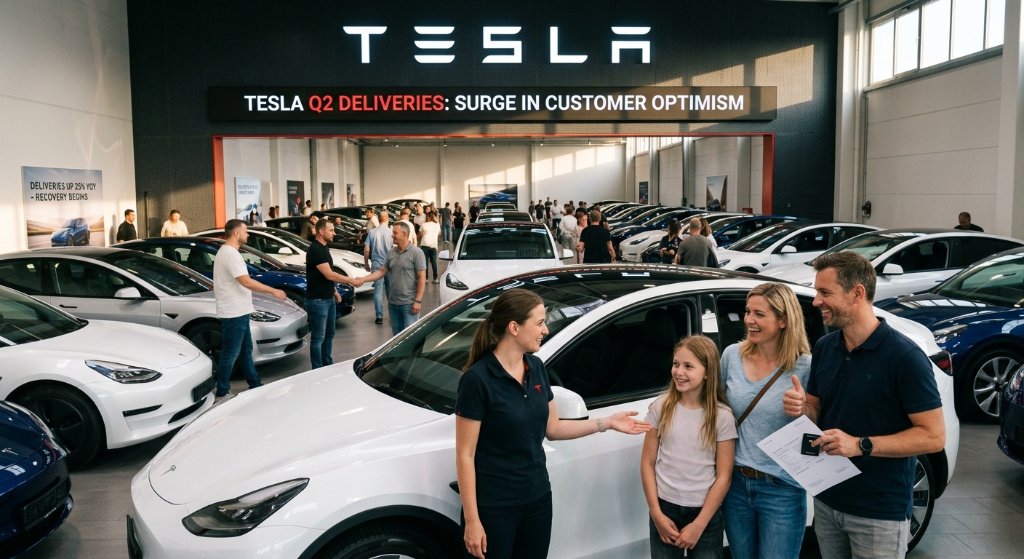
Tesla has silenced the skeptics and broken out of its painful sales slump. In its newly released Q2 2026 delivery report, the EV giant reported a stunning 480,126 vehicle deliveries globally, representing a massive 25% year-over-year jump from the 384,122 units delivered in the same period last year. This blowout quarter didn't just beat Wall Street's modest consensus of around 406,000 units—it shattered it by nearly 74,000 vehicles, signaling that the company is engineering a historic turnaround.
For the past two years, Tesla has been fighting on its back foot. Stiffening competition from Chinese behemoths like BYD—which temporarily snatched the global EV crown—combined with a massive consumer backlash in Europe over CEO Elon Musk’s polarizing political controversies, had many questioning whether the brand had peaked. Showrooms were protested, drivers faced vandalism, and sales plummeted. This Q2 performance, however, suggests the boycotts are losing their grip and buyers are returning in droves.
Breaking Down the Numbers: Inventory Drawdowns and Model Performance
This quarter’s numbers highlight not only a recovery in demand but also a much-needed operational correction. Unlike previous quarters where Tesla built far more vehicles than it sold, the automaker successfully cleared out a massive chunk of its accumulated backlog.
Key takeaways from the Q2 2026 performance include:
- The Volume Leaders: The Model 3 and Model Y remained the bedrock of Tesla’s volume, accounting for 467,762 of total deliveries and 442,936 units produced.
- The Niche Fleet: Model S, Model X, Cybertruck, and the Semi contributed 12,364 deliveries against 8,822 units produced.
- Clearing the Backlog: Total production stood at 451,758 units. By delivering 28,368 more vehicles than it manufactured, Tesla significantly depleted the unsold inventory that piled up during its rocky Q1.
- Energy on the Rise: Energy storage deployments hit a record-breaking 13.5 GWh, climbing significantly from the 9.6 GWh deployed a year earlier.
The European Rebound: Easing Boycotts and FSD Approvals
The primary driver of this quarter’s massive beat was the return of the European buyer. Last year, European consumers revolted en masse, displeased by Musk's political alignment and public antics, which triggered severe boycotts. To win back these high-value customers, Tesla pulled several aggressive levers, slashing loan and lease rates across the continent and introducing cheaper trim variants of its core vehicles.
The strategy paid off handsomely. While Tesla does not break out results by country, European trade data indicates massive sales spikes, including a staggering 300% rise in Germany this past May. Furthermore, regulators are warming to Tesla’s technology: the Netherlands, Estonia, Greece, and Lithuania have recently approved the use of Full Self-Driving (Supervised), creating a fresh wave of excitement and future utility for European buyers.
Why This Matters:
This Q2 report represents an absolute line in the sand for Tesla. It shifts the industry narrative from one of terminal decline to one of robust, price-elastic resilience.
- Who Wins: Tesla’s core automotive business and its investors are the clear winners here. Ending a two-year stretch of falling annual sales gives Tesla crucial breathing room as it prepares to spend upwards of $25 billion this year on AI, robotics, and next-generation factory expansions.
- Who Loses: Legacy automakers and direct EV rivals like BYD. BYD had been comfortably pulling ahead, but this quarter proves that Tesla's brand power is incredibly resilient. Legacy brands trying to capture EV market share will find a newly aggressive, lean-inventoried Tesla harder than ever to compete with.
- The Market Signal: The narrative that "Elon Musk's brand tax" would permanently sink the company is officially dead. While a vocal contingent of buyers will continue to boycott, the vast majority of mainstream consumers are highly practical. When prices drop, financing terms ease, and software like FSD is rolled out, they buy. Product value, cost of ownership, and technological leadership still triumph over political polarization.
Conclusion
Ultimately, Q2 2026 has proven that rumors of Tesla’s demise were greatly exaggerated. By combining aggressive financial incentives with the regulatory expansion of FSD, Tesla has successfully coaxed buyers back into its ecosystem, clearing out its bloated inventory in the process. While Elon Musk's attention remains split between SpaceX, artificial intelligence, and political theater, Tesla’s manufacturing machine has demonstrated it can still deliver where it counts. All eyes now look to the upcoming July 22 earnings call to see if these massive delivery volumes translated to healthy margins.