Tesla Unleashes 700MWh Megapack 3 Titan in Belgium, Revolutionizing European Grid Stability
Tesla Energy is making a monumental stride in Europe's green energy transition, officially commencing construction on a colossal $116 million Megapack...
Editorial Team
World Of EV
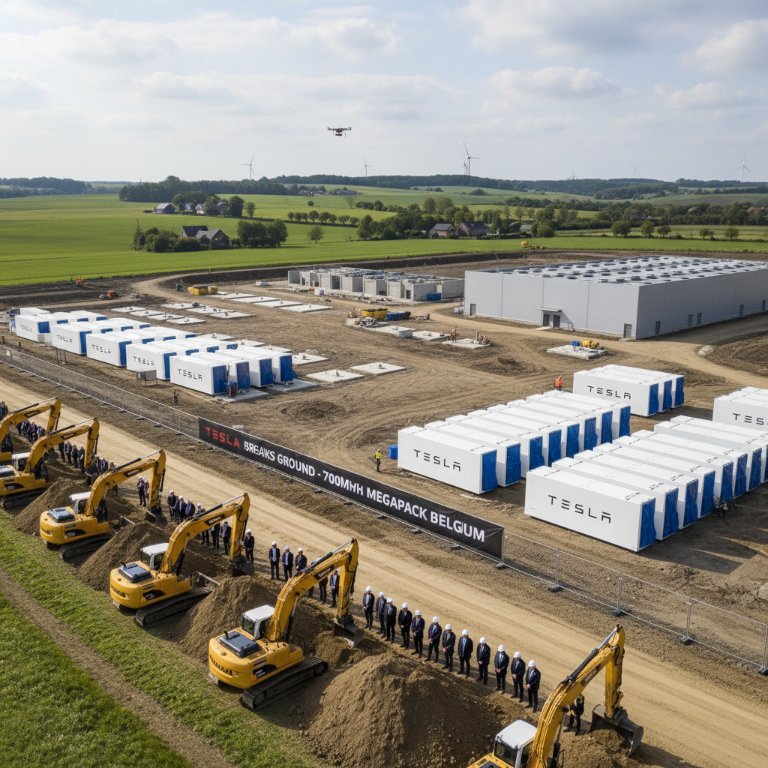
Tesla Energy is making a monumental stride in Europe's green energy transition, officially commencing construction on a colossal $116 million Megapack battery facility in Kluisbergen (Ruien), Belgium. This project isn't merely another entry on Tesla's rapidly expanding energy portfolio; it's a strategic deployment of 180 state-of-the-art Megapack 3 units, poised to deliver a staggering 700MWh of energy storage capacity. It represents one of Tesla's largest grid-scale storage initiatives on the continent, signaling a significant escalation in the race to stabilize and decarbonize European power grids.
Engaging in grid-scale energy storage is crucial for modern grids, especially as Europe accelerates its adoption of intermittent renewable sources like solar and wind. Without robust storage solutions, the volatility of these renewables can strain traditional grid infrastructure, leading to inefficiencies, higher costs, and potential blackouts. Tesla, long known for its automotive innovations, has quietly become a dominant force in this critical sector, with its Megapack systems providing the buffering capacity essential for a sustainable energy future.
Powering Europe's Green Transition with Megapack 3
The Kluisbergen facility, developed by Belgian energy firm Storm, will integrate 180 of Tesla's latest Megapack 3 units to achieve its formidable 700MWh capacity. This isn't just an incremental upgrade; the Megapack 3 represents a significant leap in battery storage technology. Each Megapack 3 unit boasts a higher capacity of 5.0 MWh, a substantial increase from the 3.9 MWh of its Megapack 2 predecessor.
Key advancements in Megapack 3 technology include:
- Higher Energy Density: Each unit stores more power, meaning fewer physical units are needed for large-scale projects, optimizing land use.
- Simplified Design and Integrated Electronics: Tesla engineers have reconfigured internal components, reducing complexity and incorporating essential electronics directly into the enclosure.
- Enhanced Thermal Management: The system features improved thermal management, utilizing a robust heat pump system, ensuring optimal performance across extreme climates.
- Faster Deployment and Cost Efficiency: The design prioritizes ease of installation, significantly cutting down on-site construction time and associated costs.
The 700MWh capacity is substantial enough to power hundreds of thousands of homes for several hours during peak demand, offering a critical buffer for grid operators striving to balance generation and consumption. With testing and commissioning slated for completion by the end of 2027, this project is set to provide tangible benefits to Belgium's energy landscape.
Tesla's Expanding Energy Footprint
This Belgian endeavor underscores Tesla's strategic pivot to solidify its position as a holistic energy solutions provider, not just an automotive manufacturer. While Tesla's electric vehicles dominate headlines, its energy division, Tesla Energy, has been steadily expanding its global footprint with large-scale battery storage deployments. Projects like the one in Kluisbergen generate significant revenue and provide a more predictable earnings stream, complementing the often-volatile nature of vehicle sales. This move signals Tesla's commitment to building the foundational infrastructure for a fully electrified world, demonstrating that clean energy extends far beyond personal transportation.
Why This Matters:
This 700MWh Megapack 3 deployment in Belgium holds profound implications for several stakeholders and the broader energy market:
- For European Grids: This project provides crucial stability, allowing for greater integration of renewable energy. It mitigates the intermittency of solar and wind, reducing reliance on fossil-fuel peaker plants and bringing Europe closer to its decarbonization goals. Consumers benefit from a more reliable and potentially more affordable energy supply.
- For Tesla Energy: It solidifies Tesla's leadership in the utility-scale battery storage market, showcasing the real-world application and scalability of its advanced Megapack 3 technology. This successful deployment will serve as a powerful case study, attracting further contracts and reinforcing Tesla's position as an indispensable partner in the global energy transition.
- For the Energy Storage Market: This significant investment signals the accelerating demand for high-capacity, rapidly deployable storage solutions. Competitors must now contend with Tesla's enhanced Megapack 3 capabilities, likely spurring further innovation across the industry to match its efficiency and scale. This is a clear call to action for other energy storage providers to scale up their offerings or risk falling behind.
- For EV Enthusiasts: A robust, clean, and stable energy grid is fundamental to the widespread adoption and convenience of electric vehicles. This project indirectly supports the EV ecosystem by ensuring the power infrastructure can handle increased demand from charging, reinforcing the long-term viability of an all-electric future.
Tesla's $116 million Megapack 3 facility in Kluisbergen marks a pivotal moment in Europe's energy evolution. It's a testament to the growing maturity of grid-scale battery storage and Tesla's unwavering commitment to powering the world sustainably. As construction progresses towards its 2027 completion, this project will stand as a shining example of how advanced battery technology is transforming energy infrastructure, driving reliability, and accelerating the global shift towards a greener future.