Tesla Unleashes Giga Berlin Expansion: 20% Model Y Output Boost to 7,500 Weekly Units Targets European EV Dominance
Tesla is gearing up to solidify its dominance in Europe’s electric vehicle market by announcing a major production expansion at Gigafactory Berlin. St...
Editorial Team
World Of EV
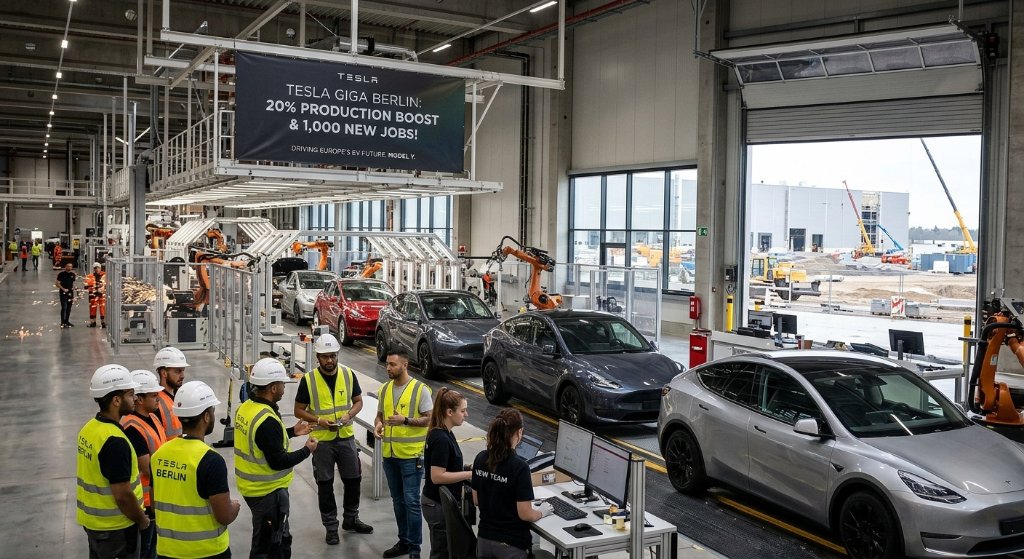
Tesla is gearing up to solidify its dominance in Europe’s electric vehicle market by announcing a major production expansion at Gigafactory Berlin. Starting in October 2026, the Austin-based automaker plans to boost weekly Model Y output at the German facility by 20%, aiming to reach an unprecedented 7,500 vehicles per week. To power this aggressive manufacturing push, Tesla will add 1,000 workers to the Grünheide facility's payroll, reflecting a significant turnaround in European EV demand.
This sudden acceleration marks a stark departure from the headwinds Tesla faced throughout 2025. Last year, a cooled-down European market and a localized 28% drop in sales raised serious concerns over Giga Berlin’s viability, leaving the plant operating at a fraction of its 375,000-vehicle annual capacity. However, a stunning 2026 rebound—highlighted by explosive registration gains—has given Tesla the confidence to turn the taps back on.
Rebuilding the Berlin Machine
The path to 7,500 vehicles per week represents a calculated progression. Giga Berlin, which historically stabilized around the 5,000-unit weekly milestone, is executing a phased scale-up. With manufacturing director André Thierig guiding the expansion, the plant is capitalizing on a massive surge in localized demand.
Key details of the expansion include:
- The Target Output: A 20% jump starting in October 2026 to hit 7,500 Model Ys per week—translating to an annual run rate of roughly 390,000 vehicles.
- Workforce Expansion: The addition of 1,000 new employees at Grünheide to support the increased production shifts.
- Market Catalyst: A dramatic recovery in European EV registrations, with mid-2026 data showing year-over-year gains of over 150% in key EU markets like Germany.
- FSD Integration: The manufacturing push coincides with Tesla's concerted effort to secure European regulatory approval for its Full Self-Driving (FSD) software, which is expected to serve as a key sales differentiator.
Shaking Off the Shadows of 2025
To appreciate why this expansion is so critical, one must look at Giga Berlin’s tumultuous history. The factory—which opened in March 2022—has spent years in the crosshairs of environmental activists, bureaucratic delays, and highly publicized labor disputes with the German trade union IG Metall.
In late 2025, the narrative was grim. With EV incentives drying up across Germany and other European nations, Tesla's European market share slid, and Giga Berlin’s capacity utilization bottomed out near 40%. Skeptics questioned whether the plant would ever reach its licensed cap of 500,000 units. Today’s announcement effectively silences those doubts. Supported by massive registration spikes in France, Denmark, Sweden, and Germany, Tesla is proving that Giga Berlin is a cornerstone of its global manufacturing strategy, rather than an expensive misstep.
Why This Matters:
Tesla Wins Big: By localizing more Model Y production, Tesla heavily reduces its reliance on shipping vehicles from Giga Shanghai. This logistical shift dramatically cuts down transportation costs, import duties, and supply-chain vulnerabilities. Operating Giga Berlin at higher capacity utilization will also sharply drive down the per-vehicle production cost, boosting Tesla’s margins at a time when industry-wide EV profitability remains razor-thin. Furthermore, because these cars are manufactured inside the EU, Tesla is completely insulated from any localized tariff skirmishes targeting Chinese-made vehicles.
Legacy European OEMs Lose Ground: This move is a direct shot across the bow for native giants like the Volkswagen Group, Stellantis, and BMW. As legacy players struggle with complex software architectures and slow platform transitions, Tesla is scaling up the continent’s best-selling EV at an unmatched pace. The sheer scale of 7,500 units per week allows Tesla to manipulate pricing dynamically, putting immense pressure on European rivals who cannot afford a price war.
The Broader Market Signal: Tesla's capacity increase is a loud, confident statement that the European EV market is far from dead. While skeptics proclaimed an 'EV winter' during the 2025 slowdown, Tesla's massive hiring spree and output expansion show that the transition is accelerating. For prospective buyers, this means shorter wait times, highly competitive local pricing, and the imminent arrival of advanced features like FSD on European roads.
Conclusion
Ultimately, Giga Berlin’s transformation from an underutilized factory into a high-octane manufacturing powerhouse signals a new phase of Tesla's European campaign. By aligning rapid manufacturing scaling with the eventual arrival of FSD, Tesla is building a moat that European rivals will find incredibly difficult to cross. If the October 2026 target is achieved, Grünheide won't just be a factory; it will be the undisputed epicenter of Europe’s electric vehicle revolution.