Tesla Unleashes Robotics Revolution: Model S and X Production Halted for AI Future
In a seismic shift that reverberates across both the automotive and tech sectors, Tesla has abruptly ceased production of its iconic Model S sedan and...
Editorial Team
World Of EV
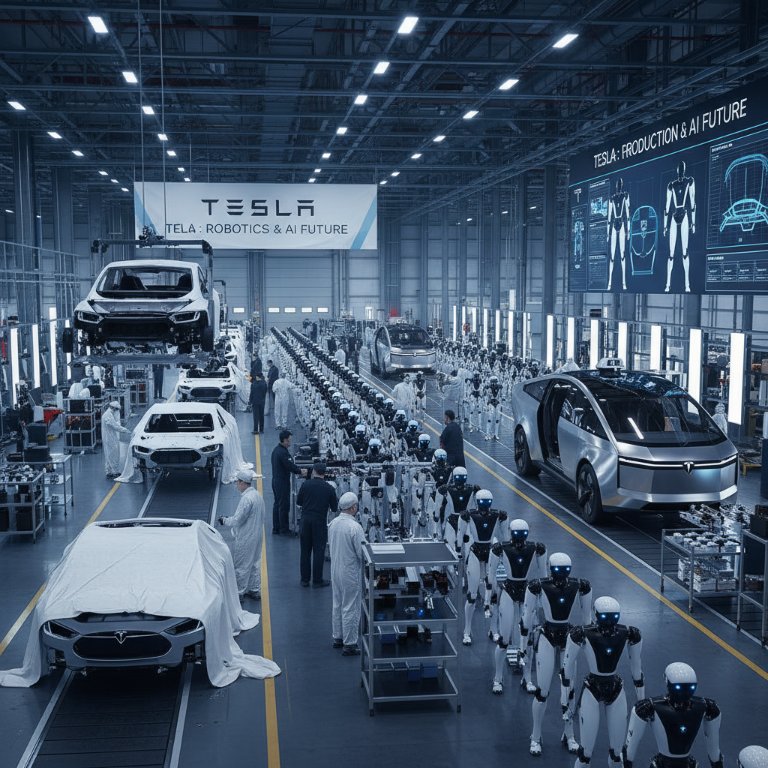
In a seismic shift that reverberates across both the automotive and tech sectors, Tesla has abruptly ceased production of its iconic Model S sedan and Model X SUV. The decision, confirmed by internal communications and observed factory reconfigurations, marks a decisive pivot for the Silicon Valley giant, signaling an aggressive, all-in strategy towards robotics and artificial intelligence. This move is not merely a reallocation of resources; it’s a foundational redefinition of Tesla’s core identity, moving from a pioneering electric vehicle manufacturer to an ambitious AI and robotics powerhouse.
For over a decade, the Model S and Model X stood as the technological and aspirational flagships of the Tesla brand. The Model S redefined performance and range in the luxury EV segment, while the Model X introduced groundbreaking features like falcon-wing doors and advanced safety. Their cessation of production highlights the profound commitment Tesla is making to its next generation of ventures, starkly contrasting with its previous focus on scaling EV manufacturing to unprecedented levels. This radical departure underscores the company's belief that its future lies beyond the confines of traditional vehicle manufacturing.
Prioritizing Optimus and Cybercab Production
The immediate beneficiary of this monumental factory reallocation is Tesla's Optimus humanoid robot program. The company is actively gearing up for what it terms 'limited sales' and the formidable challenge of eventual mass production for Optimus. This isn't just about building a robot; it's about commercializing a general-purpose humanoid assistant that could revolutionize industries from logistics to personal care. Simultaneously, the factory space will be dedicated to the initial production run of the much-anticipated Cybercab robotaxi. This fully autonomous vehicle, designed for a dedicated ride-hailing network, represents Tesla’s long-held vision for a future free of human-driven transport.
This strategic redirection is a clear manifestation of CEO Elon Musk's long-term vision, where Tesla's value will be derived less from the number of cars it sells and more from its advancements in AI and robotics. The Model S and X, while foundational to Tesla's brand, likely presented manufacturing complexities and lower volume compared to the Model 3 and Y, making them ideal candidates for factory capacity sacrifice as the company pursues its more audacious goals. The investment in Optimus and Cybercab is a bet on the exponential growth potential of AI-driven autonomy, rather than the incremental gains of refining existing EV platforms.
Why This Matters:
Tesla's Identity Shift: The company is fundamentally repositioning itself from an automotive leader to a leader in advanced robotics and artificial intelligence. This signals a new era where hardware serves as a platform for AI rather than the primary product.
Impact on the Premium EV Market: The sudden absence of the Model S and Model X leaves a significant void in the luxury performance EV segment. Competitors like Mercedes-Benz, Porsche, Lucid, and BMW, who have been aggressively developing their high-end EV offerings, now face less direct competition from Tesla's heritage models, potentially allowing them to capture a larger share of discerning luxury EV buyers.
Acceleration of Robotics and AI: Tesla’s full commitment to Optimus could significantly accelerate the development and commercialization of humanoid robots globally. The scale of Tesla's manufacturing ambition could push this nascent industry forward dramatically, challenging existing robotics firms.
The Robotaxi Race Intensifies: Dedicating capacity to Cybercab production underlines Tesla's unwavering belief in a fully autonomous future. This intensifies the competition in the autonomous vehicle space, pushing rivals like Waymo and Cruise to further innovate and scale their own robotaxi services.
A High-Stakes Gamble: This move is a colossal bet on the future. While the potential rewards in AI and robotics are immense, the capital expenditure and development challenges are equally formidable. Failure to successfully commercialize Optimus or Cybercab could severely impact Tesla's financial health and market perception, making this a true 'do-or-die' moment for the company's next chapter.
Tesla’s decision to sunset its flagship EVs in favor of an all-out assault on robotics and AI represents one of the most audacious strategic shifts in modern corporate history. It encapsulates a vision where the physical world is increasingly augmented and operated by intelligent machines. The world watches, keen to see if this pivot will secure Tesla’s place as a multi-industry titan, or if the ambition will prove too grand. The age of the electric car may have defined Tesla’s past, but the age of the robot is clearly poised to define its future.