Tesla Unleashes the Cybercab: Las Vegas Permit for 5,000 Robotaxis and $3.1M Mega-Hub Signal Commercial Launch
For years, critics have dismissed Tesla’s autonomous ride-hailing ambitions as 'vaporware'—a collection of promises by Elon Musk that were perpetually...
Editorial Team
World Of EV
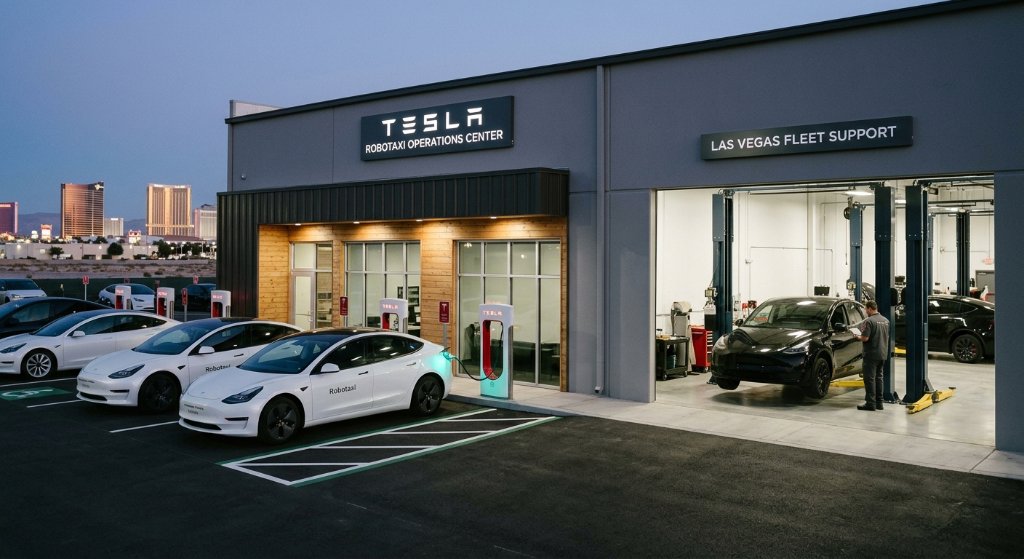
For years, critics have dismissed Tesla’s autonomous ride-hailing ambitions as 'vaporware'—a collection of promises by Elon Musk that were perpetually 'two years away'. Today, those doubts are hitting a brick wall. On June 22, 2026, reports revealed that Tesla is radically accelerating preparations to launch its commercial Robotaxi service in Las Vegas, Nevada, shifting its strategy from software development to hard physical and regulatory infrastructure.
The EV giant has formally applied for an Autonomous Vehicle Network Company (AVNC) permit with the Nevada Transportation Authority (NTA). Simultaneously, Tesla is investing $3.1 million to retrofit a massive, 37,000-square-foot industrial facility in southwest Las Vegas. For an audience accustomed to Tesla’s digital-first updates, this concrete-and-steel development is the clearest signal yet that the dedicated 'Cybercab' unveiled in late 2024 is moving from the showroom to the streets.
The Paperwork: A 5,000-Vehicle Fleet on the Horizon
Tesla is not dipping its toes in the water; it is jumping into the deep end. The application filed under NTA Docket 26-05015 reveals highly ambitious plans for its initial rollout. Key details of the commercial network filing include:
- Massive Fleet Scale: Tesla has requested authorization to operate up to 5,000 autonomous vehicles within the first 12 months after the permit is granted.
- Prime Coverage Zones: The permit targets Clark County, including the highly lucrative Harry Reid International Airport and Henderson Executive Airport corridors.
- Confidentiality Requests: Tesla has requested that specific operational data in the application remain redacted, maintaining tight secrecy over its exact rollout timeline.
If approved, this permit would transition Tesla from a testing registry—which limits operations to data collection without paying passengers—to a fully commercial, driverless ride-hailing service across the Las Vegas Valley.
The Mohawk Facility: Why a Robotaxi Needs a $3.1M Car Wash
Equally crucial is Tesla's $3.1 million investment to retrofit an industrial warehouse at 6170 Mohawk Street in southwest Las Vegas. The site, currently listed under Clark County business licenses for 'auto wash and detailing,' serves a vital purpose for an autonomous fleet. Unlike traditional fleets, a robotaxi network cannot rely on drivers to clean windshields or report mechanical gremlins.
The retrofit of the 37,000-square-foot facility includes:
- Eight Indoor Superchargers: Allowing rapid, automated turnaround times for depleted batteries.
- Six Industrial Car Lifts: Ensuring quick maintenance, tire rotation, and undercarriage inspections.
- Advanced Automatic Detailing & Camera Cleaning: FSD is entirely camera-based, relying on 'vision-only' technology. A single speck of dried mud or a dead bug on a camera lens can temporarily blind the vehicle. This facility is engineered to keep those lenses pristine automatically.
- Local Jobs on the Ground: Tesla is actively hiring nighttime supervisors and fleet support specialists in Las Vegas to keep the machinery humming 24/7.
Why Las Vegas is the Perfect Sandbox
Tesla's choice of Las Vegas is highly strategic. The city is a dense, high-demand tourist hub with a grid-like street layout that is far easier for autonomous systems to navigate than the chaotic, narrow streets of Boston or San Francisco. Furthermore, Tesla already has an established footprint in the city through Elon Musk’s Boring Company. The Vegas Loop has been shuttling passengers in human-driven Teslas under the convention center and major resorts; transitioning the city-wide surface streets to autonomous Cybercabs is the logical next step.
Why This Matters:
This development represents a seismic shift in the autonomous vehicle (AV) landscape.
- The Market Signal: Tesla is pivoting from an EV manufacturer to an AI and robotics powerhouse. For investors, this is the 'do-or-die' proof of concept. If Tesla successfully deploys 5,000 driverless cars in Vegas, it validates its 'vision-only' FSD approach and justifies its trillion-dollar valuation expectations.
- Who Wins: Consumers and tourists. A driverless Tesla network operates without driver labor costs, which typically account for over 50% of a rideshare fare. Expect a price war that could drive down the cost of hailing a ride to unprecedented lows.
- Who Loses: Traditional rideshare incumbents like Uber and Lyft, which rely entirely on human drivers. Additionally, direct competitors like Alphabet's Waymo and Amazon's Zoox should be on high alert. While Waymo has a head start in cumulative driverless miles using expensive LiDAR suites, Tesla’s low-cost, vision-only hardware means it can scale exponentially faster once the regulatory hurdles clear.
- The Gating Factor: Software readiness remains Tesla's ultimate bottleneck. While the physical infrastructure and NTA permits are moving fast, any high-profile accident in a highly litigated city like Las Vegas could trigger a swift regulatory shutdown.
What's Next for the Cybercab?
The Nevada Transportation Authority is accepting public comments and protests on Tesla's application until July 5, 2026. While the review process will take some time, Tesla's proactive hiring and $3.1 million facility overhaul show they expect a green light. Keep your eyes on the Strip—the driverless revolution is about to get a whole lot louder.