Tesla Unleashes Unsupervised Robotaxis Across Entire Austin Metro: A High-Stakes Bet on FSD's Maturation
Tesla has dramatically escalated its commitment to full autonomy, extending its unsupervised Robotaxi program to encompass the entire Austin metropoli...
Editorial Team
World Of EV
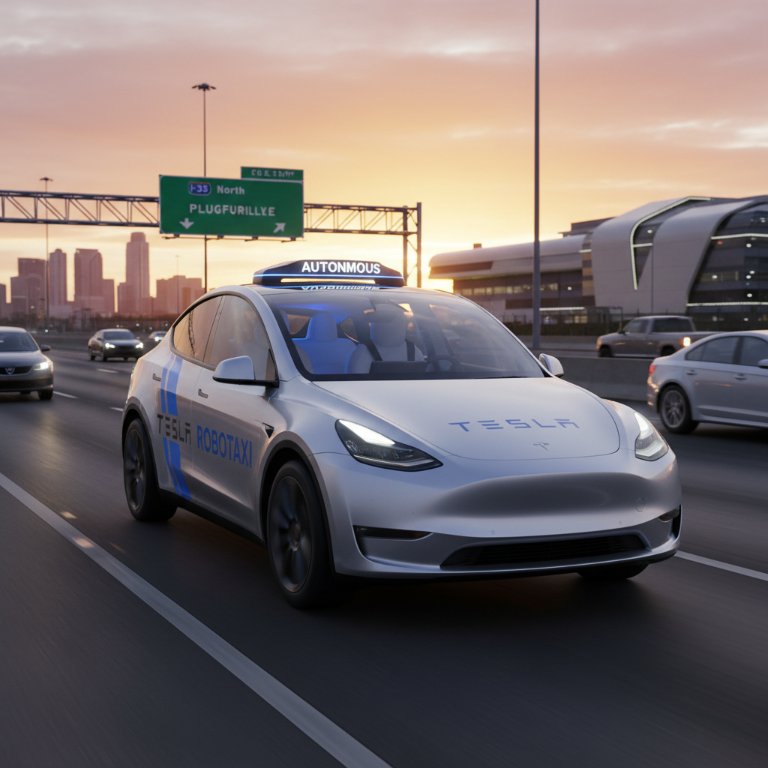
Tesla has dramatically escalated its commitment to full autonomy, extending its unsupervised Robotaxi program to encompass the entire Austin metropolitan area. This aggressive expansion, now covering the city's suburbs, I-35 highways, Gigafactory Texas, and the Austin-Bergstrom Airport, represents a pivotal moment in the company's long-standing, often controversial, quest for self-driving dominance.
For years, Tesla CEO Elon Musk has championed the vision of a vast network of robotaxis, promising a transformative shift in urban mobility and a significant revenue stream for the company. Yet, this ambition has been met with considerable skepticism, fueled by missed deadlines and ongoing concerns about the reliability and safety of its Full Self-Driving (FSD) software. The current move to open up Austin's complex driving environments to unsupervised operation is a direct challenge to these critics and a bold assertion of Tesla's confidence in its FSD system's real-world capabilities.
Austin Becomes Tesla's Autonomous Proving Ground
This latest expansion marks the fifth time Tesla has broadened its Robotaxi geofence in Austin, more than doubling its operational footprint. The new service area now includes:
- Entire Austin Metropolitan Area: Significantly expanding coverage beyond previous limited zones.
- Key Suburbs: Encompassing Pflugerville and Manor.
- Critical Infrastructure: Including major arteries like I-35 highways, Gigafactory Texas, and the bustling Austin-Bergstrom Airport.
This represents a massive increase in operational complexity, moving from contained test zones to a sprawling urban and suburban landscape. Tesla first launched its unsupervised Robotaxi operations in Austin on January 22, 2026, starting with a single vehicle and gradually increasing its presence. This latest development also removes previous limitations, allowing for unsupervised operation beyond daylight hours.
The Lingering Question: Fleet Size vs. Coverage
While the expanded geofence is impressive on paper, a critical detail casts a shadow over the immediate impact: the actual size of the active unsupervised Robotaxi fleet remains notably small. Reports indicate approximately 20 to 30 active unsupervised vehicles currently serving the vast Austin metro area. Texas Department of Motor Vehicles records, under new reporting rules, show Tesla has registered 42 autonomous vehicles across the entire state, including smaller deployments in Dallas and Houston.
This fleet size stands in stark contrast to earlier, highly ambitious projections from Elon Musk, who once claimed Austin alone would host 500 to 1,000 robotaxis by late 2025. For comparison, a competitor like Waymo operates significantly larger fleets, with 577 vehicles registered in Texas and recognized as a leader in Level 4 autonomous deployment. The small number of active vehicles in Austin suggests that while Tesla is pushing the boundaries of its FSD software, practical widespread availability for consumers may still be some way off, potentially leading to long wait times for rides.
Why This Matters:
This audacious move in Austin holds profound implications for Tesla, the autonomous vehicle industry, and the future of urban mobility:
- Validation of FSD at Scale: By deploying unsupervised Robotaxis across a full metropolitan area, Tesla is putting its vision-only FSD system to the ultimate real-world test. Success here would be a powerful validation of its long-held philosophy, contrasting sharply with competitors like Waymo and Cruise, who largely rely on LiDAR and more extensively mapped, tightly geofenced areas.
- Addressing the Skeptics (or Fueling Them): This expansion directly confronts the persistent skepticism surrounding FSD's readiness for full autonomy. If the system performs reliably, it could significantly boost confidence among investors and the public. However, any highly publicized incidents could severely damage Tesla's reputation and further intensify regulatory scrutiny, which is already mounting.
- A High-Stakes Data Play: Tesla's unique advantage lies in its massive fleet of FSD-enabled consumer vehicles constantly collecting real-world driving data. This Robotaxi expansion will exponentially increase the complexity and volume of data, feeding directly back into FSD's neural network training and potentially accelerating its improvement.
- Commercialization Imperative: Robotaxis are not merely a technological showcase; they are a cornerstone of Tesla's future revenue projections, shifting its growth narrative from EV sales to AI and robotics. A successful, scalable Robotaxi service would unlock a high-margin business model, potentially redefining ride-hailing economics. The slow fleet growth, however, indicates a significant hurdle in reaching commercial viability at the scale Musk envisions.
- Competitive Pressure: While Tesla pushes its FSD to new limits, established autonomous leaders like Waymo continue to expand their services with larger, commercially operational fleets. This puts increased pressure on Tesla to demonstrate not just capability, but also scalable, profitable deployment. The gap in active fleet size between Tesla and its rivals remains substantial.
The Road Ahead is Paved with Data (and Scrutiny)
Tesla's bold expansion of its unsupervised Robotaxi program in Austin is a testament to its unwavering belief in the FSD system. This move will generate invaluable real-world data and push the boundaries of current autonomous technology. However, the true measure of this expansion will not be the size of the geofence, but the safety and reliability of the service and, crucially, Tesla's ability to rapidly scale its fleet from dozens to thousands of vehicles. The automotive world, and especially the EV community, will be watching closely as Austin becomes a critical proving ground for Tesla's autonomous future.