Tesla Unseated: UK Real-World Range Test Crowns a New Champion, Reshaping EV Landscape
For years, Tesla has been synonymous with electric vehicle range, setting benchmarks that competitors struggled to meet. However, a recent, comprehens...
Editorial Team
World Of EV
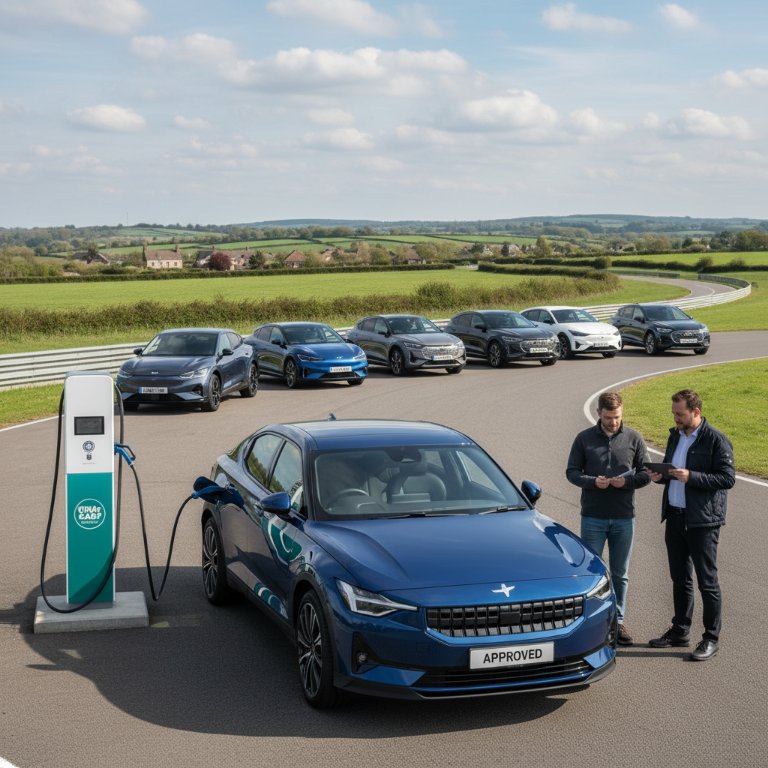
For years, Tesla has been synonymous with electric vehicle range, setting benchmarks that competitors struggled to meet. However, a recent, comprehensive real-world test conducted by experts at What Car? in the UK delivers a seismic shift to this narrative: a Tesla vehicle did not secure the top spot. This outcome signals a crucial maturation of the EV market, where advancements in battery technology, powertrain efficiency, and thermal management are levelling the playing field across the industry.
This isn't merely about a single test result; it represents a significant evolution. Historically, consumers and media alike have often fixated on the official Worldwide Harmonised Light Vehicle Test Procedure (WLTP) figures. While WLTP provides a standardized comparison point, it frequently fails to reflect the nuanced realities of daily driving – variables like temperature, driving style, and terrain can drastically impact an EV's actual usable range. What Car?'s meticulous evaluation of the ten longest-range electric cars available in the UK sought to bridge this gap, offering prospective buyers and enthusiasts a much-needed dose of practical, actionable data.
The Reality of Range: Debunking WLTP
Official WLTP ratings, while improved over older testing cycles, still operate under specific, controlled conditions. These often don't account for real-world scenarios that drivers encounter daily, leading to what many term 'range anxiety' when their vehicle underperforms its advertised figures. What Car?'s initiative directly addresses this disparity by:
- Simulating diverse driving conditions: Moving beyond laboratory settings to replicate mixed urban, rural, and motorway driving.
- Focusing on consistent performance: Evaluating how vehicles maintain their efficiency and range capabilities under varied loads and speeds.
- Providing transparency: Offering a clearer picture of what drivers can genuinely expect from their EV purchase.
A New Contender Emerges: Beyond Tesla's Shadow
The most striking revelation from the What Car? findings is the dethroning of Tesla from the peak range position. While the specific winning model remains the subject of detailed analysis from the publication, the fact that a non-Tesla vehicle achieved superior real-world range is a powerful indicator of how quickly other manufacturers are catching up, and in some cases, surpassing the pioneer. This isn't an indictment of Tesla, but rather a testament to the accelerated innovation occurring throughout the global automotive industry. Brands that once struggled to offer competitive range figures are now leveraging dedicated EV platforms, advanced battery chemistry, and sophisticated energy management systems to deliver impressive results.
Why This Matters:
This shift in the real-world range hierarchy carries profound implications for every stakeholder in the EV ecosystem. For consumers, it means genuine choice. No longer must they default to a single brand to alleviate range anxiety; the market is diversifying with highly capable alternatives offering competitive, verified performance. This fosters greater confidence in EV adoption and encourages a broader range of models to suit varied lifestyles and budgets.
For manufacturers, the message is clear: headline WLTP numbers are no longer enough. The battleground for EV dominance is moving to practical, verifiable performance. This compels automakers to invest even more heavily in fundamental engineering – from developing more energy-dense and thermally stable battery packs (like BYD's Blade or next-gen NMC/LFP chemistries) to optimizing electric motor efficiency and thermal management systems. It signals a move away from merely adapting internal combustion engine (ICE) platforms for electrification (a struggle for early entrants like the Mazda MX-30, for instance) towards purpose-built architectures designed from the ground up for superior EV performance.
Tesla, while still an undeniable market leader and innovator, faces intensified competition. Their initial lead in range and charging infrastructure provided a significant competitive moat. As real-world range closes the gap, Tesla must continue to innovate aggressively, not only in software and autonomous driving but also in fundamental vehicle efficiency and battery technology to maintain its edge. This isn't a 'do-or-die' moment for Tesla, but it unequivocally signals that their era of unchallenged range dominance is over.
Ultimately, this landmark test from What Car? underscores the rapid maturation of the electric vehicle market. The focus is shifting from theoretical figures to tangible, real-world performance, driving a new era of fierce but beneficial competition. As the industry continues to push boundaries, consumers stand to gain the most, with an ever-growing selection of highly capable and truly long-range EVs.