Tesla's 2026 Spring Update: A Red Alert for Blind Spots, Redefining In-Cabin Safety
Tesla's 2026 Spring Update (version 2026.14 and later) isn't merely a set of incremental software enhancements; it marks a significant evolution in ho...
Editorial Team
World Of EV
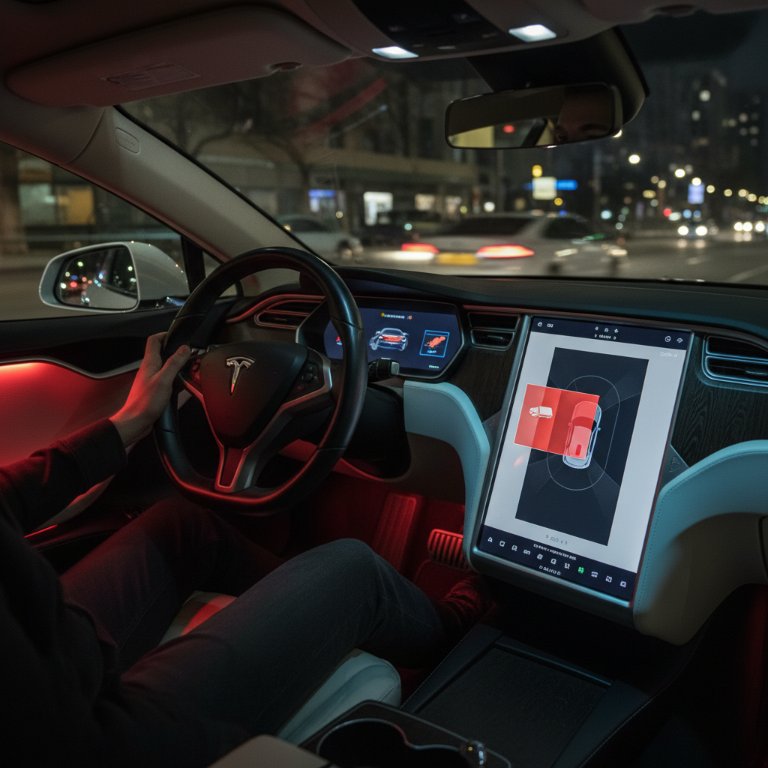
Tesla's 2026 Spring Update (version 2026.14 and later) isn't merely a set of incremental software enhancements; it marks a significant evolution in how the electric vehicle pioneer approaches active safety within the cabin. With a new feature that dynamically integrates the vehicle's interior accent lights into its blind spot detection system, Tesla is once again demonstrating its commitment to leveraging its advanced AI and integrated design to enhance driver awareness. This innovative approach moves beyond traditional audible chimes or mirror-mounted indicators, offering a more intuitive and visually compelling warning system directly within the driver's peripheral vision.
Seamless Integration of Visual Cues
The core of this update lies in the sophisticated application of existing hardware: the vehicle's interior accent lighting. Instead of a generic alert, Tesla has programmed these lights to turn red with precise intent. This activation occurs under two critical scenarios:
- When an object is detected in the blind spot and the turn signal is engaged, providing immediate feedback before a potential lane change.
- When an approaching object is detected while the vehicle is parked, a crucial warning for opening doors or exiting the vehicle safely.
Crucially, Tesla's onboard AI technology plays a pivotal role here. It intelligently distinguishes between left and right blind spots, activating only the relevant side's accent light. This highly specific feedback minimizes driver confusion and ensures that the warning is both timely and targeted.
The Power of Tesla's AI in Action
This isn't a simple sensor-triggered light; it's a testament to the continuous refinement of Tesla's AI platform. The system processes vast amounts of data from the vehicle's external cameras and potentially other sensors to accurately identify objects, assess their proximity and trajectory, and then contextually determine when a blind spot warning is necessary. This deep integration with Tesla's vision-first AI strategy ensures higher accuracy and reduces false positives, building greater driver trust in the system. It showcases how the company’s full self-driving (FSD) development also directly benefits fundamental safety features, making the entire vehicle ecosystem smarter and safer.
Why This Matters:
- Enhanced Driver Awareness: The red accent light provides a highly visible, yet non-intrusive, warning directly within the driver's natural field of vision. This direct visual cue can significantly reduce reaction times and prevent dangerous maneuvers, particularly during lane changes in busy traffic or when exiting a parked vehicle in a congested area. It's a more visceral alert than a small icon on a mirror, especially when peripheral vision is crucial.
- Setting New Interior Safety Standards: By integrating critical safety alerts into the cabin's ambient lighting, Tesla is pushing the boundaries of interior design as an active safety component. This innovative approach could inspire other manufacturers to explore more dynamic and aesthetically integrated warning systems, moving beyond traditional dashboard icons or audible beeps that can sometimes be overlooked or dismissed.
- Validation of Tesla's Vision-Centric AI: This feature further validates Tesla's long-standing bet on a vision-first, AI-driven approach for all its safety systems. It demonstrates the sophisticated capabilities of its onboard intelligence to handle nuanced real-time environmental analysis, reaffirming the company's path forward in autonomous driving development while simultaneously enhancing fundamental driver assistance.
- Impact on Accident Reduction: While individual incidents might seem small, the cumulative effect of a more intuitive and attention-grabbing blind spot warning system could lead to a measurable reduction in collisions related to lane changes and door openings. This is a net win for safety on the roads.
Conclusion
Tesla's 2026 Spring Update, with its intelligent blind spot integration into the interior accent lights, is more than just another software upgrade. It represents a tangible step forward in leveraging AI and design to create a more intuitive and inherently safer driving environment. As Tesla continues to refine its software and AI capabilities, we can expect further blurring of the lines between vehicle aesthetics and essential, life-saving safety features, solidifying its position at the forefront of automotive innovation.