Tesla’s Autopilot and FSD Crashes Hit Record High: Why a 207-Crash Month Threatens Elon Musk’s Robotaxi Future
Tesla’s relentless drive toward a fully autonomous future has hit a staggering speed bump. According to safety reports submitted to the National Highw...
Editorial Team
World Of EV
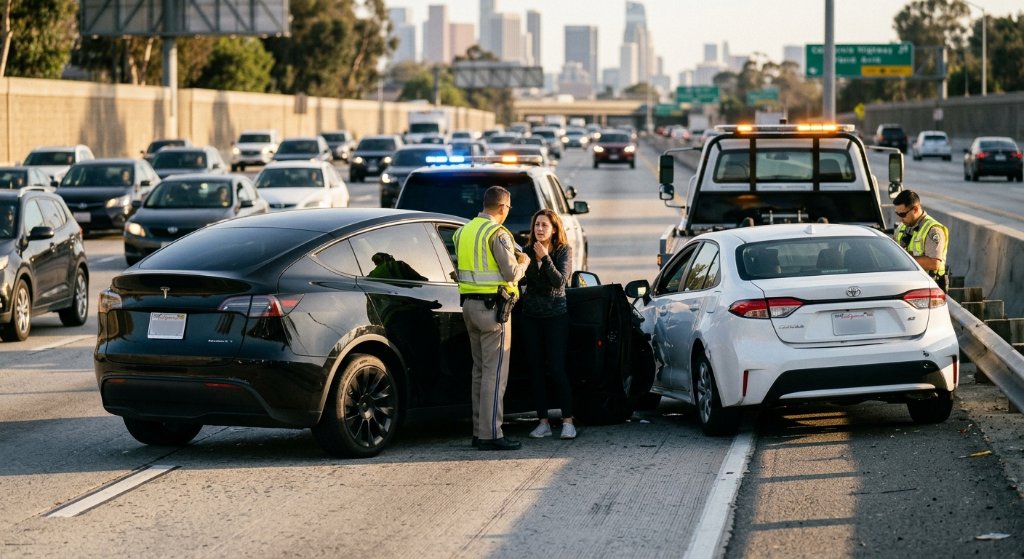
Tesla’s relentless drive toward a fully autonomous future has hit a staggering speed bump. According to safety reports submitted to the National Highway Traffic Safety Administration (NHTSA), the company logged a record-breaking 207 crashes involving its Autopilot and Full Self-Driving (FSD) suites in a single month. This represents the highest monthly crash count Tesla has ever recorded, landing at a highly critical juncture as the automaker sidelines traditional EV development to bet the farm on its FSD (Supervised) software and upcoming Robotaxi fleet.
While Tesla enthusiasts and CEO Elon Musk frequently boast that FSD improves road safety, these new federal figures tell a far more complicated story. To put the number in perspective, Tesla's single-month surge is larger than all of its logged driver-assist crashes in 2021 combined. It also highlights a growing regulatory and public relations crisis for a company that now accounts for roughly 85% of all advanced driver-assistance system (ADAS) crash reports in the United States.
Anatomy of the Surge: The Raw Numbers
The dramatic spike in crashes is detailed in NHTSA’s Standing General Order (SGO) database, which tracks incidents where Level 2 driver-assist systems were active within 30 seconds of an impact. Importantly, these are not minor parking-lot scrapes. For a crash to enter this federal database, it must meet a strict severity threshold, including:
- Airbag deployment
- Vehicle tow-away
- Bodily injury or fatality
- A struck pedestrian or cyclist
Tesla logged 207 of these severe crashes in May 2026 alone. The broader trend is accelerating rapidly: while 2025 was the first year Tesla crossed 1,000 ADAS crashes annually (totaling 1,043), the first six months of 2026 have already racked up 826 incidents. That puts the automaker on pace to nearly double last year's totals.
The Scale Defense vs. Tesla’s Transparency Problem
There is, of course, a critical caveat to raw crash volumes: fleet size. Tesla has rolled out FSD (Supervised) aggressively, deploying free trials and lowering subscription prices, which means millions of drivers are accumulating billions of miles on these systems. Statistically, more miles driven will inevitably lead to more crashes, even if the per-mile safety rate is actually improving.
However, Tesla’s insistence on keeping its detailed per-mile data proprietary has turned this defense into a liability. Unlike rivals in the autonomous space, Tesla does not provide independently auditable, detailed mileage metrics to back up its claim that FSD is "10x safer" than a human driver. This lack of transparency forces the public—and regulators—to judge Tesla solely on the raw, rising crash figures and the escalating federal scrutiny.
NHTSA Tightens the Noose
This record-high crash month does not exist in a vacuum. NHTSA has steadily escalated its oversight of Tesla's Autopilot and FSD suites. In late 2023, safety regulators forced Tesla to issue a massive over-the-air recall for over two million vehicles to address insufficient driver-attention controls. Yet, as the 2026 numbers show, that recall did little to stem the rising tide of crashes.
More recently, federal regulators have opened new probes into FSD's performance in low-visibility conditions (such as fog, sun glare, and dust) following several high-profile collisions, including one that fatally struck a pedestrian. NHTSA has also demanded internal Tesla communications, including the mysteriously titled "Radar Saves Us" document, indicating that the agency is digging deep into Tesla’s controversial decision to abandon radar sensors in favor of a camera-only "Tesla Vision" setup.
Why This Matters:
- The Regulatory Bottleneck: Tesla’s entire premium valuation is built on the promise of solving autonomy. However, if NHTSA's ongoing engineering analyses conclude that FSD has a fundamental safety defect, the agency has the power to force a recall that could restrict or entirely disable the software. Such a move would be a catastrophic blow to Tesla's stock price and brand image.
- The Robotaxi Dilemma: You cannot launch a driverless robotaxi network if your underlying Level 2 software is averaging over 200 severe crashes a month under human supervision. These figures suggest that Tesla's transition from Level 2 (Supervised) to Level 4/5 (Unsupervised) autonomy is much further away than Musk's highly publicized timelines suggest.
- The Competitive Threat: While Tesla fights off federal regulators and manages rising crash counts, traditional rivals are closing the gap. Legacy automakers are steadily rolling out highly capable, geofenced Level 3 autonomous systems (like Mercedes-Benz's Drive Pilot) that assume legal liability when active. Tesla's insistence on an "all-vision, supervise-it-yourself" approach is increasingly looking like a high-risk gamble that may alienate mainstream buyers.
Conclusion
Tesla’s record-high 207-crash month is a stark reminder that the road to full vehicle autonomy is paved with immense real-world volatility. As raw crash figures escalate alongside federal scrutiny, Tesla can no longer rely on clever marketing or vague safety charts to appease the public. If the automaker wants to convince regulators and buyers that its software is truly ready to take the wheel, it must open its books, share auditable safety data, and prove that its autonomous dream is not a public safety nightmare.