Tesla's Bold Bet: Model S & X Sunset as Fremont Pivots to Optimus, Cybercab Accelerates
A monumental strategic shift is underway at Tesla, one that signals the definitive end of an era for its pioneering luxury vehicles and ushers in a ne...
Editorial Team
World Of EV
A monumental strategic shift is underway at Tesla, one that signals the definitive end of an era for its pioneering luxury vehicles and ushers in a new age centered on artificial intelligence and robotics. Elon Musk has confirmed that Tesla has nearly depleted its remaining inventory of the Model S sedan and Model X SUV, with only a few hundred units left available. This isn't merely a production adjustment; it's a profound reorientation of the company's core mission, moving aggressively beyond traditional consumer vehicles towards an autonomous future and humanoid robots.
For years, the Model S and Model X stood as symbols of Tesla's ambition and technological prowess, defining the premium electric vehicle segment. While instrumental in establishing Tesla's market leadership and showcasing the viability of long-range EVs, these vehicles now represent an older chapter in the company's rapidly evolving narrative. This decisive move reinforces Musk's long-held vision of Tesla as a multifaceted technology giant, not just an automotive manufacturer.
The Sunset of Iconic Flagships
The near-complete depletion of Model S and Model X inventory marks a significant moment in Tesla's history. These vehicles, particularly the Model S, were the company's original flagships, demonstrating that electric cars could be both high-performance and luxurious. Their gradual phasing out indicates Tesla's intent to focus resources and manufacturing capabilities on its next-generation products and strategic pillars. This isn't a quiet discontinuation; it's a clear signal that the company's future lies elsewhere.
Fremont's Robotic Rebirth
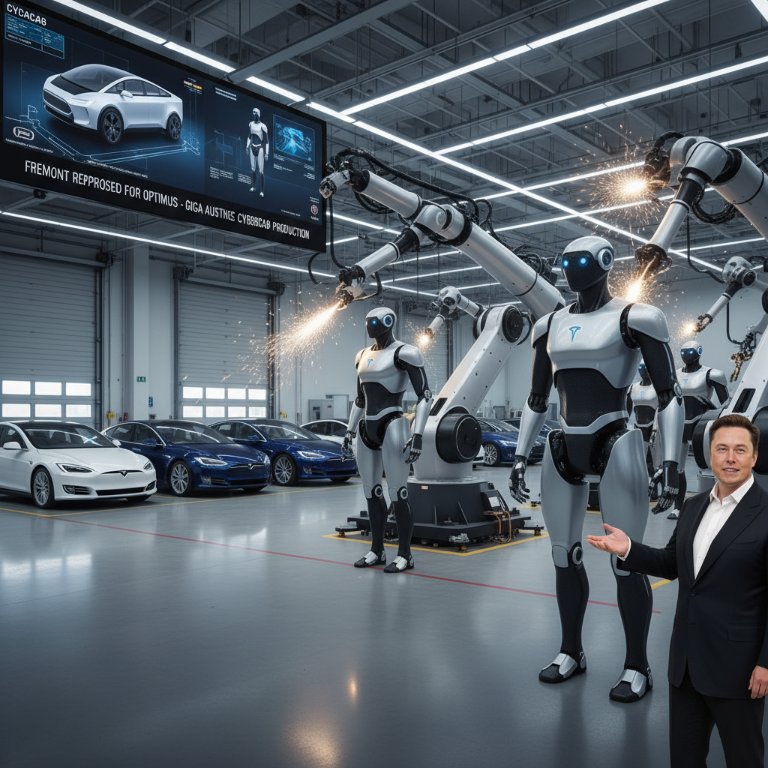
The most telling aspect of this strategic pivot is the repurposing of the iconic Fremont factory. Historically, Fremont has been the heart of Tesla's vehicle production, giving birth to every Model S and Model X since their inception. Now, this storied automotive plant, once a joint venture (NUMMI) between General Motors and Toyota, is undergoing a dramatic transformation. It will cease its role in producing these legacy EVs to become the primary manufacturing hub for the Optimus humanoid robot. This shift dramatically underscores Tesla's commitment to developing and deploying advanced robotics at scale, positioning the company as a key player in the emerging humanoid AI sector.
Cybercab Accelerates at Austin
Simultaneously, Tesla is accelerating its autonomous driving ambitions with the commencement of Cybercab production at Gigafactory Austin. The Cybercab, Tesla's vision for a fully autonomous robotaxi service, represents the company's direct foray into future mobility solutions, bypassing traditional vehicle ownership. This move highlights Tesla's unwavering belief in its Full Self-Driving (FSD) technology and its potential to revolutionize urban transportation. By manufacturing these dedicated autonomous vehicles, Tesla is laying the groundwork for a future where personal car ownership may become optional for many, replaced by on-demand, self-driving services.
Why This Matters:
- Bold Strategic Pivot: Tesla is unequivocally doubling down on its AI, robotics, and autonomous driving ambitions. This is a high-stakes gamble that could either solidify its position as a transformative technology leader or expose it to unforeseen risks associated with unproven markets. The company is actively shedding its 'car company' skin to fully embrace its 'AI and robotics company' vision.
- Competitive Landscape Reshaped: While traditional automakers continue to chase EV market share, Tesla is already moving to an entirely different playing field. This pivot effectively creates a new competitive arena, potentially leaving traditional rivals scrambling to catch up in autonomous services and humanoid robotics.
- Investor Confidence Test: Shedding profitable, albeit lower-volume, legacy vehicles for capital-intensive, futuristic ventures will undoubtedly test investor confidence. Success will depend on Tesla's ability to demonstrate tangible progress and a viable path to profitability in these nascent industries.
- Consumer Impact and Brand Evolution: For long-time Tesla enthusiasts who valued the luxury and performance of the Model S and X, this move narrows Tesla's consumer vehicle lineup, pushing buyers towards the Model 3, Model Y, and Cybertruck. It signals a brand evolution from luxury EV pioneer to a future-focused mobility and AI innovator.
- Future of Manufacturing: The repurposing of Fremont from producing consumer cars to humanoid robots is a powerful symbolic act, underscoring a shift in manufacturing focus towards highly advanced, intelligent machines.
Tesla is embarking on its most audacious gamble yet, betting its future not on incremental automotive improvements but on the exponential potential of artificial intelligence and robotics. This bold pivot signals a company determined to redefine mobility and automation on a global scale, pushing the boundaries of what an 'automotive' company can truly be. The road ahead is undoubtedly challenging, but if successful, it promises to usher in a new era for Tesla and profoundly impact industries far beyond the automotive world.