Tesla's FSD Supervised Gains Critical Ground in Europe as Estonia Leverages EU Mutual Recognition
Tesla's Full Self-Driving (FSD) Supervised system is rapidly expanding its footprint across Europe, with Estonia becoming the latest nation to grant a...
Editorial Team
World Of EV
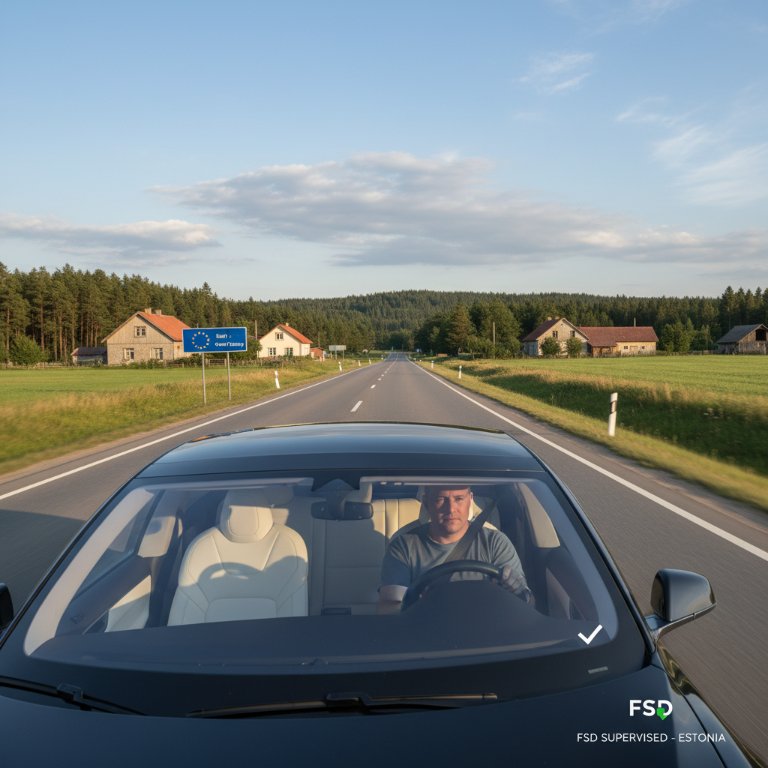
Tesla's Full Self-Driving (FSD) Supervised system is rapidly expanding its footprint across Europe, with Estonia becoming the latest nation to grant approval. This strategic move, following earlier green lights in the Netherlands and Lithuania, marks a significant acceleration for Tesla's advanced driver-assistance system on the continent. Crucially, Estonia's recognition of the Dutch certification under the European Union's mutual-recognition rules is not merely a localized win; it signals a potentially streamlined pathway for FSD Supervised into other EU member states, circumventing lengthy individual approval processes.
Accelerating European Rollout Through Mutual Recognition
The approval in Estonia on May 29, 2026, by its Transport Administration, leverages the foundational type approval granted by the Dutch vehicle authority (RDW) on April 10, 2026, after an extensive 18-month review and over 1.6 million kilometers of on-road testing across Europe. This mechanism, allowed under EU Regulation 2018/858, empowers member states to acknowledge certifications from other national authorities for new technologies without undertaking their own independent testing. This approach is vital for Tesla, enabling a potentially faster and more widespread deployment of FSD Supervised across the diverse regulatory landscape of the EU.
Key aspects of this accelerated rollout include:
- Estonia's approval directly follows the Netherlands and Lithuania, demonstrating a growing trend of mutual recognition.
- The RDW's comprehensive testing and approval under UN Regulation 171 (Driver Control Assistance Systems) sets a precedent for other nations.
- This process hints at a more systematic and efficient expansion for Tesla compared to a piecemeal, country-by-country approval, though full EU-wide harmonization is a separate, more complex process.
FSD Supervised: Understanding Level 2 Capabilities
It is imperative to understand that FSD Supervised, even with its advanced capabilities, remains a Level 2 advanced driver-assistance system (ADAS) according to the SAE scale. This classification strictly requires drivers to remain fully attentive, with hands on the wheel, and prepared to take control at all times. The system enhances driving convenience by assisting with acceleration, braking, and steering in most scenarios, but it does not constitute autonomous driving. European regulatory bodies, including Estonia's Transport Administration, have consistently emphasized the driver's ultimate responsibility.
Key characteristics of FSD Supervised as a Level 2 system in Europe:
- Constant Driver Supervision: The driver is legally and practically responsible for the vehicle's operation.
- Enhanced Driver Convenience: Provides assistance with navigation, lane changes, and traffic responses within its operational design domain.
- Regulatory Compliance: Meets the strict safety requirements of UN Regulation 171, including robust driver monitoring, minimum risk maneuvers, and override capabilities.
- Hands-Off, Eyes-On: While the system may permit hands-off operation, continuous driver attentiveness monitoring is enforced by sensors.
Why This Matters:
This expansion of FSD Supervised into Estonia, propelled by EU mutual-recognition, is a pivotal moment for Tesla's long-term strategy in Europe and holds significant implications for the broader automotive industry. For Tesla, it validates years of investment in AI and software development, turning deferred revenue from FSD purchases into recognized income as the feature becomes available to more customers. The ability to leverage one national approval for wider deployment fundamentally shifts the speed at which Tesla can penetrate the European market, strengthening its perception as a technology leader in the EV space.
European consumers stand to gain access to more advanced driver-assistance features, potentially improving driving convenience and safety, as Tesla's safety reports indicate FSD Supervised is significantly safer than the U.S. national average in testing conditions. However, the emphasis on Level 2 capabilities ensures drivers understand their role, a critical factor for public acceptance and safety.
For competitors, particularly traditional automakers investing heavily in their own ADAS and autonomous driving systems, this accelerated rollout by Tesla puts pressure to innovate and gain regulatory approvals. While some European manufacturers are pursuing Level 3 systems that permit hands-off and eyes-off under specific conditions, Tesla's Level 2 FSD Supervised is rapidly gaining market access and real-world data, which is invaluable for AI training and refinement. This move also signals a growing confidence from European regulators in vision-based ADAS solutions.
This isn't merely a regulatory formality; it's a strategic beachhead that allows Tesla to gather more diverse driving data from European roads, crucial for refining its "World Model" AI, which has historically been more US-centric. The trajectory suggests that while full EU harmonization remains a goal, a significant portion of the continent could see FSD Supervised roll out through this cascading national approval process by summer 2026.
Conclusion:
Estonia's approval of FSD Supervised, facilitated by the EU's mutual-recognition framework, represents a substantial stride for Tesla in its ambitious European expansion. This pivotal moment underscores the growing regulatory confidence in advanced driver-assistance systems and sets a precedent for a more efficient, albeit still Level 2, rollout across the continent. As FSD Supervised becomes accessible to more European drivers, its performance and safety will be under constant scrutiny, shaping the future of advanced driver assistance and paving the way for increasingly automated driving experiences across the globe.