Tesla's Global Gambit: FSD v14 'Lite' Lands in South Korea, Resurrecting Legacy Hardware 3 Fleet
After months of watching newer Hardware 4 (AI4/HW4) vehicles dominate the headlines with Tesla’s latest autonomous driving breakthroughs, legacy Tesla...
Editorial Team
World Of EV
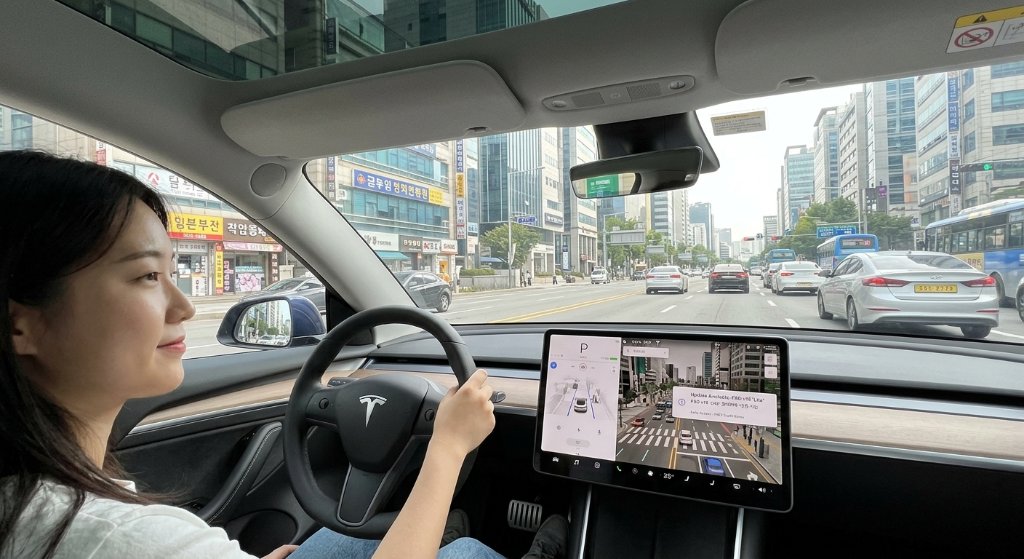
After months of watching newer Hardware 4 (AI4/HW4) vehicles dominate the headlines with Tesla’s latest autonomous driving breakthroughs, legacy Tesla owners are finally getting their day in the sun. Tesla AI has officially commenced the global rollout of its highly anticipated Full Self-Driving (FSD) v14 "Lite" update, surprisingly selecting South Korea—rather than the usual second-step market of Canada—as its first international launchpad outside of North America.
This is more than just a routine software update; it is a critical lifeline for Tesla's massive legacy fleet. For well over a year, Hardware 3 (HW3) owners have endured a frustrating FSD dry spell, frozen on legacy builds while Tesla's engineering focus shifted entirely to newer, more powerful silicon. By deploying v14 Lite internationally, Tesla is attempting to prove it can fulfill its long-held promise of full autonomy to early adopters without being forced into an incredibly expensive hardware retrofit program.
Squeezing Water from a Silicon Stone
The engineering hurdle behind v14 Lite cannot be overstated. Hardware 3 computers, which power millions of Teslas currently on the road, possess only about 15% of the memory bandwidth found in the newer AI4 suites. To bridge this massive hardware chasm, Tesla's AI team turned to advanced neural network distillation. By using reinforcement learning and offline AI models, Tesla has essentially trained a lightweight, highly efficient child model that inherits the driving intelligence of the robust HW4 parent stack.
Rather than running an entirely separate, inferior software branch, v14 Lite brings the core architecture of Tesla’s end-to-end neural networks to older vehicles. Early testers have reported a dramatic leap in driving smoothness, lane-centering consistency, and overall confidence on the road.
What’s Packed Into FSD v14 'Lite'
Despite the "Lite" moniker, this firmware update (version 2026.20.5.1) is a ground-up rebuild for older vehicles. It introduces a suite of features that drastically shift the day-to-day usability of the driver-assist system:
- Starting FSD From Park: The vehicle can now unpark itself and immediately transition into autonomous driving without driver intervention.
- Speed Profiles: Introduction of customizable driving personalities, including assertive "Hurry" modes that dynamically adjust to local traffic flows.
- Full Reversing and Auto-Parking: The system can now autonomously reverse, navigate complex driveways, and execute seamless parking maneuvers at the chosen destination.
- Advanced Navigation Tactics: Sharper real-time decision-making during tight lane merges, highway forks, pedestrian interactions, and traffic light handoffs.
The Korean Conundrum: US vs. China Builds
While the South Korean rollout is a massive milestone, it comes with a major geopolitical and manufacturing catch. Currently, the v14 Lite update is only being pushed to US-built Model 3 and Model Y vehicles. Because Tesla transitioned its South Korean supply chain to Giga Shanghai starting in 2023, the vast majority of recently sold Model 3 and Model Y vehicles in the country are China-made (MIC). These MIC vehicles are temporarily excluded from this early rollout, leaving most local Korean Tesla buyers waiting on the sidelines while a select group of older, US-built vehicles take the lead.
Why This Matters:
This rollout is a watershed moment for the electric vehicle industry, signaling how legacy hardware lifecycles will be managed in the AI era.
- The Big Winner: Tesla's Balance Sheet. Had Tesla orphaned Hardware 3, it faced the terrifying prospect of having to retroactively upgrade or refund millions of legacy vehicles whose owners paid up to $15,000 for FSD under the promise of full autonomy. By successfully squeezing v14 onto HW3 via AI distillation, Tesla mitigates a multi-billion-dollar liability and retains the trust of its most loyal early-adopting customer base.
- The Industry Signal: Software-Defined Vehicles Are Real. Legacy automakers often abandon software support for vehicles just two or three years off the assembly line. Tesla delivering a paradigm-shifting autonomous driving update to vehicles built in 2019 sets a brutal benchmark that legacy OEMs like Ford, GM, and Hyundai will struggle to match.
- The Loser: China-Made Tesla Owners. The exclusion of Giga Shanghai-built vehicles from the initial South Korean rollout exposes the operational and regional regulatory friction in Tesla’s global production hubs. It suggests that buying a cheaper, locally sourced MIC model may come with a hidden penalty: delayed access to cutting-edge software.
Conclusion:
The deployment of FSD v14 Lite in South Korea proves that Tesla is unwilling to leave its legacy fleet behind, even as it aggressively charges toward an AI4-dominated future. Squeezing highly complex neural networks into heavily constrained HW3 silicon is an engineering triumph that keeps Tesla's autonomous promises alive. As this global rollout expands beyond early testers, the ultimate test will be whether this "distilled" intelligence can safely navigate the chaotic streets of Seoul, Sydney, and Munich without pushing the physical limits of its older hardware.