Tesla's June 1st Slide: A Confluence of Headwinds Challenges EV Bellwether
Tesla Inc. (TSLA) experienced a notable downturn on June 1, 2026, with its stock price declining by 3.78%. This movement saw the EV giant underperform...
Editorial Team
World Of EV
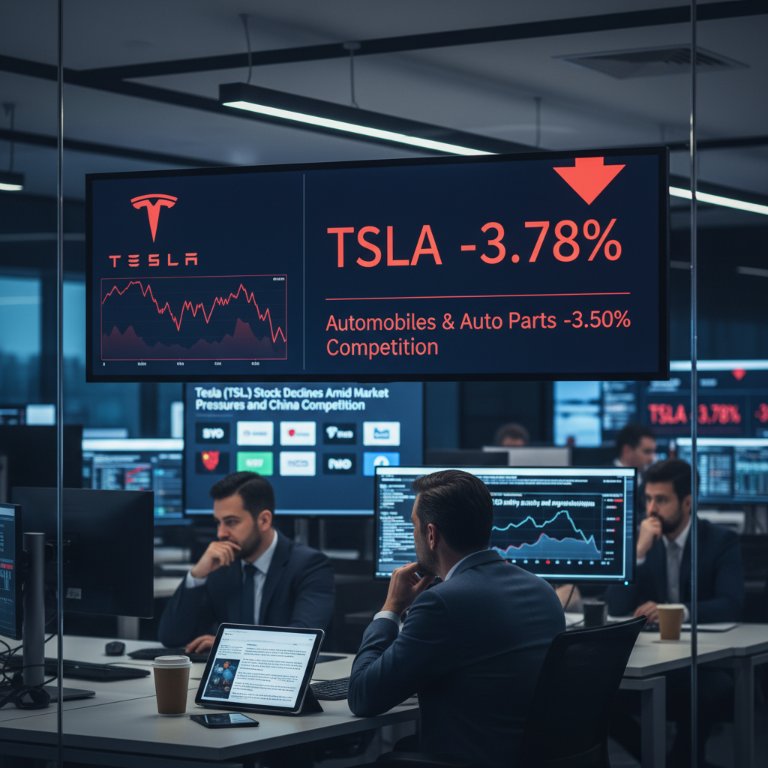
Tesla Inc. (TSLA) experienced a notable downturn on June 1, 2026, with its stock price declining by 3.78%. This movement saw the EV giant underperform the broader Automobiles & Auto Parts sector, which recorded a 3.50% dip, signaling a particularly rough day for Elon Musk's enterprise. This latest slide is not an isolated incident but rather a symptom of several persistent pressures converging on the once-unassailable market leader, ranging from a cooling global EV market to intense geopolitical competition and ongoing regulatory challenges.
Mounting Market Headwinds and Softening Demand
The narrative of exponential, unbridled EV growth is clearly evolving. The global EV market, while still expanding, shows clear signs of maturation and a softening of demand in key regions. This trend impacts all players, but for a company like Tesla, which has historically commanded premium valuations based on aggressive growth projections, even a slight deceleration can send ripples through its stock performance. We're transitioning from an early adopter phase to a mass-market environment, where price, practicality, and diversified options become paramount. Tesla, with its often higher price points and singular model strategy compared to some rivals, feels this shift acutely.
The Chinese Battleground Intensifies
Perhaps the most significant headwind for Tesla remains the hyper-competitive Chinese market. China, the world's largest EV market, has seen an explosion of highly capable, technologically advanced, and often more affordably priced domestic brands such as BYD, Nio, Xpeng, and Li Auto. These companies have not only replicated many of Tesla's features but often innovate faster on aspects like interior technology, battery swapping, and diverse vehicle segments specifically tailored to Chinese consumer preferences. Tesla, which once enjoyed a near-monopoly in premium EV sales in China, now faces an uphill battle to maintain market share against agile local competitors who benefit from strong government backing and a deep understanding of local tastes. This fierce competition forces Tesla into price cuts, impacting profit margins and investor confidence.
Full Self-Driving: A Double-Edged Sword
Tesla's Full Self-Driving (FSD) beta program continues to be a focal point for both innovation and intense scrutiny. While FSD promises a revolutionary autonomous future and is a significant revenue stream through subscriptions and one-time purchases, it remains mired in controversy. Persistent safety concerns have led to numerous regulatory investigations by agencies like the National Highway Traffic Safety Administration (NHTSA) in the United States. Each reported incident, each software recall, and every delay in achieving true Level 4 or Level 5 autonomy casts a shadow over Tesla's technological leadership claims and raises questions about the ethical implications of its ongoing beta testing on public roads. This ongoing scrutiny not only drains resources but also risks damaging the brand's reputation for safety and reliability.
Why This Matters:
The June 1st stock movement, coupled with the underlying issues, signals a critical juncture for Tesla and the broader EV industry. For long-term investors, this isn't merely a daily fluctuation; it's a stark reminder that Tesla's era of unchallenged dominance is facing unprecedented pressure. Traditional automakers like Hyundai, Kia, Ford, and GM are consistently rolling out compelling EV alternatives, while the Chinese market's indigenous champions are proving formidable adversaries.
- Who Wins? Savvy consumers benefit from increased competition, leading to more diverse, affordable, and technologically advanced EV options. Chinese domestic brands further solidify their home turf, potentially expanding globally. Competitors with more diversified product portfolios and clearer regulatory pathways for advanced driver-assistance systems (ADAS) gain an advantage.
- Who Loses? Tesla, if it fails to adapt decisively. Its high valuation has historically been predicated on rapid growth and technological supremacy. Softening demand, intensified competition, and FSD's regulatory quagmire directly threaten these pillars. Investors focused solely on past growth trajectories may find themselves reassessing future expectations.
- What Does This Signal? The EV market is maturing. It's no longer enough to simply be an EV; companies must offer compelling value, address diverse consumer needs, navigate complex regulatory landscapes, and compete fiercely on technology and price. Tesla's current situation is a wake-up call that innovation alone is insufficient without robust execution across all facets of the business.
A Pivotal Moment for Tesla's Future Trajectory
Tesla stands at a pivotal moment. The company must navigate these complex market dynamics by potentially diversifying its product offerings more aggressively, strengthening its competitive stance in crucial markets like China, and demonstrating a clear, safe, and regulatory-compliant path forward for its FSD technology. Failure to address these multifaceted challenges decisively could see Tesla's market leadership continue to erode, signaling a new, more competitive chapter for the entire electric vehicle industry.