Tesla's Latest Software Recall: A Stark Reminder of the EV Era's Double-Edged Sword
Tesla, the vanguard of the electric vehicle revolution and a pioneer in software-defined vehicles, has initiated a recall affecting thousands of its c...
Editorial Team
World Of EV
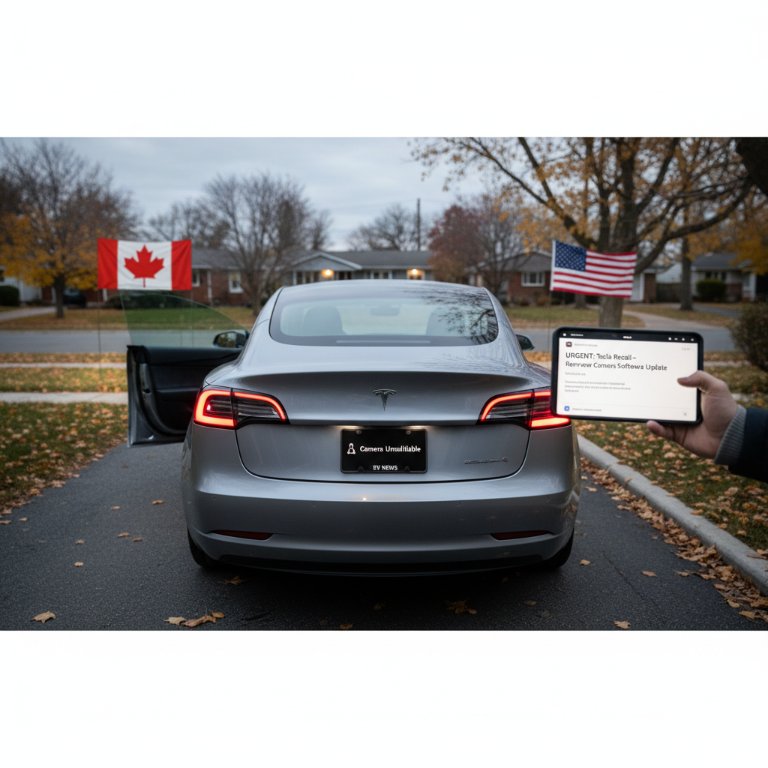
Tesla, the vanguard of the electric vehicle revolution and a pioneer in software-defined vehicles, has initiated a recall affecting thousands of its cars across the United States and Canada. This latest action stems from a software flaw that can critically impede the rearview camera’s functionality, failing to display the image when a driver shifts into reverse shortly after starting the vehicle. The oversight significantly elevates the risk of a collision, underscoring the inherent complexities and vulnerabilities of deeply integrated software systems in modern automobiles.
The Glitch: More Than Just a Minor Annoyance
The identified software bug directly compromises a fundamental safety feature: the rearview camera. In an era where drivers increasingly rely on visual aids for parking and low-speed maneuvers, a sudden absence of the rearview feed can be disorienting and dangerous. Imagine pulling out of a driveway or navigating a tight parking lot without this crucial visual input; the potential for incidents, from fender benders to more serious accidents involving pedestrians, dramatically increases. While seemingly minor on the surface, this flaw directly impacts operational safety, triggering the necessary recall action by regulators.
Over-the-Air: Tesla's Blessing and Curse
Tesla’s ability to deploy over-the-air (OTA) software updates has long been a cornerstone of its innovation, allowing for rapid feature enhancements and, crucially, swift rectifications of software bugs. In this instance, the company has already leveraged its OTA capabilities to release a patch addressing the rearview camera issue, notifying affected owners via email. This instantaneous resolution stands in stark contrast to traditional recalls, which often involve dealership visits and significant owner inconvenience, a benefit Tesla owners have come to expect. However, this recurring reliance on OTA for safety-critical fixes also highlights a recurring pattern: a significant number of Tesla's recalls originate from software glitches. While the fix is efficient, the frequency of these software-driven recalls, sometimes for issues as critical as Full Self-Driving behavior or seatbelt chimes, prompts ongoing questions about internal validation processes and the robust quality assurance necessary for such complex systems.
Why This Matters:
For Tesla's Brand Trust: While the efficiency of an OTA fix is commendable, a steady stream of software-related recalls, even minor ones, can chip away at consumer confidence. Prospective buyers and regulators alike may begin to question the maturity and reliability of a company so heavily reliant on software, even as it positions itself as a tech leader. Each recall, irrespective of the fix method, adds to a public record that can influence purchasing decisions.
The Software-Defined Vehicle Paradigm: Tesla remains at the forefront of the software-defined vehicle movement. Its challenges, including this rearview camera glitch, serve as a critical case study for traditional automakers rapidly integrating complex software into their new EV platforms. This incident underscores that while OTA updates offer unparalleled agility, they also necessitate rigorous pre-release testing and validation to prevent widespread deployment of potentially dangerous flaws. It's a blueprint and a cautionary tale rolled into one.
Regulatory Scrutiny and Future Precedent: Regulators are still adapting to the unique nature of software-based recalls. While an OTA fix might seem less severe than a physical component recall, the underlying safety risk remains the same. This trend could lead to increased scrutiny from bodies like the NHTSA, potentially influencing how such issues are reported, investigated, and penalized in the future, establishing new precedents for the entire industry.
Consumer Expectations: EV enthusiasts and tech-savvy buyers value the continuous improvement offered by OTA updates. However, they also expect core safety features to be flawless from day one. This recall is a reminder that even the most advanced automotive software isn't immune to bugs, prompting a nuanced appreciation of the balance between innovation and immediate reliability.
This incident, swiftly mitigated by Tesla’s signature over-the-air update capability, nevertheless serves as a potent reminder of the intricate challenges inherent in the software-defined vehicle era. While the immediate danger is averted, the larger narrative around software reliability, brand trust, and regulatory oversight continues to evolve, shaping the future of automotive safety and consumer expectations.