Tesla's Next FSD Frontier: Why Germany is Eyeing Robotaxis to Save Rural Public Transit
Elon Musk's vision of an autonomous future is quietly shifting gears from Silicon Valley hype to the rural, winding roads of Germany. Brandenburg Tran...
Editorial Team
World Of EV
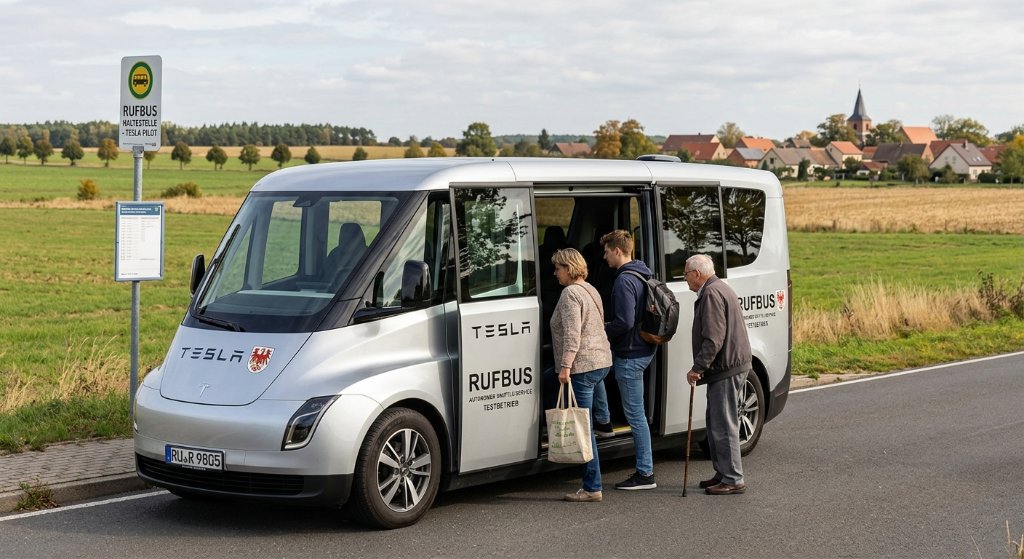
Elon Musk's vision of an autonomous future is quietly shifting gears from Silicon Valley hype to the rural, winding roads of Germany. Brandenburg Transport Minister Robert Crumbach recently confirmed that the German state is in active, high-level discussions with Tesla to deploy its autonomous vehicles to rescue the region's struggling rural public transit network. The plan seeks to integrate Tesla's self-driving shuttles or robotaxis directly into Brandenburg’s on-demand 'Rufbus' (dial-a-bus) infrastructure, providing a lifeline to underserved communities suffering from severe driver shortages.
This is far from a speculative PR stunt. By targeting Brandenburg, Tesla is planting its autonomous flag directly in its European home turf—just miles away from Gigafactory Berlin-Brandenburg in Grünheide. It also marks a massive escalation of Tesla’s ambitions in Europe, building directly on the momentum of its ground-breaking pilot project launched in Germany’s western Eifelkreis Bitburg-Prüm district in late 2025.
Solving the Rural Mobility Gap with 'Rufbus'
Public transportation in Germany’s rural expanses has long been plagued by inefficiency. In many sparse areas, traditional buses only run once or twice a day, leaving non-drivers—such as seniors and students—completely isolated. The state's existing "Rufbus" dial-a-bus network was designed as a flexible solution, but it is currently crippled by an acute labor shortage. Under the proposed framework with Tesla:
- Targeting Underserved Communities: Driverless shuttles will step in to bridge transit gaps where low rider demand makes running full-sized diesel buses financially and logistically impossible.
- On-Demand Flexibility: Rather than operating on rigid schedules, these Tesla autonomous vehicles (AVs) will be integrated into the state's existing call-and-ride dispatch system.
- A State-Level Endorsement: Unlike typical corporate pilots, Brandenburg’s ministry is acting as a proactive partner, looking to modernize public transit regulations to support autonomous fleet operations.
Building on the Bitburg-Prüm Blueprint
This isn't Tesla's first rodeo on German asphalt. In December 2025, Tesla turned heads across Europe by launching a first-of-its-kind public shuttle service in the rural district of Eifelkreis Bitburg-Prüm. Using Model Ys equipped with Full Self-Driving (FSD) Supervised, that pilot proved that Tesla’s neural-network-based system could safely handle narrow country lanes, blind corners, and unpredictable rural obstacles. Key takeaways from that deployment include:
- High Public Acceptance: Local mayors and residents praised FSD's "experienced driver" feel, which helped demystify autonomous driving for a highly skeptical German public.
- Regulatory Pathways: Germany’s landmark 2021 Autonomous Driving Act provides a unique legal framework for SAE Level 4 operations under remote technical supervision, paving the way for Tesla to eventually ditch the safety driver entirely.
- Proving the Tech Off-Highway: While competitors focus on highly mapped urban grids, Tesla’s camera-only approach is proving its versatility on unmapped, complex rural networks.
The Giga Berlin Power Play
The geographic choice of Brandenburg is highly strategic. Gigafactory Berlin-Brandenburg, situated in Grünheide, is not only Tesla's European manufacturing crown jewel but also the rumored future production site for Tesla’s upcoming "Cybercab" robotaxi. By launching a state-backed pilot in Brandenburg, Tesla secures a perfect feedback loop:
- Localized R&D: Autonomous software and hardware can be produced, tested, and refined locally, significantly cutting down deployment lead times.
- Political Leverage: Partnering with the state of Brandenburg aligns Tesla's commercial goals with the economic and infrastructural interests of local politicians, smoothing over previous local friction regarding the factory’s environmental footprint.
Why This Matters:
For Tesla, this is a masterclass in regulatory and commercial positioning. By transitioning FSD from a consumer-only luxury feature to a vital piece of municipal public infrastructure, Tesla is shifting its business model from B2C to B2G (Business-to-Government). This provides a massive buffer against the notoriously slow-moving European consumer regulatory approval process.
Who Wins: Rural European citizens gain reliable, flexible, and affordable mobility. Tesla wins by securing lucrative public transit contracts, proving the safety of its camera-only FSD system under strict government oversight, and gathering invaluable real-world edge-case data on European roads.
Who Loses: Legacy German automakers—specifically the Volkswagen Group. VW has been slowly developing its own autonomous ride-pooling service (MOIA) in Hamburg, while Deutsche Bahn has partnered with Mobileye for its KIRA trial. By moving swiftly to cut deals with local German state ministries, Tesla is effectively leapfrogging these legacy giants on their home turf, proving that its software-first approach can deploy faster than traditional corporate-led AV projects.
Conclusion
Brandenburg's talks with Tesla represent more than just a localized transit upgrade; they are a glimpse into the future of public transportation. As driver shortages worsen and rural populations age, the pressure on governments to adopt autonomous solutions will only intensify. If Tesla can successfully integrate its vehicles into Germany’s stringent public transit fabric, it will establish a standardized blueprint for the rest of Europe. The road to autonomy may have started on the sunny streets of California, but its ultimate proving ground is turning out to be the quiet, rural heartland of Germany.