Tesla's Roadster: Speed Over Safety? Musk's Controversial Stance Ignites Debate Amid Regulatory Probes
Elon Musk, CEO of Tesla, has once again injected a jolt of controversy into the automotive world, stating unequivocally that the upcoming Tesla Roadst...
Editorial Team
World Of EV
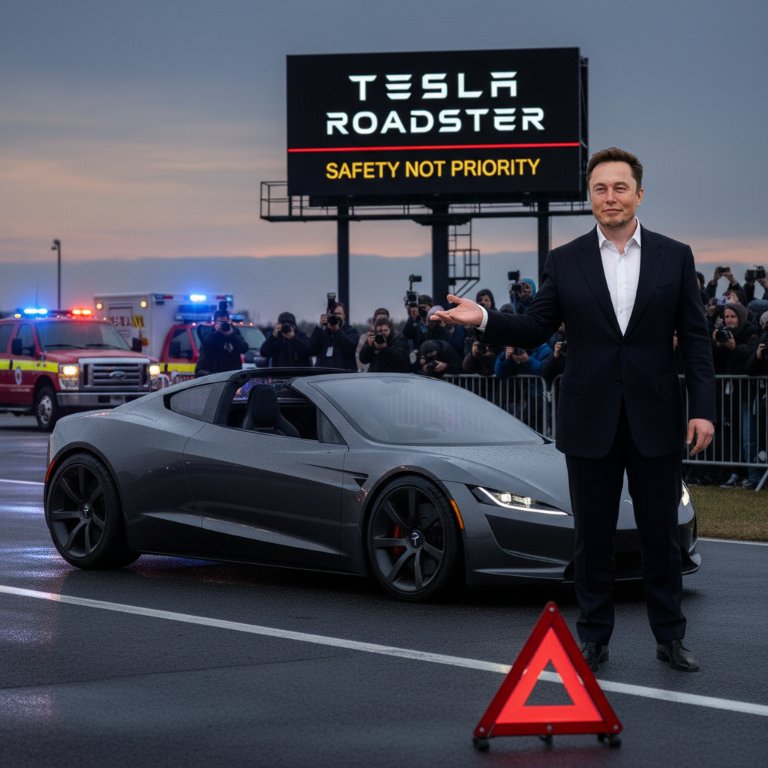
Elon Musk, CEO of Tesla, has once again injected a jolt of controversy into the automotive world, stating unequivocally that the upcoming Tesla Roadster will not prioritize safety. He advised potential buyers whose primary concern is safety to avoid the vehicle. This striking declaration lands as federal regulators intensify their scrutiny of Tesla's products, including the company's advanced, yet oft-maligned, Full Self-Driving (FSD) system.
Musk's statement, delivered during a recent podcast, positions the Roadster firmly in the realm of extreme performance, seemingly at the expense of traditional safety benchmarks. The second-generation Roadster, first unveiled in 2017, has long been hyped for its astonishing acceleration — with Musk famously boasting of a 0-60 mph time in less than two seconds, and potentially even under one second with the optional SpaceX package. This emphasis on raw, unadulterated speed aligns with Tesla's image as an innovator pushing the boundaries of automotive engineering.
The Regulatory Shadow Cast Over Tesla
Musk's candidness about the Roadster's safety priorities comes at a particularly sensitive time for Tesla. Federal regulators, notably the U.S. National Highway Traffic Safety Administration (NHTSA), are engaged in ongoing and expanding investigations into various aspects of Tesla's vehicle safety.
- Full Self-Driving (FSD) Investigations: NHTSA has been actively probing Tesla's FSD system following numerous reports of incidents. These include vehicles allegedly running red lights, failing to stop fully, driving the wrong way, and exhibiting problematic behavior at intersections and railroad crossings. In October 2025, a new investigation was opened into approximately 2.88 million Teslas equipped with FSD, citing 58 incident complaints, including 14 crashes and 23 injuries. This builds on earlier investigations, including one in October 2024 focusing on FSD performance in reduced visibility conditions after a fatal pedestrian crash.
- Broader DOJ Probes: Beyond FSD, the Department of Justice has expanded its investigations into Tesla, issuing subpoenas for information concerning “personal benefits, related parties, vehicle range and personnel decisions,” suggesting a wider inquiry than just automated driving systems.
While Tesla vehicles are legally required to meet certain safety standards, incorporating features like structural crash protection, airbags, and stability systems, Musk's statement suggests a design philosophy that prioritizes performance metrics over comfort-oriented safety features.
Why This Matters:
- For Tesla's Brand Identity: This statement solidifies Tesla's commitment to pushing extreme performance boundaries, potentially appealing to a niche segment of hardcore automotive enthusiasts who value speed and innovation above all else. However, it also risks alienating safety-conscious buyers and could further complicate Tesla's efforts to position its technology, like FSD, as reliable and safe. This reinforces Tesla's reputation as a company that doesn't always play by traditional automotive industry rules.
- Impact on the EV Market: This could set a precedent within the burgeoning electric supercar segment. While established supercar brands historically prioritize performance, their marketing rarely explicitly downplays safety. Tesla's approach might encourage or normalize a more cavalier attitude towards safety messaging among ultra-high-performance EV manufacturers, potentially influencing future design and marketing decisions across the industry.
- Heightened Regulatory Scrutiny: Musk's comments are a direct challenge to federal regulators. Already under intense pressure to address safety concerns surrounding FSD and other Tesla products, this statement could provide further impetus for regulatory bodies to take more decisive action. It might also lead to increased calls for more rigorous pre-market safety assessments for vehicles that claim such extreme performance capabilities. The ongoing investigations into FSD, with reported crashes and injuries, underscore the critical need for a balanced approach to innovation and safety.
- Consumer Trust: For the average consumer, this raises significant questions about Tesla's overall commitment to safety, even if the Roadster is an extreme outlier in its product line. It could erode public trust, particularly given the ongoing concerns surrounding FSD and autopilot systems.
In essence, Tesla is making a calculated bet: that the allure of unprecedented performance will outweigh any potential concerns about safety, at least for the target demographic of the Roadster. This is a high-stakes gamble with significant implications for Tesla's reputation, the regulatory landscape, and the future direction of high-performance electric vehicles.
Conclusion:
Elon Musk's candid admission regarding the Tesla Roadster's safety priorities underscores the ongoing tension between cutting-edge innovation and public safety. As federal regulators continue their in-depth investigations into Tesla's existing safety systems, the company's decision to explicitly de-prioritize safety for its halo performance vehicle signals a bold, albeit risky, strategy. The automotive world will be watching closely to see how this plays out, both in terms of market reception and the inevitable response from regulatory bodies tasked with safeguarding the public.