Tesla's Stealth Price Hikes Signal Shifting Strategy: More Cost, Fewer Perks for Buyers
Tesla, the undisputed leader in the electric vehicle market, is making subtle yet significant adjustments to its U.S. pricing and incentive structures...
Editorial Team
World Of EV
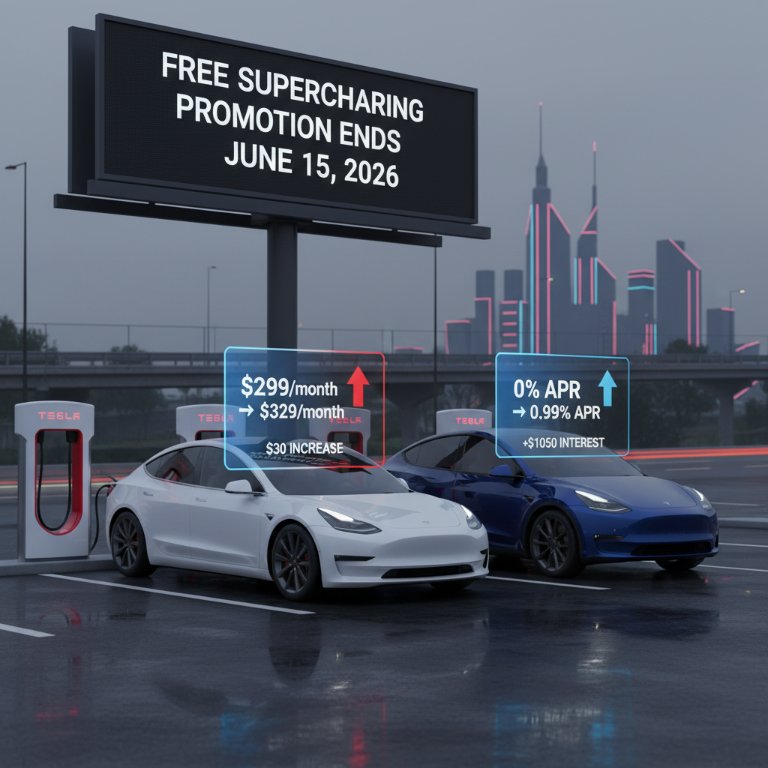
Tesla, the undisputed leader in the electric vehicle market, is making subtle yet significant adjustments to its U.S. pricing and incentive structures. This move comes after a period where the automaker has famously — and often controversially — used aggressive price cuts and incentives to stimulate demand and navigate a fluctuating market. Now, a clear trend emerges: the cost of entry into Tesla ownership is quietly rising, while attractive perks are disappearing.
These latest changes hit prospective buyers directly in their wallets. The monthly lease payment for the base Model 3 Rear-Wheel Drive (RWD) has climbed by $30, from $299 to $329. Over a standard 36-month lease term, this seemingly small increase totals an additional $1,080. For those looking to finance, the previously enticing 0% APR offer on the popular Model Y All-Wheel Drive (AWD) is gone, replaced by a 0.99% rate. This modest interest rate, applied over a 60-month loan, adds approximately $1,050 to the total cost. Furthermore, a sought-after one-year free Supercharging promotion, a hallmark of the Tesla ownership experience, is set to expire on June 15, 2026, for orders of the Model 3 Premium and Model 3 Performance. This creates a critical deadline for buyers hoping to secure the benefit.
These adjustments arrive at a time when the broader EV market is maturing, and Tesla itself is navigating shifting priorities. While Tesla's Model 3 and Model Y continue to dominate the U.S. EV market, accounting for more than half of all EVs sold in 2025, the competitive landscape is intensifying. The company has historically employed a dynamic pricing strategy, often adjusting prices multiple times a year, sometimes to the consternation of customers. However, recent shifts in incentives and financing indicate a strategic pivot away from solely aggressive growth and towards enhanced profitability.
Why This Matters:
This isn't merely a minor tweak to pricing; it represents a significant strategic recalibration for Tesla, with wide-ranging implications for consumers and the broader EV industry.
Prioritizing Profitability: After a period of aggressive price cuts, particularly in 2022-2024, to maintain market share and stimulate demand, Tesla appears to be prioritizing its margins and overall profitability. The company reported strong Q1 2026 earnings, with revenue up 16% year-over-year and gross margin reaching 21.1%, the strongest in several quarters. These price increases, coupled with the elimination of perks, will directly contribute to healthier financial statements, especially as the company plans substantial capital expenditure for AI, robotics, and new vehicle production.
Testing Market Elasticity: Tesla is undoubtedly testing the elasticity of demand for its core products. The Model 3 and Model Y remain global best-sellers and command a significant market share. By modestly increasing costs, Tesla is likely assessing how much pricing power it truly holds before seeing a significant drop in sales volume. This is a bold move, considering the overall EV market saw a decline in sales in Q1 2026 in the U.S. and China.
Impact on Accessibility and Competition: For prospective buyers, these changes mean a higher total cost of ownership at a time when rising interest rates are already impacting EV affordability. While a 0.99% APR is still competitive in the current financing environment, it’s a far cry from 0%. This could make Tesla vehicles slightly less accessible for some budget-conscious consumers, potentially creating an opening for competitors who are also rolling out more affordable EV options. Legacy automakers and new EV players are increasingly offering compelling alternatives, and a higher entry point for Tesla could help them gain traction.
Shifting Customer Value Proposition: The disappearance of free Supercharging, a significant long-term benefit, alters the value proposition. For many, unlimited Supercharging was a substantial draw, offsetting concerns about public charging costs. This signals a shift towards a more standard vehicle ownership model, where charging costs are explicitly factored in, potentially making the decision process more complex for buyers comparing total cost of ownership against rival EVs.
Tesla's latest financial adjustments represent a calculated move to solidify its financial standing and refine its market strategy. While the company continues to innovate with ambitious projects like Robotaxi and Optimus, these pricing shifts suggest a renewed focus on optimizing the profitability of its automotive division. The market will closely watch how these changes influence buyer behavior and whether competitors can capitalize on Tesla's slightly less aggressive pricing stance in the coming quarters.