Tesla's Strategic Model Y Price Hikes Signal Shifting EV Market Dynamics and Renewed Demand
The electric vehicle landscape, long characterized by intense competition and a race to the bottom on pricing, is witnessing a significant pivot from ...
Editorial Team
World Of EV
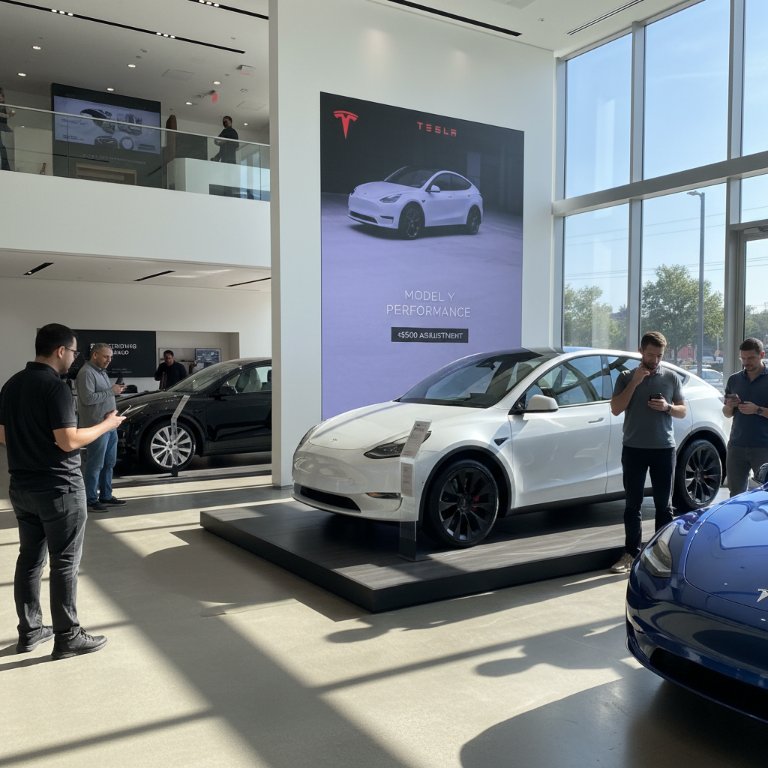
The electric vehicle landscape, long characterized by intense competition and a race to the bottom on pricing, is witnessing a significant pivot from its arguably most influential player. Tesla, in a move that signals a potential turning point for the industry, has implemented targeted price increases for select higher-trim versions of its hugely popular Model Y in the United States. This adjustment comes after a protracted period of industry-wide weakness and aggressive price cuts, suggesting that the EV giant perceives a strengthening in consumer demand.
Model Y's Targeted Price Bump
Tesla's latest pricing strategy focuses on the more premium configurations of its best-selling Model Y crossover, leaving the entry-level variants untouched. The adjustments are as follows:
- Model Y Premium (Rear-Wheel Drive and All-Wheel Drive): Saw a notable $1,000 increase.
- Model Y Performance: The top-of-the-line variant experienced a $500 price bump.
- Entry-Level Model Y (Rear-Wheel Drive and All-Wheel Drive): Prices for these foundational trims remain unchanged, maintaining accessibility for a broader buyer demographic.
This nuanced approach indicates Tesla's confidence in the value proposition of its higher-end offerings and perhaps a belief that the market for these specific trims can absorb a slight premium. Unlike broad-brush price reductions seen over the past year, these increases are surgical, targeting segments where demand appears to be firming up.
A Calculated Reversal in Strategy?
For much of late 2023 and early 2024, the narrative surrounding the EV market was dominated by Tesla's aggressive price cuts, a strategy aimed at stimulating demand, reducing inventory, and fending off burgeoning competition, particularly from Chinese manufacturers like BYD. These cuts often sparked a 'price war' across the industry, forcing competitors to adjust their own pricing to remain competitive. This latest move, however, represents a calculated reversal. It suggests Tesla has either achieved its goals with the previous price reductions or, more critically, sees an underlying improvement in market conditions for electric vehicles. This could be interpreted as a bullish signal not just for Tesla, but for the wider EV market, hinting that the worst of the demand slump may be behind us.
Why This Matters:
Tesla's decision to raise prices for key Model Y trims is far more than a simple accounting adjustment; it's a profound market signal with significant implications for consumers, competitors, and the broader EV industry. For existing Model Y owners, particularly those with higher trims, this move could offer a slight boost to their vehicle's resale value, mitigating some of the rapid depreciation often associated with EVs. For prospective buyers, it underscores a potential shift in the market; waiting for further price drops might no longer be a viable strategy, particularly for the more feature-rich versions of the Model Y.
From an industry perspective, this action signals Tesla's renewed confidence in its brand power and product desirability. If demand for the Model Y remains robust despite these increases, it validates Tesla's strategy and puts pressure on other automakers who are still struggling to move their EV inventory or match Tesla's efficiency and charging infrastructure. It suggests that Tesla believes the market has absorbed the previous cuts and is now willing to pay more for its established brand and technology. This could mark the end of the widespread EV price wars, ushering in a period where manufacturers focus more on profitability and product differentiation rather than just volume at any cost.
In essence, Tesla appears to be betting on strengthening demand, higher margins, and its ability to lead the market rather than simply react to it. This move could empower Tesla to invest more heavily in its next generation of vehicles and technologies, further solidifying its competitive advantage.
This strategic price adjustment by Tesla for its Model Y is a critical indicator that the electric vehicle market may be entering a new phase. After a period defined by price corrections and demand uncertainty, Tesla's confidence to raise prices suggests a potential stabilization and even recovery in consumer interest for EVs. All eyes will now be on sales figures to see if this calculated gamble pays off, and whether other manufacturers will interpret this as a green light to follow suit or an opportunity to seize market share with aggressive pricing of their own.