Tesla's Strategic Shift: Model Y Price Hike Signals End of Aggressive Discounts Era
In a move that sends ripples through the electric vehicle market, Tesla has initiated its first price increases for the Model Y in two years, signalin...
Editorial Team
World Of EV
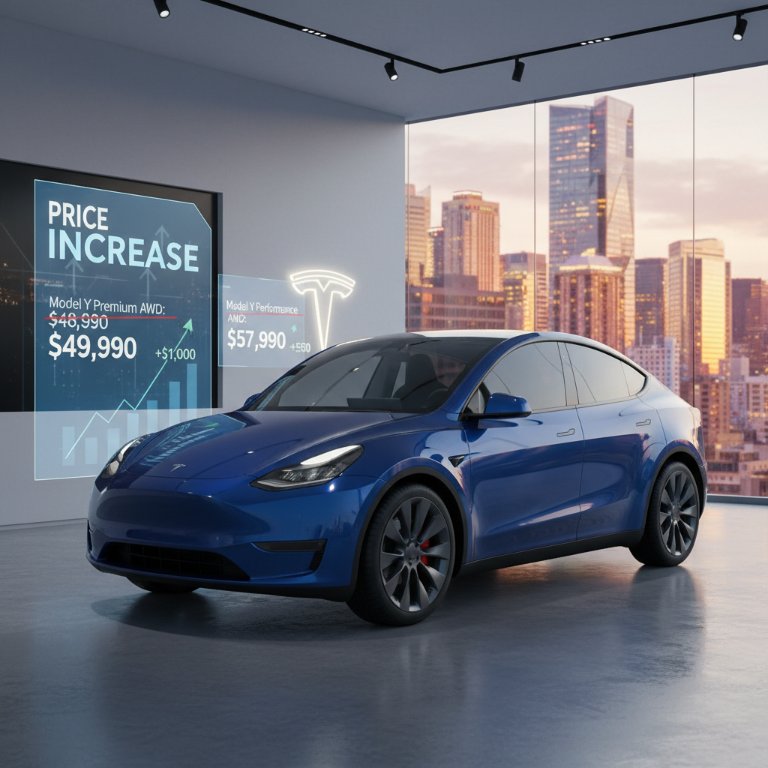
In a move that sends ripples through the electric vehicle market, Tesla has initiated its first price increases for the Model Y in two years, signaling a potential pivot from its long-standing strategy of aggressive price cuts. This adjustment affects all three variants of the highly popular electric SUV, suggesting a broader recalibration of the automaker's market approach.
For nearly two years, Tesla has been locked in a fierce price war, repeatedly slashing prices across its lineup, including the Model Y, to boost demand and maintain market share amidst increasing competition and evolving economic conditions. This period saw the Model Y become an increasingly accessible option for many, driving significant sales volume. The recent increases, however, mark a distinct departure from that trend, prompting industry observers and consumers alike to question the underlying motivations and future implications.
The Price Adjustments Detailed
The price hikes are consistent across the Model Y lineup, with varying increases depending on the trim:
- Model Y Premium All-Wheel Drive: Saw a $1,000 increase, bringing its new price to $49,990.
- Model Y Premium Rear-Wheel Drive: Also increased by $1,000, now priced at $45,990.
- Model Y Performance All-Wheel Drive: Experienced a $500 increase, reaching a new price point of $57,990.
These adjustments, while seemingly modest, are particularly noteworthy given their timing. They arrive after a sustained period where the automotive industry, and Tesla specifically, often used price reductions as a primary lever to stimulate demand and clear inventory. This makes the reversal a significant indicator of changing market dynamics or internal strategic directives within the EV giant.
Why This Matters:
This price hike is more than just a minor adjustment; it’s a strong signal of a strategic shift at Tesla, with profound implications for consumers, competitors, and the broader EV market.
- Prioritizing Profitability Over Pure Volume: For a considerable period, Tesla's aggressive price cuts seemed aimed at maximizing sales volume and pressuring competitors. This reversal suggests Tesla may now be leaning towards enhancing profit margins, indicating a maturity in its market position where it feels less compelled to sacrifice margins for every sale. This move could calm investor concerns about eroding profitability, a common critique during the price war phase.
- Stabilizing Demand and Market Confidence: The decision to raise prices could indicate that Tesla's internal analysis suggests demand for the Model Y has stabilized or even strengthened at current levels, making aggressive discounts less necessary. It might also reflect confidence in the Model Y's value proposition against growing competition, such as the Hyundai Ioniq 5, Kia EV6, Ford Mustang Mach-E, and an influx of new Chinese EV SUVs that have been challenging Tesla's dominance. Existing Model Y owners will likely see this as positive, as it helps to shore up resale values after a period of depreciation due to continuous price reductions.
- A Telltale for the Broader Market: Tesla's pricing strategies often act as a bellwether for the entire EV industry. If the market can absorb these increases, it might empower other EV manufacturers to reconsider their own pricing, potentially leading to a more stable, albeit higher-priced, EV landscape. Conversely, if demand falters for the Model Y, Tesla may be forced to backtrack, or competitors might seize the opportunity to undercut the market leader.
- Impact on Prospective Buyers: For prospective Model Y buyers, especially those who were anticipating further price drops, this news necessitates a re-evaluation of their purchasing plans. While the increases are not prohibitive, they slightly diminish the Model Y's previous advantage as a highly cost-effective premium EV, particularly against a backdrop of increasing choices in the sub-$50,000 segment.
This marks a significant moment for Tesla, moving away from a strategy characterized by continuous downward pressure on prices. The company appears to be betting on the enduring appeal of the Model Y and its brand strength to maintain sales momentum even at higher price points. The coming months will reveal whether this calculated risk will pay off and what further recalibrations Tesla, and by extension the entire EV industry, will undertake.