The $8,700 Reality Check: Out-of-Warranty Rivian R1T Repair Bill Exposes the High Cost of Early EV Adoption
When Rivian burst onto the scene in 2022 with the R1T, it was heralded as a triumph of American EV engineering. Early adopters enthusiastically put th...
Editorial Team
World Of EV
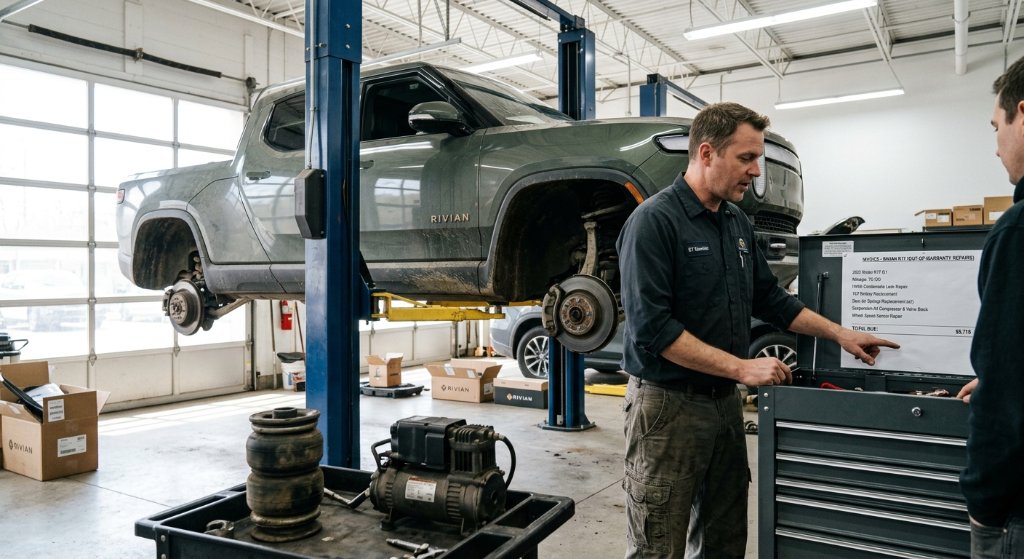
When Rivian burst onto the scene in 2022 with the R1T, it was heralded as a triumph of American EV engineering. Early adopters enthusiastically put the quad-motor beast through its paces, racking up high mileages on a vehicle that redefined the electric utility sector. However, as these pioneering first-generation (G1) trucks cross the threshold of their 5-year/60,000-mile comprehensive warranties, the true cost of long-term ownership is beginning to emerge. A recent detailed testimonial from a 2022 R1T Quad-motor owner highlights a sobering $8,700 out-of-pocket repair bill at 75,000 miles, serving as a stark reminder of the "early adopter tax" that often accompanies bleeding-edge automotive platforms.
While the high-voltage battery and electric drive units remain securely covered under Rivian's longer 8-year powertrain warranty, this owner's experience—representing 15,000 miles driven past the truck's comprehensive manufacturer warranty—proves that auxiliary system failures can quickly add up to luxury-car repair bills. Just as early Tesla Model S owners faced notorious out-of-warranty bills for door handles and media control units, or legacy premium truck buyers grapple with aging air suspension leaks on Ram 1500s, Rivian’s early engineering is highly complex and costly to service outside of a warranty safety net.
The Anatomy of an $8,700 Invoice
The owner detailed a running total of $8,700 in out-of-pocket expenses to resolve a mix of mechanical, pneumatic, and low-voltage electrical issues. The specific repairs required to keep the high-mileage R1T on the road included:
- Replacing Two Rear Air Springs: The R1T's sophisticated height-adjustable air suspension system suffered leaks in the rear, requiring replacement of both rear air springs.
- Replacing the Suspension Air Compressor & Valve Block Assembly: The physical muscle and brain of the pneumatic system failed, requiring a complete swap of the high-pressure compressor and its accompanying valve block.
- Installing New 12V Batteries: Early G1 R1Ts rely on a notoriously finicky dual-lead-acid AGM battery setup that is prone to rapid degradation and severe phantom drain.
- Resolving an HVAC Condensate Leak: Fixing an air conditioning drainage failure that could otherwise lead to cabin dampness or electrical corrosion.
- Repairing a Loose Wheel Speed Sensor: Re-securing a minor but critical sensor that, when loose, throws cascade errors across the stability control, traction control, and Driver+ autonomy systems.
First-Gen Complexity Meets the Closed Service Ecosystem
This laundry list of repairs highlights the immense engineering complexity of Rivian's first-generation vehicles. To prove its capabilities out of the gate, the G1 R1T was aggressively over-engineered. It featured a complex hydraulic kinetic roll control system paired with air suspension, dual 12V batteries, and a sprawling electrical architecture comprised of over 17 individual electronic control units (ECUs). When these highly integrated, proprietary systems fail, owners face a double whammy: high parts costs and complete reliance on Rivian's first-party service centers.
Unlike traditional internal combustion trucks, where an owner can source aftermarket air springs or hire a local mechanic to swap a compressor, the independent repair ecosystem for Rivians is virtually non-existent. Owners are locked into premium labor rates at manufacturer-owned service centers, turning minor component wear into major financial setbacks.
The Gen 2 Evolution: Learning From Early Mistakes
Fortunately, Rivian has recognized the financial and service bottlenecks of this complexity. The automaker's heavily revised Gen 2 (2025/2026+) R1 platform was redesigned specifically to streamline manufacturing, improve reliability, and lower long-term service costs. The structural and electrical changes are dramatic:
- Zonal Electrical Architecture: Rivian slashed the number of ECUs from 17 to just a handful of zonal controllers, eliminating over 1.6 miles of heavy, failure-prone wiring harnesses.
- Overhauled Low-Voltage Power: The problematic dual-12V lead-acid battery setup was redesigned to alleviate auxiliary power failures and reduce parasitic power drain.
- Simplified Underbody and Castings: Transitioning to single-piece cast aluminum cradles and optimized suspension components reduces the overall part count, meaning fewer individual items can break as the vehicle ages.
Why This Matters:
This $8,700 repair bill is a critical bellwether for the broader EV industry, signaling long-term challenges and opportunities as the first wave of modern electric trucks enter their post-warranty lifecycles.
- The Used EV Market Takes a Hit: For prospective buyers, the threat of a looming four-figure bill for suspension or electrical repairs will severely depress residual values. Early-generation R1Ts may face steep depreciation curves if used buyers fear being stuck with massive out-of-pocket costs.
- The Urgent Need for Right-to-Repair: This case underscores why the push for open diagnostic software and third-party parts availability is essential. Without a thriving independent aftermarket, high-mileage EV ownership becomes unsustainable for the average consumer.
- A Win for Gen 2 (and Rivian's Margins): While bad news for early adopters, this testimonial validates Rivian's pivot to its Gen 2 zonal architecture. By aggressively simplifying the vehicle's internals, Rivian is protecting its own warranty margins for newer models while delivering a more reliable product.
- The Service Scaling Challenge: As thousands of early EVs age out of their warranties, EV startups must prove they can support high-mileage vehicles without bankrupting their owners or overwhelming their limited service networks.
Conclusion
Ultimately, this owner's $8,700 experience shows that while the solid-state components of an EV—like the electric motors and battery pack—are highly robust, the traditional physical wear items and complex auxiliary systems remain highly vulnerable to the passage of time and mileage. Rivian’s transition from G1 to Gen 2 represents a vital maturity phase for the company. For consumers, however, it is a clear warning: if you plan to keep an early-generation EV past its bumper-to-bumper warranty, budgeting for premium maintenance is no longer optional—it is a necessity.