The Battery Death Myth Is Dead: Massive Study of 22,700 EVs Proves Packs Will Outlast the Cars
For more than a decade, the single greatest hurdle to mass EV adoption has not been styling, performance, or even raw range—it has been the specter of...
Editorial Team
World Of EV
For more than a decade, the single greatest hurdle to mass EV adoption has not been styling, performance, or even raw range—it has been the specter of "battery death." Skeptics and hesitant buyers alike have long feared the looming financial catastrophe of a five-figure battery replacement bill. This anxiety is deeply rooted in early EV history; the first-generation Nissan Leaf, famously built with a passive, air-cooled battery pack, suffered notorious thermal degradation in warm climates. Early statistics from that era showed that up to 8% of early EVs ultimately required full battery replacements.
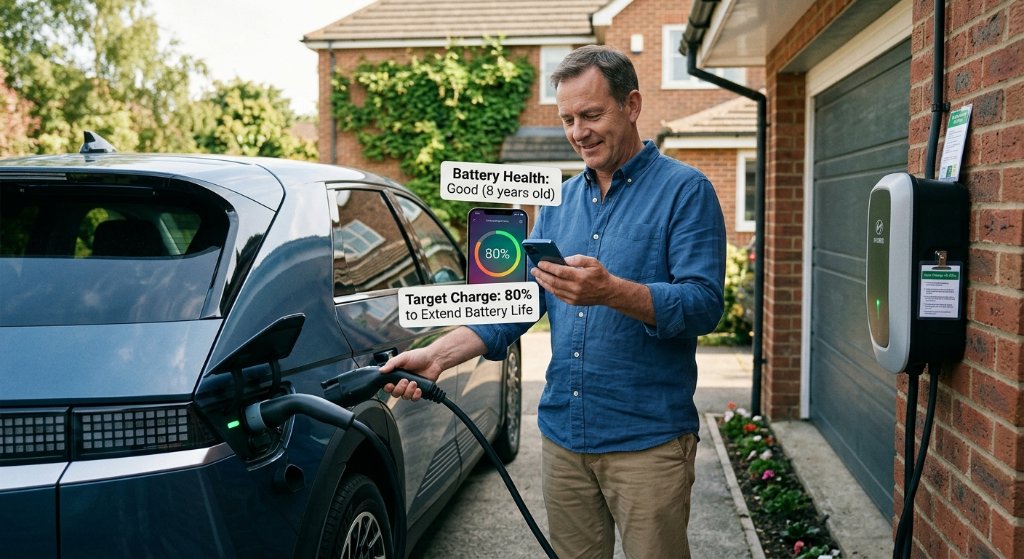
But a massive, real-world study analyzing over 22,700 electric vehicles has officially laid those fears to rest. The comprehensive data proves that modern EV battery packs are incredibly robust, degrading by an average of just 2.3% per year. At this rate, the average EV will retain roughly 81.6% of its original capacity after eight years of daily driving—a lifespan that easily outlasts the average ownership period of a combustion vehicle.
Cruising Past the Eight-Year Mark
Modern battery chemistries, sophisticated thermal management loops, and smart battery management systems (BMS) have completely transformed EV longevity. Unlike the fragile cells of the early 2010s, today's liquid-cooled battery packs—such as Tesla's structural 4680 cells or BYD's ultra-durable LFP Blade batteries—are designed to go the distance.
The data highlights several reassuring trends for prospective buyers:
- Slow and Steady Range Retention: An average degradation rate of 2.3% per year means a vehicle starting with 300 miles of range will still comfortably deliver roughly 245 miles of range after eight years of service.
- The Stability Plateau: Telematics data indicates that battery degradation is not a rapid, linear nose-dive. Most packs experience a minor drop in health during their first year before stabilizing into a highly durable plateau for the rest of their operational life.
- Engine-Beating Longevity: For the vast majority of drivers, the battery pack will easily outlive the structural, suspension, and mechanical elements of the car itself, making the "disposable EV" myth completely obsolete.
The Longevity Playbook: Three Essential EV Life Hacks
While modern engineering does the heavy lifting, drivers are not entirely powerless. The study highlights that operational habits and environmental conditions have a major impact on how well your battery ages. To maximize your pack's lifespan and keep your annual degradation closer to the 1.5% mark, experts recommend three simple, high-impact strategies:
- The 20-80 Rule: Maintain a daily charge level strictly between 20% and 80%. Keeping a lithium-ion battery sitting at a 100% state of charge or drained below 20% for prolonged periods stresses the chemical structure. Keep the full 100% charge reserved strictly for long road trips.
- Beat the Heat: Avoid parking in ambient temperatures exceeding 110°F whenever possible. Extreme heat is the ultimate battery killer, accelerating the parasitic chemical reactions that degrade cells. Whenever you can, opt for shade, garages, or underground parking.
- Grid-Powered Preconditioning: Always heat or cool your car’s cabin while it is still plugged into home grid power. Utilizing grid energy to bring the interior to a comfortable temperature saves precious battery capacity for the road and prevents the battery from pulling heavy currents for climate control right at the start of a drive.
Why This Matters:
This data is a tectonic shift for the entire automotive landscape. For years, the lack of definitive, large-scale, real-world degradation data allowed anti-EV narratives to dominate public perception. Now, we have hard, empirical proof.
- The Used EV Market Wins Big: This is a massive victory for the second-hand EV market. Historically, used EVs suffered from devastating depreciation because secondary buyers feared buying a vehicle with a dying battery. With proof that an eight-year-old EV retains over 80% of its range, finance and insurance companies can confidently underwrite used EV loans, and residual values will finally stabilize.
- Fleet Managers Get Their Answer: For commercial fleet operators, total cost of ownership (TCO) is everything. This study proves that EVs are not ticking financial time bombs. They can be run for hundreds of thousands of miles with minimal maintenance, giving corporate fleets a green light to rapidly accelerate electrification.
- The Losers? Predatory Warranties and Legacy FUD: Third-party warranty companies that prey on EV battery anxiety are about to lose a lucrative market. Furthermore, legacy automotive dealers who relied on the "expensive battery replacement" scare tactic to steer buyers toward high-maintenance ICE vehicles are losing their loudest talking point.
- What’s Next: As automotive giants pivot rapidly from NMC (Nickel Manganese Cobalt) to LFP (Lithium Iron Phosphate) chemistries—which boast even higher charge-cycle limits—expect these degradation numbers to look even better in the coming years. The conversation is officially shifting from if an EV battery will last, to how we will reuse these ultra-durable packs in grid storage once the cars are finally scrapped.
Conclusion:
Ultimately, the transition to electric mobility has always been a game of confidence. This study provides the empirical bedrock that both consumers and industry analysts have been waiting for. Modern EV batteries are not fragile tech toys; they are highly engineered, incredibly resilient powerhouses built for the long haul. Take care of the thermal extremes, charge wisely, and enjoy the ride—your battery is going to be just fine.