The Charging Cure: Why EV Owner Satisfaction Just Hit an All-Time High Despite Economic Headwinds
Despite a turbulent market and the phase-out of lucrative federal tax credits, electric vehicle owners are happier than ever. According to the newly r...
Editorial Team
World Of EV
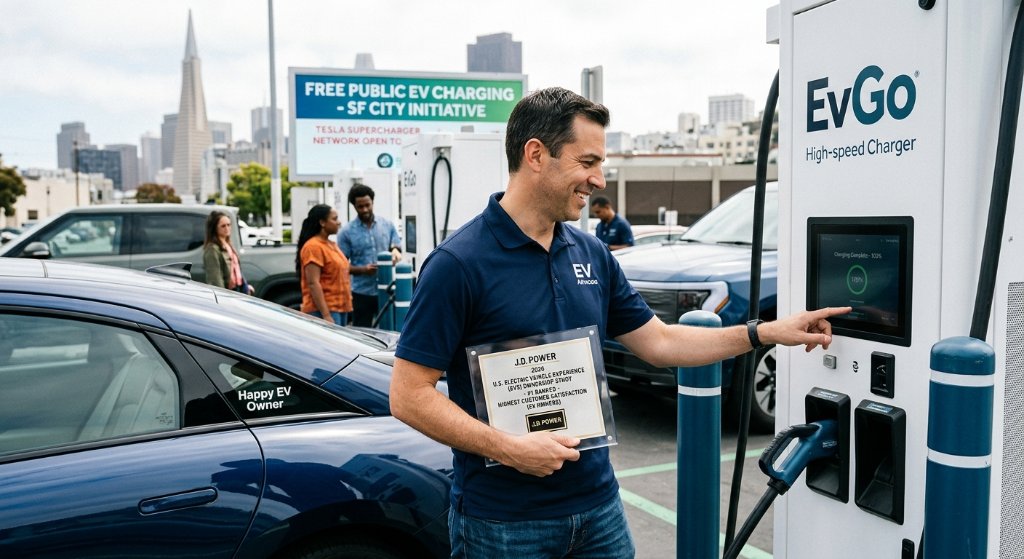
Despite a turbulent market and the phase-out of lucrative federal tax credits, electric vehicle owners are happier than ever. According to the newly released J.D. Power 2026 U.S. Electric Vehicle Experience (EVX) Ownership Study, overall customer satisfaction among battery electric vehicle (BEV) owners has soared to its highest level since the study's inception in 2021 [source]. Strikingly, a whopping 96% of new BEV owners indicated they would purchase or lease another EV for their next vehicle [source].
This surge in enthusiasm comes at a critical juncture. For the past several years, mainstream narratives have pushed a story of "EV fatigue," pointing to fluctuating sales growth, political polarization, and the loss of point-of-sale federal incentives [source]. Yet, the data reveals a starkly different reality on the ground: once drivers make the switch to electric, they almost never look back. The reason for this sudden shift? The industry has finally started fixing its biggest Achilles' heel: public charging [source].
The Supercharger Effect: Solving the Infrastructure Crisis
For the first half of this decade, the non-Tesla EV experience was plagued by a fragmented, highly unreliable public charging infrastructure. CCS-standard chargers were notorious for broken screens, failed software handshakes, and sluggish speeds, leaving legacy EV owners stranded and frustrated. The J.D. Power 2026 study highlights that the primary driver of this year's record-high customer satisfaction is a vastly improved public charging experience, spearheaded by mass-market access to Tesla's Supercharger network [source].
Key factors driving this satisfaction milestone include:
- The NACS Transition: The widespread industry adoption of Tesla's North American Charging Standard (NACS) has finally allowed non-Tesla drivers access to the gold standard of fast-charging infrastructure [source].
- Plug-and-Play Simplicity: Access to Superchargers has eliminated the need for drivers to juggle dozens of fragmented smartphone apps and payment gateways, offering seamless plug-and-charge capability [source].
- Unmatched Reliability: Tesla's network boasts uptime rates consistently above 99%, drastically reducing "charger anxiety" for road-tripping EV owners [source].
Why This Matters:
This study marks a historic turning point in the EV transition, signaling that the "early adopter" phase is officially over. By opening the Supercharger network to rival automakers, Tesla has effectively salvaged the viability of the entire North American EV market [source].
The clear winners here are legacy automakers like Ford, General Motors, and Rivian. Their vehicles suddenly became infinitely more practical the moment they gained access to Tesla's infrastructure [source]. However, the biggest losers are third-party charging networks (such as Electrify America and EVgo) that failed to prioritize reliability in their early rollouts. These networks must now aggressively upgrade their infrastructure or face absolute irrelevance as consumers vote with their charging ports. Ultimately, a 96% loyalty rate signals to Wall Street and legacy automotive boardrooms that the electric transition is not a passing fad—it is an inevitability [source].
Looking Ahead
As we move deeper into 2026, the focus of the EV industry must shift from battery range to infrastructure expansion. With charging anxiety largely addressed by the integration of the Supercharger network, automakers must now focus on bringing down vehicle MSRPs to capture the next wave of cost-conscious buyers. The foundation has been laid, and the road ahead is undeniably electric.