The EV Insurance Penalty Is Finally Cracking: Why Electrified Vehicles Are Getting Much Cheaper to Insure
For years, the total cost of ownership (TCO) for electric vehicles contained a painful, hidden asterisk: auto insurance. Despite saving money on gasol...
Editorial Team
World Of EV
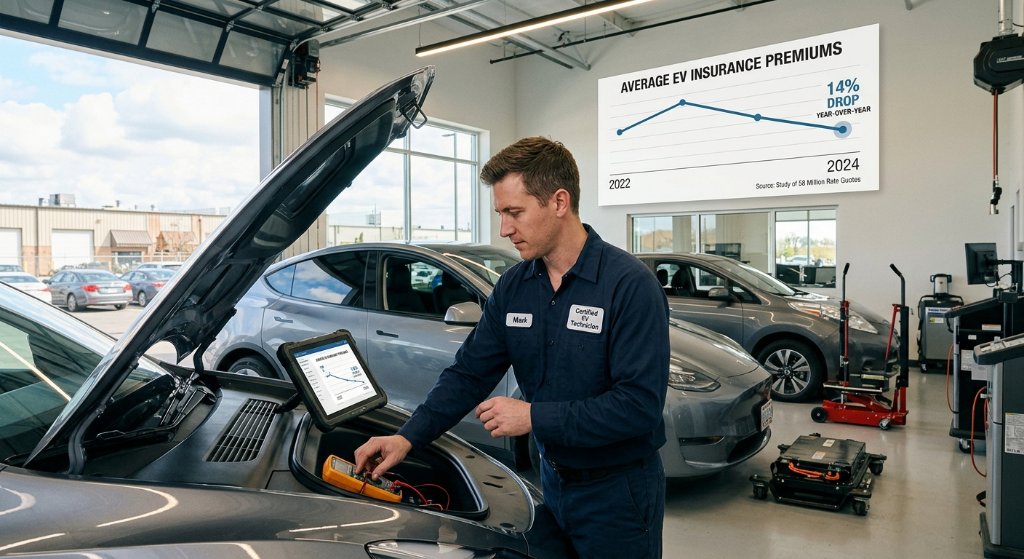
For years, the total cost of ownership (TCO) for electric vehicles contained a painful, hidden asterisk: auto insurance. Despite saving money on gasoline and routine oil changes, early adopters were routinely blindsided by insurance premiums that were up to 49% higher than comparable gas-powered cars. Insurers, terrified of the "unknowns"—like minor fender-benders totaling a structural battery pack—priced their policies with conservative actuarial guesswork.
But a massive new study suggests the infamous "EV insurance tax" is finally breaking. This shift represents a major milestone in the maturity of the electric vehicle market, signaling that the industry is shedding its early-adopter volatility and moving toward mainstream stability.
The Hard Numbers: Electrified Models Lead the Decline
According to a landmark study by Compare.com analyzing over 58 million insurance quotes for 2025 and 2026 model-year vehicles, electric and hybrid vehicles are experiencing substantial year-over-year premium drops. Most notably, six of the top ten largest premium decreases belong to electrified models.
Key highlights from the data reveal how rapidly the landscape is shifting:
- Hyundai Ioniq 5: Leading the charge with a massive 19% year-over-year premium drop, saving owners an average of $704 annually.
- Nissan Leaf: Seeing a steep 18% decrease, translating to $687 back in owners' pockets.
- Broad Savings: The national average annual full-coverage premium for 2025-2026 model years sits at $2,879, with many mainstream EVs now dipping well below this benchmark.
The Three Pillars Driving the Premium Collapse
What changed? Why are insurers suddenly loosening their grip on EV premiums? This downward correction is driven by three structural pillars of the maturing EV ecosystem:
- Maturing Certified Repair Networks: In the early days of EVs, if you dented an electric vehicle, you had to wait months for a specialized, manufacturer-certified technician. Today, mainstream automakers have spent years expanding and certifying local collision centers. With more competition and more qualified technicians, repair cycle times and labor rates are finally normalizing.
- Plummeting Battery Cell Costs: Historically, if an EV battery pack sustained even minor superficial damage in an accident, insurers would total the entire vehicle because replacing a battery cost upwards of $15,000 to $20,000. With battery cell prices dropping significantly (by up to 20% in recent years), replacing damaged components is no longer an automatic write-off.
- Actuarial Certainty Replaces Guesswork: For the past decade, insurers lacked long-term data on how EVs age, how they are driven, or how they crash. To protect their margins, they priced in a "fear tax". Now, with millions of EVs on the road and years of claims history in their databases, carriers can price policies based on actuarial reality rather than worst-case scenario speculation.
Why This Matters:
For the average consumer, this is a monumental shift. The financial math of buying an EV has long been a tricky equation. While federal tax credits and fuel savings looked great on paper, paying an extra $1,000 a year to insure the vehicle effectively erased those savings for many drivers. Lower premiums fundamentally alter the TCO math, shortening the "payback period" of buying an EV and opening the door for budget-conscious buyers who were previously scared off by the insurance penalty.
- Who Wins: Volume EV makers and consumers win big. Brands like Hyundai, Kia, and Nissan—who are targeting mainstream, budget-conscious buyers—can now pitch a much cleaner TCO argument against traditional internal combustion engines (ICE).
- Who Loses: Legacy ICE holdings are the clear losers here. The TCO argument was one of the last defensive bastions for gas-powered vehicles. If EVs cost the same to insure, maintain, and fuel, the financial justification for buying a gas car shrinks significantly.
- The Market Signal: This pricing correction is the clearest signal yet that electric vehicles are transitioning from a risky novelty to a stable, mainstream utility. As repair networks expand and battery costs keep sliding, expect EV insurance premiums to align even closer to their internal combustion rivals, officially ending one of the electric transition's most frustrating barriers.