The EV Owner’s Blueprint: Why DriveCoded’s New Masterclass on Battery Health is Essential Reading
Electric vehicles are frequently marketed under the promise of "zero maintenance." While it is true you can say goodbye to oil changes, spark plugs, a...
Editorial Team
World Of EV
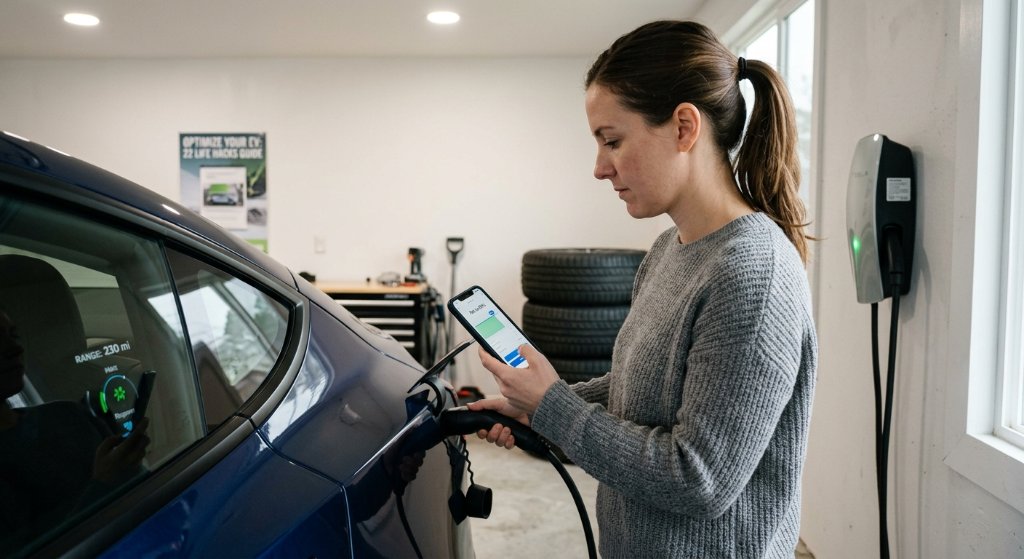
Electric vehicles are frequently marketed under the promise of "zero maintenance." While it is true you can say goodbye to oil changes, spark plugs, and timing belts, managing a massive, chemically sensitive high-voltage battery pack requires an entirely different operational playbook than a traditional combustion engine. In an era where out-of-warranty battery replacements can easily run between $15,000 and $25,000, the stakes for long-term vehicle health and residual value have never been higher.
In response to this steep learning curve, technical outlet DriveCoded has released a comprehensive guide outlining 22 crucial "life hacks" designed to help EV owners maximize daily range and prolong battery life. This is not just a list of generic driving tips; it is an essential blueprint for mastering the thermal and chemical properties of modern electric drivetrains.
The Science of Efficiency: Master the Core Hacks
DriveCoded’s guide cuts through standard owner's manual genericism to offer high-yield, scientifically backed tips. The most critical operational adjustments focus on the delicate balance of thermal dynamics, rolling resistance, and battery chemistry:
- The 80/20 Charging Rule: For vehicles utilizing traditional Lithium-Ion chemistries like NMC (Nickel Manganese Cobalt) or NCA (Nickel Cobalt Aluminum), charging past 80% or discharging below 20% on a daily basis accelerates chemical degradation. Keeping the state-of-charge within this optimal window minimizes mechanical stress inside the cells, safeguarding long-term capacity. (Note: Newer LFP, or Lithium Iron Phosphate, batteries are more resilient to 100% charging, making chemistry identification critical for owners).
- Smart Cold-Weather Preconditioning: Lithium-ion batteries perform poorly in the cold, as low temperatures slow down the chemical reactions needed to transfer energy and accept charges. By activating battery preconditioning while the vehicle is still plugged into a home charger, owners draw grid energy to warm the pack to its peak operating temperature—saving precious battery capacity for driving.
- Maximizing Regenerative Braking: Relying on the vehicle’s electric motors to slow down rather than using friction brakes does more than save your brake pads. Driving with maximum regenerative braking (often called "one-pedal driving") can capture and return up to 30% of kinetic energy back to the battery pack during deceleration, significantly boosting stop-and-go city efficiency.
- Low-Rolling-Resistance Tire Calibration: Highway driving is an aerodynamic and frictional battle. DriveCoded highlights that optimizing tire inflation pressures specifically for low-rolling-resistance can yield major efficiency dividends, offsetting the 15-20% of energy typically lost to tire deformation at high speeds.
Why This Matters:
This guide highlights a glaring industry problem: the steep educational hurdle of EV ownership. While legacy automakers historically built "jump-in-and-drive" cars, EVs demand a level of technical mindfulness that the average consumer is unprepared for.
The Winners: Savvy owners who adopt these habits will see massive financial returns, retaining high state-of-health (SoH) metrics that translate directly into thousands of dollars in resale value. Furthermore, automakers like Tesla, Porsche, and Hyundai (with its highly efficient E-GMP platform) win because they already integrate automated thermal management and charging limiters directly into their infotainment systems, making these "hacks" almost invisible to the user.
The Losers: Uninformed consumers who treat an EV exactly like an ICE vehicle will suffer. They face premature battery degradation, plummeting trade-in values, and a frustrating winter driving experience. Additionally, legacy brands that fail to build intuitive, automated battery-preservation software into their vehicles will face high warranty claims and disgruntled customers who feel deceived by real-world range figures.
This marks a transition point for the industry. We are moving past the early-adopter phase where enthusiasts gladly babied their cars, and into a mainstream era where software must automate these protections. If an OEM requires the customer to manually "hack" their car to get promised longevity, that OEM is failing.
The Road Ahead
DriveCoded’s 22-step guide is an invaluable asset for today’s EV driver, serving as a reminder that peak efficiency is a partnership between human driving habits and vehicle chemistry. However, the future of the EV market relies on automation. As solid-state and advanced LFP battery chemistries scale, the industry must design vehicles that manage these complexities behind the scenes, ensuring the "80/20 rule" becomes a historical footnote rather than a daily chore.