The EV Service Crisis: Why China’s Cutting-Edge New Energy Vehicles Are Leaving Owners Stranded
For the past five years, China’s New Energy Vehicle (NEV) market has felt like an unstoppable juggernaut, dazzled by rapid-fire vehicle launches, hype...
Editorial Team
World Of EV
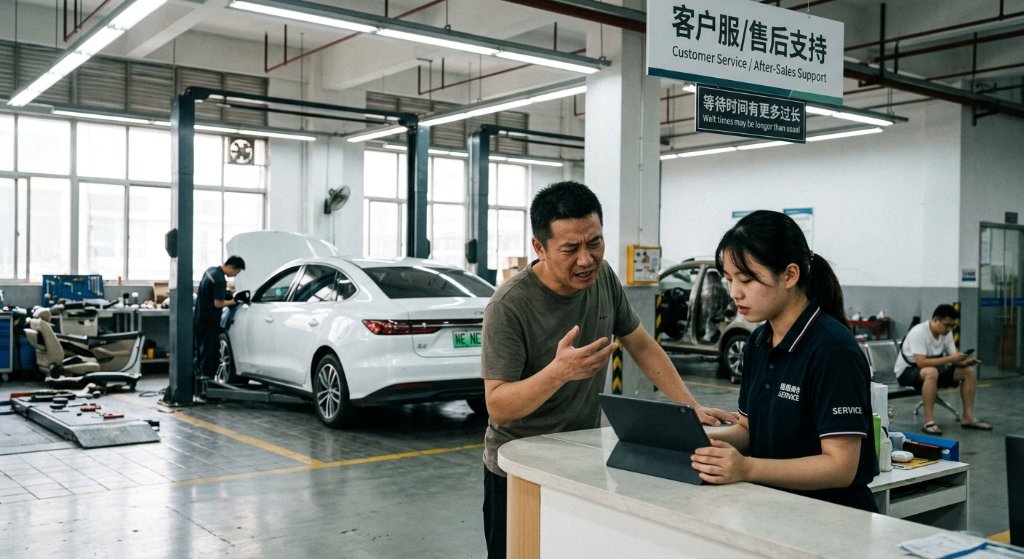
For the past five years, China’s New Energy Vehicle (NEV) market has felt like an unstoppable juggernaut, dazzled by rapid-fire vehicle launches, hyper-competitive pricing, and ultra-futuristic digital cabins. However, the latest data exposes a massive, systemic crack in this high-tech armor. While automakers have perfected the art of the launch event, their physical service and maintenance networks are in a state of freefall.
The J.D. Power 2026 China Brand Reputation Index Net Promoter Score (NPS) delivers a sobering wake-up call for an industry that has long prioritized over-the-air software updates over physical service bays. According to the study, the after-sales service NPS for NEVs plummeted by a staggering 14.9 points compared to 2025. This critical logistical failure has turned 15% of electric vehicle owners into active "detractors"—meaning one out of every seven NEV buyers in China now actively discourages others from purchasing an EV due to agonizingly slow repairs, parts shortages, and subpar service quality.
The Disconnect Between Hardware and Help
As Chinese EV makers have engaged in brutal price wars to capture market share, they have treated post-sale support as a distant afterthought. This has created a massive bottleneck as the millions of EVs sold in recent years begin to age and require physical maintenance. J.D. Power’s data reveals a painful paradox: electric vehicle product quality has never been higher, yet the actual ownership experience is fracturing.
Key metrics from the 2026 study highlight this critical disconnect:
- The Service Chasm Widens: The reputation gap between legacy internal combustion engine (ICE) and NEV after-sales service expanded from 3.9 points in 2025 to 8.2 points in 2026.
- The Elite Few: Out of 59 brands evaluated, only five demonstrated strong, balanced performance across product, sales, and service. Meanwhile, an alarming 92% of brands showed critical deficiencies in at least one area.
- Product Parity, Service Penalty: Driven by advancements in battery technology and digital features, the NEV product NPS surged 9.5 points to 49.2, nearly reaching parity with ICE vehicles (49.8). Yet, these engineering triumphs are being completely undone by lagging maintenance networks.
Winners and Losers in the Reputation Race
While the industry at large is struggling with after-sales growing pains, a select few brands have managed to build a resilient reputation by investing in holistic ownership ecosystems.
- Premium NEV Leaders: NIO and Huawei-backed AITO tied for the highest rank among premium NEV brands with a score of 48.7. NIO’s heavy capital investments in its proprietary battery-swapping network and premium concierge services continue to pay massive brand-equity dividends.
- The Mass-Market Disruptor: Smartphone giant Xiaomi captured the top spot in the mass-market NEV segment with an impressive score of 51.5, followed by Changan's Deepal (48.3) and Geely's Zeekr (48.1). Xiaomi’s seasoned expertise in managing direct-to-consumer digital and physical ecosystems has given it a formidable first-mover advantage.
- Legacy ICE Giants Hold the Line: Porsche (57.3) and Land Rover (56.1) dominated the premium ICE segment, proving that decades of dealer network development and structured parts pipelines still provide a massive buffer against upstart EV competitors.
Why This Matters:
This is a defining 'grow up or blow up' moment for the global electric vehicle transition. For years, the industry narrative has focused almost exclusively on range, battery chemistry, and autonomous driving tech. But as the NEV market transitions from tech-savvy early adopters to mainstream buyers, the rules of engagement are shifting dramatically. Mass-market buyers do not care about cutting-edge lidar or automated parking if their primary vehicle has to sit in a backlot for three weeks waiting for a simple suspension component or a basic electrical diagnostic.
The winners of this shift are legacy automotive groups and consumer-tech powerhouses who already possess the scale, capital, and discipline to manage complex physical logistics. The losers are the wave of cash-strapped, pure-play EV startups that poured every dollar of venture capital into high-profile R&D while completely ignoring the brick-and-mortar reality of dealerships and technician training. This isn't just a domestic issue for China; it serves as a loud warning to Western markets preparing for an influx of Chinese EV exports. Sleek digital dashboards and aggressive pricing are no longer enough to secure long-term brand loyalty. If you cannot service the cars you sell, you will eventually stop selling them.
In conclusion, the 2026 J.D. Power study highlights a critical turning point where the EV revolution must finally reconcile its digital aspirations with real-world infrastructure. Building an exceptional electric car is only half the battle; keeping it running efficiently is the other. As global competition intensifies, automakers who fail to back up their software prowess with robust, reliable, and swift physical repair networks will watch their market share evaporate in the face of customer frustration.