The Golden State Paradox: Why California’s EV Dream is Colliding with Grid Reality
California has long been the undisputed epicenter of the EV revolution, but a recent wave of owner testimonials reveals a stark paradox. As the state ...
Editorial Team
World Of EV
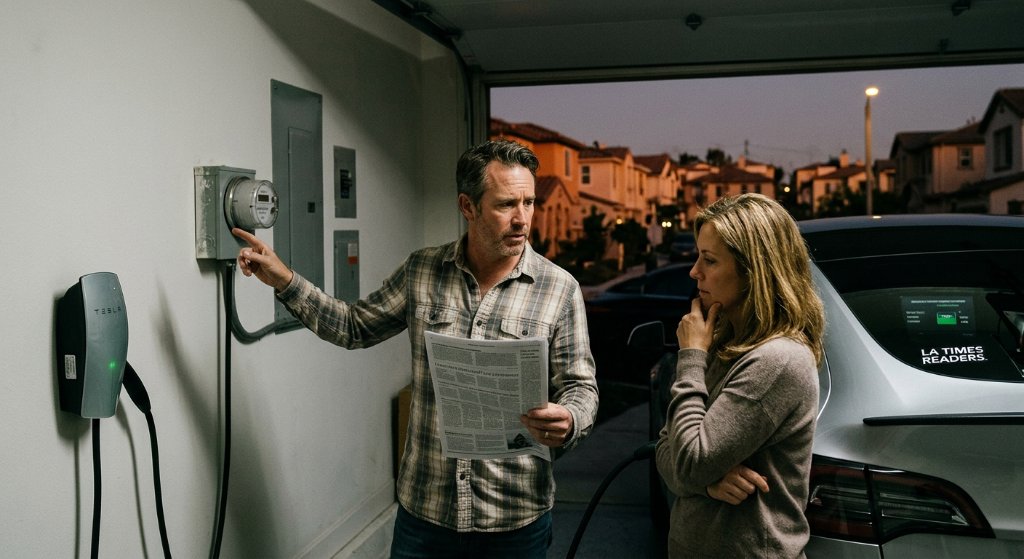
California has long been the undisputed epicenter of the EV revolution, but a recent wave of owner testimonials reveals a stark paradox. As the state pushes toward its aggressive 2035 mandate to phase out the sale of new gas-powered vehicles, early adopters are finding themselves caught in a high-stakes tug-of-war. On one side lie undeniable financial victories—driven by sky-high $6-a-gallon gasoline and instant point-of-sale incentives. On the other is the mounting psychological and logistical toll of an unstable energy grid and a deeply flawed public charging infrastructure.
This tension is more than just a localized hurdle; it represents a critical stress test for the entire nation's transition to electric mobility. While the California Independent System Operator (ISO) reported improved grid stability heading into summer 2026, the psychological scar of rolling blackouts and emergency 'Flex Alerts' from previous years remains a major pain point for everyday drivers. For many, the dream of zero-emission driving is colliding head-on with the cold reality of public utility limits and skyrocketing electricity rates.
The Carrot: $6 Gas and Instant Incentives Drive Mass Appeal
For the majority of owners, the financial math of making the switch is what sealed the deal. In a state where gasoline prices routinely hover near $6 a gallon, the daily operational savings of an EV are immediate and dramatic. When paired with instant point-of-sale state incentives that slash the upfront cost at the dealership, the economic argument becomes almost impossible to ignore.
- Bypassing the Pump: Shifting from $6-a-gallon gasoline to electric propulsion remains the single biggest driver of adoption, saving average commuters thousands of dollars annually.
- Instant Gratification: Point-of-sale rebate programs have replaced the tedious process of waiting months for tax credits, lowering the initial financial barrier to entry.
- Whisper-Quiet, Zero-Friction Ownership: Beyond the wallet, owners highly praise the quiet cabin experience and the near-total elimination of traditional maintenance chores like oil changes, spark plugs, and smog checks.
The Stick: Utility Rate Hikes and Public Charging Roulette
However, the honeymoon phase often ends when owners plug in. Public charging reliability continues to be the Achilles' heel of the non-Tesla EV experience. Moreover, the cost advantage of home charging is being squeezed. PG&E’s average residential rate has climbed to a staggering 34.5¢/kWh as of mid-2026, marking a massive 44% increase over the last six years.
- The Public Charging Mirage: Broken plugs, software handshake failures, and long queues at non-Tesla CCS stations turn road trips and daily top-ups into a source of high anxiety.
- Grid Paranoia: The looming threat of regional rolling blackouts and emergency 'Flex Alerts' forces drivers to constantly strategize when—and if—they can safely draw power.
- The Renters' Tax: Apartment dwellers and those without dedicated home charging are hit hardest, forced to rely on expensive, unreliable public DC fast chargers.
Why This Matters:
The California EV experience is a crystal ball for the rest of the automotive world. What this owner feedback signals is a fundamental shift in the EV challenge: the primary bottleneck is no longer the vehicles themselves, but the infrastructure supporting them.
- The Winners: Tesla and automakers adopting the North American Charging Standard (NACS) are the big winners, maintaining a massive advantage in charger uptime. Similarly, homeowners with solar panels and backup home batteries (like those utilizing GM Energy's new PG&E-backed bidirectional chargers) are winning by bypassing the grid entirely.
- The Losers: Apartment dwellers and the 'garage-less' demographic are losing out, as they are entirely dependent on public networks. Legacy automakers who are launching excellent EVs but failing to ensure a reliable charging experience also stand to lose market share.
- The Market Signal: To hit the 2035 target, policymakers must pivot from merely subsidizing car purchases to aggressively upgrading local distribution grids and mandating public charger reliability standards. Without these structural fixes, mass-market EV adoption will plateau.
Bridging the Divide
Ultimately, California's EV journey proves that building exceptional electric vehicles is only half the battle. To successfully transition the masses, the energy infrastructure must be as seamless and reliable as the cars themselves. As utility companies and automakers begin collaborating on solutions like Vehicle-to-Grid (V2G) technology, the hope is that parked EVs will soon stabilize the grid rather than strain it—finally delivering on the true promise of the electric revolution.