The Great EV Divide: New Data Proves Lifestyle, Not Tech, Dictates Owner Satisfaction
The electric vehicle revolution has reached a critical, polarizing junction. For years, early adopters shrugged off public charging hiccups and winter...
Editorial Team
World Of EV
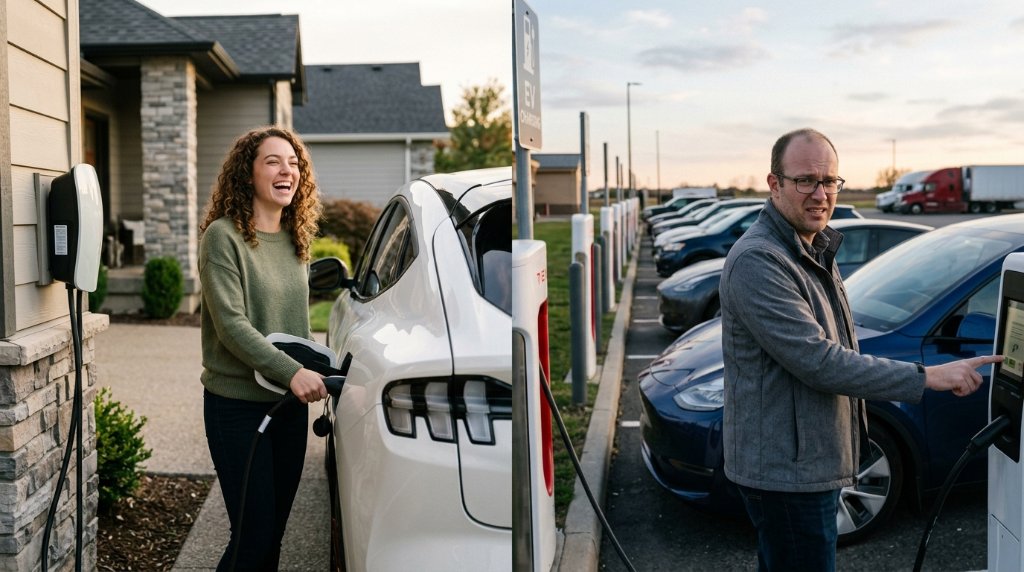
The electric vehicle revolution has reached a critical, polarizing junction. For years, early adopters shrugged off public charging hiccups and winter range fluctuations as the necessary tax of driving the future. But as EVs attempt to cross the chasm into mainstream adoption, a stark divide has emerged. A new study from automotive data company Bumper reveals that the EV ownership experience is no longer a monolith—it is a tale of two vastly different realities, driven not by the vehicles themselves, but by how and where their owners live.
A Deeply Fragmented Customer Experience
The Bumper survey, which analyzed feedback from 642 EV owners, paints a picture of a deeply fractured market. On one side, 32% of respondents reported that their EV exceeded expectations, leaving them wishing they had made the transition much sooner. On the flip side, 28% expressed deep regrets, describing their ownership experience as significantly worse than anticipated. This nearly equal split highlights a hard truth: the EV honeymoon phase is officially over for a massive chunk of buyers, signaling that the industry is failing to properly align vehicle capabilities with consumer lifestyles.
The Infrastructure and Range Reality Gap
What separates the ecstatic EV evangelist from the regretful buyer? The data points directly to lifestyle compatibility and infrastructure reliability, rather than the build quality of the cars themselves. Key findings from the survey illustrate this divide:
- The Garage Divide: Owners with access to dedicated, reliable overnight home charging (Level 2) and predictable daily commutes reported overwhelming satisfaction. For them, an EV is a seamless, cost-effective upgrade that eliminates trips to the gas station.
- The Public Charging Struggle: Conversely, drivers relying on public charging infrastructure and tackling frequent long-distance road trips faced severe frustration. Legacy public networks still struggle with plug uptime and broken dispensers, turning routine stops into logistical nightmares.
- The Range Discrepancy: A staggering 64% of respondents reported getting less real-world range than advertised. This 'range gap' is exacerbated by highway speeds and cold weather degradation, leaving buyers who relied on official EPA estimates feeling misled.
Why This Matters:
This data signals a massive warning flare to both legacy automakers and EV startups. The 'if you build it, they will come' phase of EV marketing is officially dead.
- Who Wins: Automakers who bundle home-charger installations directly into the vehicle purchase price (similar to GM's Qmerit partnership) and those who have successfully transitioned to Tesla’s highly reliable North American Charging Standard (NACS) network.
- Who Loses: Renters, apartment dwellers, and highway commuters who were sold on paper-spec ranges but lack the private infrastructure to support them. Third-party public charging networks that fail to maintain high uptime will also see their customer bases evaporate as the market demands reliability over novelty.
- The Strategic Shift: Automakers can no longer rely on raw horsepower or screen real estate to sell EVs. If dealerships continue to push electric vehicles onto buyers whose living situations cannot support them, they risk creating a toxic wave of anti-EV sentiment that could set the transition back by a decade. Sales teams must pivot to qualifying a buyer's daily charging access before closing an EV sale, or prepare for a flood of sour trade-ins.
In Conclusion
Ultimately, the Bumper survey proves that the vehicle itself is rarely the problem; the environment surrounding it is. Until public infrastructure achieves the ubiquity and plug-and-play reliability of the traditional gas pump, the EV market will remain highly segregated. The future of electric mobility depends not on engineering larger batteries or faster acceleration, but on bridging the gap between those who can charge at home and those who are left in the dark.