The Great Leap: Why the MG4 EV Urban is Converting the Toughest ICE Holdouts
When Karryn Warren's 20-year-old gasoline-powered Suzuki Swift broke down on the highway, it wasn't just the end of a reliable old hatchback—it was th...
Editorial Team
World Of EV
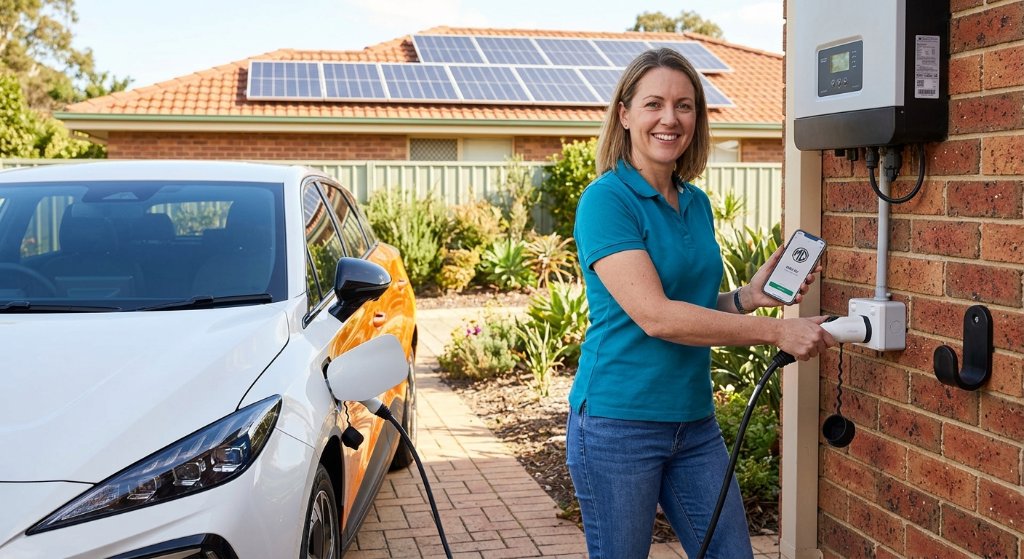
When Karryn Warren's 20-year-old gasoline-powered Suzuki Swift broke down on the highway, it wasn't just the end of a reliable old hatchback—it was the catalyst for a radical leap into the electric age. Warren's rapid transition from a purely analog, decades-old internal combustion engine (ICE) vehicle to a brand-new MG4 EV Urban highlights a growing trend: the democratization of electric vehicles is no longer driven solely by tech-forward early adopters. Instead, practical utility, massive operational savings, and seamless tech integration are winning over everyday drivers.
For years, legacy automakers treated the transition from analog to digital motoring as a luxury, reserving advanced connectivity and software for premium models. However, SAIC-owned MG Motor has systematically dismantled this dynamic. By packaging high-tech, software-defined vehicle features into a highly competitive, budget-friendly package, the MG4 EV Urban is aggressively undercutting rivals like the BYD Dolphin and the Volkswagen ID.3, proving that going electric no longer requires paying a premium price tag.
The Frictionless Leap from Analog to Digital
Warren’s first-hand impressions of her MG4 EV Urban expose exactly how much value budget-conscious buyers get from modern EV architecture. The leap from a 2004 Suzuki Swift to a 2026 EV is astronomical, yet the transition is remarkably intuitive.
Key user-friendly features redefining the daily commute include:
- Seamless Digital Sharing: Through the MG companion app, owners can instantly share digital keys with family members, entirely eliminating the physical key handoff.
- Pre-conditioned Cabin Comfort: The ability to pre-cool or pre-heat the cabin via smartphone prior to driving ensures comfort on extreme weather days before even stepping into the vehicle.
- Low-Cost Solar Charging: By plugging into a standard domestic wall socket (often dubbed "granny charging" or Level 1) during peak daylight hours, owners can charge directly from their rooftop solar panels, effectively driving on 100% free, self-generated energy.
Affordable Engineering: Under the Hood of the MG4 Urban
While premium EVs rely on heavy, expensive nickel-manganese-cobalt (NMC) battery packs, the MG4 EV Urban utilizes a highly durable, 43 kWh Lithium Iron Phosphate (LFP) battery.
- Battery Chemistry: LFP technology allows owners to charge to 100% daily without the rapid battery degradation typical of standard lithium-ion packs.
- Real-World Range: Delivering an impressive 316 km (approx. 201 miles) of WLTP-certified range, the Urban comfortably meets the needs of daily city commuters.
- Smart Power Utility: The inclusion of Vehicle-to-Load (V2L) capability allows the vehicle to act as a giant mobile power bank, pushing electricity back out to power external appliances.
Why This Matters:
The story of a driver swapping a 20-year-old petrol hatchback for a Chinese-built electric hatchback is a microcosm of a massive, structural shift in the global automotive landscape.
- The Market Signal: For the past decade, EVs were marketed as a status symbol. Today, they are transitioning into highly efficient, utilitarian appliances. This case study proves that consumers do not need expensive Level 2 home wallboxes or confusing public charging infrastructure to live with an EV; a simple wall socket and rooftop solar panels can easily sustain daily driving habits.
- Who Wins: Budget-conscious consumers and aggressive Chinese automakers like MG and BYD. They have successfully commercialized low-cost LFP batteries and robust app-connected ecosystems, giving them an iron grip on the entry-level market.
- Who Loses: Western legacy OEMs (like Volkswagen, Stellantis, and Ford) who are still struggling to build affordable, ground-up EV platforms that can compete on price and digital integration. By yielding the entry-level segment, they risk losing a generation of buyers who are forced to transition by necessity when their old ICE vehicles break down.
Conclusion
As legacy petrol vehicles reach the end of their lifespans, the path of least resistance is no longer another internal combustion engine—it is the accessible, high-tech EV. The MG4 EV Urban proves that entry-level electric cars are no longer compromised, stripped-down penalty boxes. Instead, they are highly advanced, hyper-efficient machines that make the leap from the analog past to the electric future not just painless, but profoundly desirable.