The Hammer Falls: Tesla Disables Unauthorized FSD, Citing Safety and Compliance
Tesla has launched a significant enforcement campaign, remotely disabling Full Self-Driving (FSD) capabilities on vehicles where owners utilized third...
Editorial Team
World Of EV
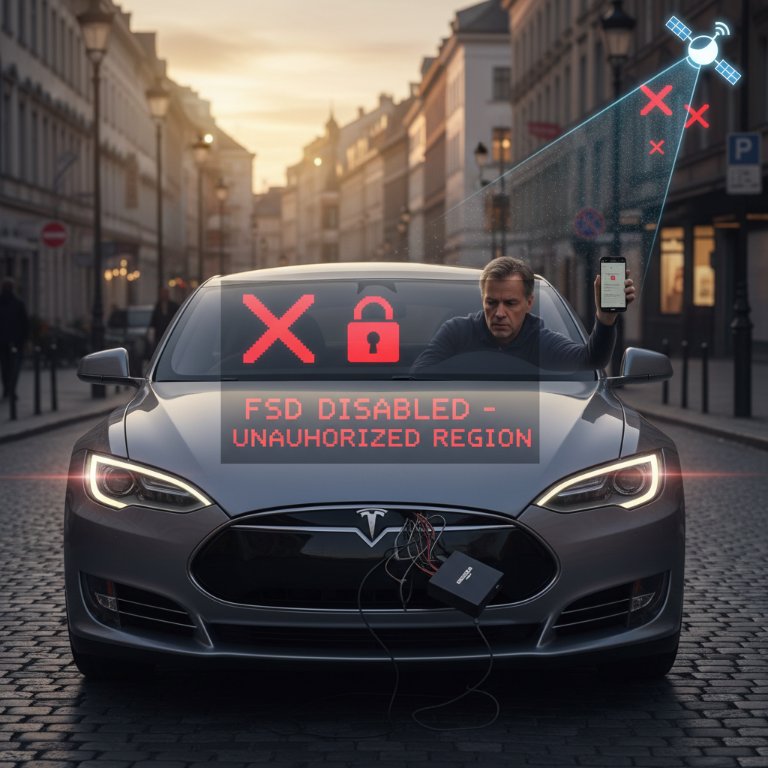
Tesla has launched a significant enforcement campaign, remotely disabling Full Self-Driving (FSD) capabilities on vehicles where owners utilized third-party hardware hacks to activate the software in unsupported regions. This aggressive move aims to uphold regulatory compliance and ensure safety, as FSD (Supervised) is not designed to adhere to local traffic laws and signals outside of approved markets.
For years, Tesla has been at the forefront of autonomous driving technology, with its FSD suite representing the pinnacle of its efforts. However, the global rollout of FSD has been a complex undertaking, constantly navigating a patchwork of international regulations, varied road infrastructures, and differing legal frameworks. Unlike traditional automotive features, FSD’s sophisticated AI requires deep localization to function safely and legally, meaning its capabilities are often geo-restricted until official approval is secured in each market.
Tesla's Uncompromising Enforcement
Tesla's enforcement campaign involves remotely disabling FSD functionality on affected vehicles. In some cases, the company is permanently revoking access, even for owners who paid for the feature. This action stems from the detection of third-party hardware, often inexpensive USB-style modules, plugged into the vehicle's Controller Area Network (CAN) bus. These devices intercept signals to bypass geographical locks and trick the car into believing FSD is authorized, enabling its use in countries across Europe, China, Japan, South Korea, and the UK where it remains unapproved.
The company has also begun sending in-car notifications and emails to owners, warning that unauthorized modifications violate terms of service, compromise vehicle safety systems, and expose cars to cybersecurity risks. Tesla emphasizes that FSD (Supervised) was never designed to respect the unique traffic laws, signals, road markings, or driving norms prevalent in these unsupported markets. Running such unadapted software introduces a significant safety risk, even with a human supervisor behind the wheel. Furthermore, in regions like South Korea, authorities have explicitly warned that activating FSD without authorization is illegal and can lead to severe penalties, including fines and imprisonment, highlighting the serious legal ramifications for owners.
Why This Matters:
This aggressive crackdown from Tesla holds significant implications for owners, the wider automotive industry, and the future of autonomous technology.
- For Tesla: This move reinforces Tesla's commitment to regulatory compliance and safety, protecting its brand reputation and mitigating potential liability in regions where FSD is not yet officially sanctioned. It demonstrates the company's firm control over its software features and its willingness to act decisively to prevent unauthorized use. This is a crucial step for Tesla as it continues its push for global FSD expansion, signaling a mature approach to navigating complex regulatory landscapes.
- For Owners: Owners who used these hacks now face not only the loss of FSD functionality, often despite having paid for it, but also potential warranty voidance and even legal consequences in some territories. This action underscores the reality that purchasing an FSD package does not equate to unrestricted access across all geographies or an immunity from Tesla's oversight of its proprietary software. The lack of prior approval from owners before disabling features has also sparked discontent, emphasizing Tesla's server-side control over vehicle functionalities.
- For the Industry: Tesla's enforcement sets a precedent for how automakers will manage and protect their advanced software features, especially in the context of autonomous driving. It highlights the ongoing struggle between vehicle ownership rights and the intellectual property and safety responsibilities of manufacturers. This campaign also brings into sharper focus the disparate global regulatory environment for autonomous vehicles, emphasizing that a truly 'full self-driving' future requires a cohesive international legal framework.
Ultimately, this is not a 'do-or-die' moment for Tesla, but rather a critical maturation of its FSD strategy. It signals to the market that while Tesla is pushing the boundaries of autonomy, it will do so within the confines of established legal and safety parameters, even if it means alienating a segment of its most enthusiastic users.
Tesla's decisive action against unauthorized FSD activation underscores the significant challenges and responsibilities inherent in deploying advanced autonomous systems globally. As FSD continues its slow, regulated march towards broader availability, this enforcement serves as a potent reminder that software capabilities remain firmly under the control of the manufacturer, prioritizing safety and compliance above all else.