The Margin Paradox: Why Tesla’s Massive Q2 Delivery Beat Triggered a 7.5% Sell-Off
Tesla’s Q2 delivery numbers did not just beat Wall Street’s estimates—they vaporized them. Handing over 480,126 vehicles globally, the EV giant oblite...
Editorial Team
World Of EV
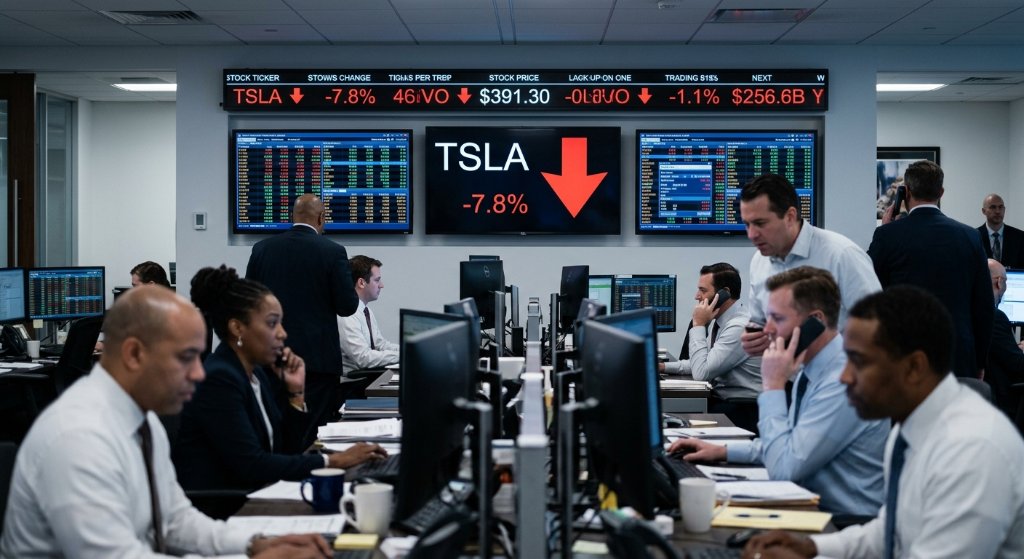
Tesla’s Q2 delivery numbers did not just beat Wall Street’s estimates—they vaporized them. Handing over 480,126 vehicles globally, the EV giant obliterated consensus forecasts by nearly 20%, staging an emphatic operational comeback after a challenging period of stagnant volume and a mounting inventory overhang from earlier in the year. Yet, in a move that left casual onlookers scratching their heads, Tesla (TSLA) stock plummeted by over 7.5% on July 2, closing at $391.30.
This paradox highlights a critical inflection point for the EV pioneer. For years, investors judged Tesla almost purely on its ability to scale production and deliveries. Today, however, as global competition intensifies and legacy automakers retreat into pricing wars, the market has rewritten its rulebook. The primary metric of concern is no longer how many vehicles leave the factory gates, but how much profit is left over once they do.
Inside the Q2 Surge: Clearing the Overhang
Tesla's impressive Q2 performance was propelled by highly focused inventory clearance and robust demand for its core lineup. Rather than letting unsold vehicles accumulate as they did in the first quarter of the year—where a massive mismatch left over 50,000 EVs sitting in storage lots—Tesla successfully drew down its backlog.
- Core Volume Drivers: The Model 3 and Model Y continued to do the heavy lifting, accounting for 442,936 vehicles produced and 467,762 delivered.
- Other Models & Cybertruck: Niche offerings—including Model S, Model X, Cybertruck, and the Semi—contributed 8,822 units to production and 12,364 to deliveries.
- Inventory Drawdown: By delivering 28,368 more vehicles than it produced (480,126 deliveries vs. 451,758 production), Tesla liquidated a significant portion of its costly Q1 backlog.
- Energy Storage Juggernaut: In tandem with automotive recovery, Tesla deployed a record-breaking 13.5 GWh of energy storage products, demonstrating that its Megapack division is scaling rapidly.
The Anatomy of a "Sell the News" Sell-Off
Why did record-shattering deliveries trigger a stock slide? Financial analysts point to a classic market mechanism: "buy the rumor, sell the news." In the trading days leading up to the July 2 announcement, whisper numbers of a massive beat pushed TSLA stock up by a staggering 12%. Once those expectations were realized, institutional traders quickly locked in their profits.
Furthermore, investors are intensely focused on the cost of this volume. To achieve these massive delivery numbers, Tesla had to deploy aggressive promotional financing terms, low-interest APR incentives, and direct regional discounts globally. While these tactics successfully lured buyers back into showrooms, they raise major red flags regarding average selling prices (ASPs) and automotive gross margins ahead of the full Q2 earnings report on July 22.
Why This Matters:
This market reaction signals a fundamental shift in how Wall Street values Tesla. The era of giving the company a pass on profitability in exchange for rapid, unchecked volume growth is officially over.
- The Margin vs. Volume Dilemma: Tesla proved it can still generate massive demand, but the looming question is whether it sacrificed its coveted automotive gross margins to do so. If margins drop below critical thresholds when full earnings drop on July 22, the delivery beat will be viewed as a costly, unsustainable victory.
- Winners and Losers: Retail buyers looking for aggressive finance deals are the immediate winners. On the losing side are short-term growth investors who expected the volume beat to translate into a straight-line stock rally.
- The Long-Term Signal: To maintain its premium valuation, Tesla can no longer rely solely on selling cars. It must successfully monetize its broader ecosystem, particularly its FSD (Full Self-Driving) software, robotaxis, and the booming energy storage division. If the energy business (with its 13.5 GWh deployment) can offset declining automotive margins, Tesla remains in a strong position. If not, the pressure on Elon Musk to deliver a massive AI and autonomy breakthrough on the product side will become immense.
Conclusion
Tesla’s record-breaking Q2 deliveries prove the brand still has unparalleled muscle in the global EV market. However, the 7.5% stock drop serves as a stark warning: Wall Street is no longer measuring Tesla's health solely by its odometer. Operationally, the company is back on track, but the true financial toll of this comeback won't be known until July 22. Investors must brace themselves; the rules of the EV game have changed, and profit margins are now the ultimate scoreboard.