The Myth of "Zero Maintenance": Why Your EV Still Demands Active Upkeep
For years, automotive manufacturers and EV evangelists pushed a seductive narrative: buy an electric vehicle and say goodbye to maintenance. With no s...
Editorial Team
World Of EV
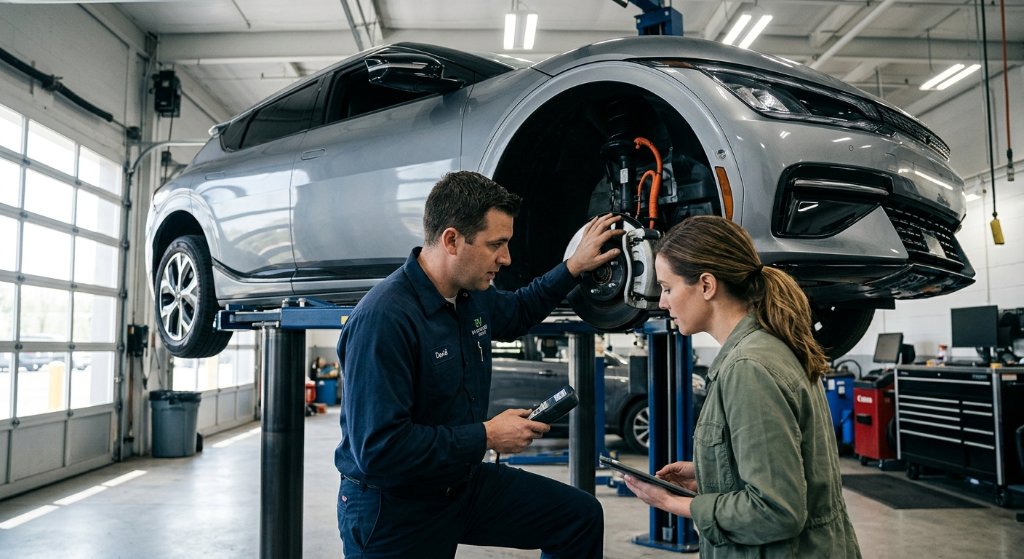
For years, automotive manufacturers and EV evangelists pushed a seductive narrative: buy an electric vehicle and say goodbye to maintenance. With no spark plugs, no motor oil, and a fraction of the moving parts of an internal combustion engine (ICE) vehicle, early adopters expected their ownership costs to plummet to near-zero. But as the global EV fleet ages, a stark reality is setting in. EVs are not maintenance-free; rather, they require a completely different, highly specialized form of active stewardship.
A recent detailed guide from Jalopnik underscores this shifting paradigm. While you may never need another oil change, neglecting your EV’s battery management, braking system, and thermal filtration can result in severe range degradation, expensive mechanical failures, and compromised safety. For prospective buyers and current owners alike, understanding these requirements is the key to protecting their multi-thousand-dollar investments.
The Battery Health Equation: Managing the 20-80% Zone
The high-voltage battery pack is the heart and single most expensive component of an EV. Unlike an ICE fuel tank, which remains indifferent to whether it is full or empty, an EV's lithium-ion battery is a sensitive chemical ecosystem. Managing its charge cycles is critical to preventing premature degradation.
- The 20% to 80% Rule: Keeping the state of charge (SoC) between 20% and 80% for daily driving minimizes stress on the battery's anodes and cathodes.
- The LFP Exception: While modern Lithium Iron Phosphate (LFP) batteries (increasingly found in standard-range EVs like entry-level Teslas) can tolerate regular 100% charging, traditional Nickel Manganese Cobalt (NMC) packs will degrade rapidly if kept at maximum voltage.
- Thermal and Charge Stress: Relying solely on DC fast chargers generates intense heat, accelerating chemical wear. Smart charging scheduling and pre-conditioning are essential habits for the modern EV owner.
The Paradox of Regenerative Braking
One of the greatest engineering feats of the modern EV is regenerative braking, which uses the electric motor as a generator to slow the vehicle and recapture kinetic energy. However, this feature introduces a mechanical paradox: because the friction brakes are rarely used, they are highly susceptible to neglect.
- Rust and Corrosion: In wet or salted winter environments, moisture easily accumulates on brake rotors. Without the friction heat of normal braking to burn it off, rotors rust and brake calipers can seize.
- Fluid Degradation: Brake fluid is hygroscopic—it naturally absorbs moisture from the air over time. This happens regardless of how often you press the brake pedal. If not flushed regularly (typically every two years), water in the lines can cause internal corrosion and compromise braking pressure during an emergency stop.
Thermal Efficiency and the HEPA Filter Bottleneck
Modern EVs—particularly those equipped with advanced heat pumps—rely on sophisticated HVAC systems to keep both the passenger cabin and the battery pack at optimal operating temperatures.
- The Air Filtration Link: Swapping out cabin air and HEPA filters is often treated as a minor cosmetic service. In an EV, a clogged filter restricts crucial airflow.
- Range Impact: When airflow is restricted, the heat pump and thermal management system must work significantly harder to regulate temperatures. This extra power draw comes directly from the high-voltage battery, leading to a noticeable drop in driving range and putting premature wear on expensive thermal hardware.
Why This Matters:
This shift in maintenance awareness represents a critical inflection point for the EV market. For years, legacy automakers and startups alike used the "reduced maintenance" card to justify higher initial vehicle MSRPs. Now, as early-generation EVs enter the used market, the lack of standardized maintenance records is hurting resale values.
The winners in this new landscape will be proactive owners who preserve their battery health and independent EV repair shops that can service specialized components like high-voltage systems and heat pumps. The losers will be negligent owners facing astronomical out-of-warranty battery replacements, and OEMs who oversold the "maintenance-free" dream and may now face warranty disputes over degraded packs. Moving forward, a vehicle's certified battery health report and documented thermal service history will become the new "Carfax gold standard" in the used car market.
Ultimately, while EVs bypass the greasy, mechanical headaches of the ICE era, they swap them for precise chemical and thermal care. To protect your vehicle's range, safety, and longevity, active upkeep isn't just recommended—it's mandatory.