The Point of No Return: Why EV Owner Loyalty Just Shattered Records as ICE Defection Rates Collapse to 1%
After years of media skeptics warning of widespread "EV buyer's remorse" and predicting a mass migration back to gas stations, real-world data has del...
Editorial Team
World Of EV
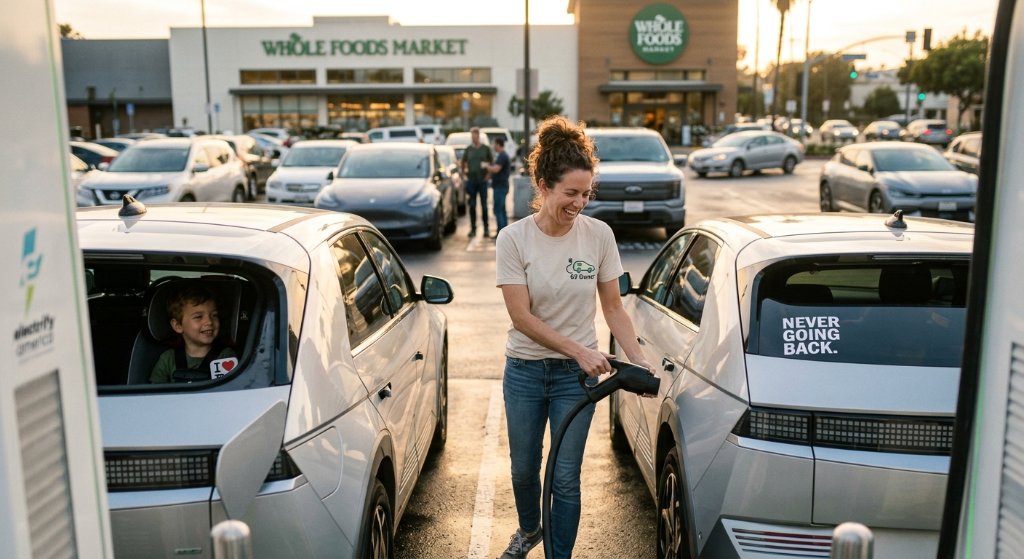
After years of media skeptics warning of widespread "EV buyer's remorse" and predicting a mass migration back to gas stations, real-world data has delivered a final, decisive verdict: once drivers go electric, they burn the bridge behind them.
A newly released study by automotive retail software giant CDK Global, which surveyed 552 electric vehicle owners in the United States, highlights an unprecedented shift in consumer sentiment. In 2025, the automotive industry was rocked by surveys suggesting that up to 21% of EV drivers were actively considering a return to internal combustion engine (ICE) vehicles, fueled by early-adopter friction and public charging headaches. Fast forward to 2026, and that defection rate has utterly collapsed. Today, only a microscopic 1% of EV owners are looking to go back to gas, signaling a permanent, one-way psychological shift in the American passenger vehicle market.
The Data: A One-Way Street to Electrification
The CDK Global study highlights that the initial hurdles of adapting to electric propulsion have given way to massive long-term satisfaction. Despite persistent frustrations around public charging infrastructure, overall consumer loyalty and purchase confidence have reached record highs. Here is how the key metrics break down:
- The 1% Defection Rate: The share of EV drivers considering switching back to ICE vehicles plummeted from 21% in 2025 to a mere 1% in 2026.
- Point of No Return: An overwhelming 94% of current EV owners state they will absolutely never buy a gasoline or diesel vehicle again.
- Strong Rebuy Intent: An impressive 90% of all surveyed owners plan to purchase another EV for their next vehicle—a number that surges to 94% when looking at buyers outside the baby boomer demographic.
- The Financial Dividend: 87% of drivers report saving substantial money by driving an EV, up significantly from 77% last year, proving that electricity remains a highly compelling financial play.
The Charging Paradox: Frustrated but Unshaken
What makes these high satisfaction numbers so remarkable is that they coexist with a highly imperfect public charging ecosystem. EV drivers are not wearing rose-colored glasses; the study confirms that frustrations regarding the availability, speed, and reliability of public chargers remain persistent. Critics have long used these infrastructure struggles as evidence of an impending EV market collapse, yet consumer behavior tells a completely different story.
So why the record-high loyalty? The answer lies in the shift in daily driving patterns. The vast majority of EV owners rely on cheap, convenient home charging for their daily commutes, meaning they rarely interact with public infrastructure. When they do travel long distances, the wholesale industry transition to the North American Charging Standard (NACS)—which granted non-Tesla vehicles access to Tesla's highly reliable Supercharger network starting in late 2024 and 2025—has significantly reduced real-world highway anxiety. For most drivers, the instant torque, whisper-quiet cabins, and lack of routine maintenance far outweigh the occasional public charging headache.
Why This Matters:
- For the Consumer: This news is the ultimate confidence booster. If you have been hesitating to pull the trigger on an EV due to horror stories of buyer regret, this data proves those stories are statistical anomalies. Real owners are overwhelmingly happy with their switch.
- For Legacy Automakers: This is a massive wake-up call. Brands that have hedged their bets by delaying dedicated EV platforms in favor of hybrid-heavy line-ups (such as Toyota) risk losing access to a rapidly growing, fiercely loyal customer base. Once a buyer transitions to a full battery electric vehicle (BEV), they are effectively removed from the ICE and hybrid sales funnel forever.
- For EV-First Manufacturers and Prepared Legacies: This loyalty is a goldmine. Manufacturers that committed early to dedicated EV architectures—such as Hyundai with its E-GMP platform (powering the Ioniq 5 and 6) or General Motors with its Ultium platform—are poised to capture highly lucrative repeat business. The battle now shifts from convincing buyers that EVs work, to competing on which EV offers the best software, range, and cabin experience.
- For Automotive Dealerships: This shift demands an urgent overhaul of the service bay. With 94% of EV buyers refusing to return to gas, the high-margin revenue from oil changes, spark plugs, and exhaust repairs will evaporate. Dealers must aggressively pivot toward software updates, tire programs, and specialized EV battery servicing to survive.
The Verdict
The CDK Global study proves that the EV transition is no longer a speculative trend—it is an established consumer reality. While public charging infrastructure still requires major government and private investment to mature, the vehicle technology itself has already won the hearts and minds of the American driver. The ICE age is drawing to a close, not because of regulatory mandates, but because consumers simply do not want to go back.