The 'Rock' in the Cabin: Tesla Drivers in China Expose a Critical Flaw in ADAS Monitoring
A disturbing trend has emerged from China, revealing that some Tesla drivers are actively circumventing the vehicle's in-cabin driver-monitoring syste...
Editorial Team
World Of EV
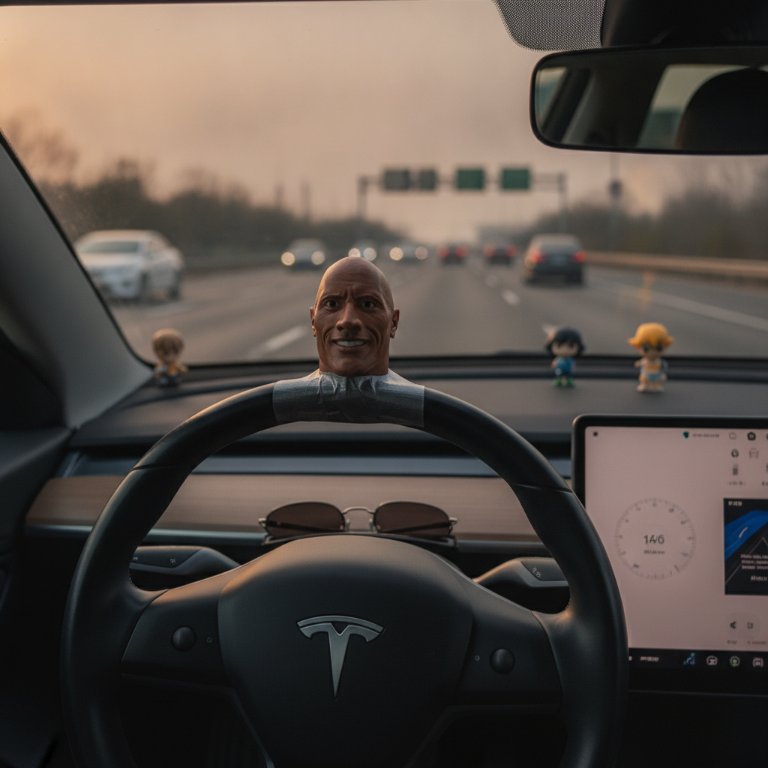
A disturbing trend has emerged from China, revealing that some Tesla drivers are actively circumventing the vehicle's in-cabin driver-monitoring system.
Reports indicate drivers are employing surprisingly simple, yet effective, visual tricks – ranging from miniature plastic heads resembling celebrities like Dwayne 'The Rock' Johnson to blinking lenticular cards and even small screens playing looping videos of faces – to deceive the internal camera. This allows them to use Autopilot features without maintaining the crucial attention mandated by Level 2 Advanced Driver-Assistance Systems (ADAS).
This isn't merely a quirky anecdote; it highlights a profound challenge at the intersection of advanced automotive technology and human behavior. For years, the industry has grappled with the 'human in the loop' problem, particularly as ADAS capabilities expand. While systems like Tesla's Autopilot offer significant convenience, they remain supervisory, requiring drivers to be ready to take control at any moment. The effectiveness of these systems hinges entirely on robust driver monitoring, a principle that this latest development severely undermines.
The Deception Unveiled: A Thriving Market for Misdirection
The ingenuity of these workarounds is unsettling. Following Tesla's implementation of stricter distracted-driver monitoring via its cabin camera in China last year, a cottage industry of defeat devices rapidly materialized on Chinese e-commerce platforms like Taobao and Douyin.
- Plastic Figurines: The most popular solution involves small plastic heads, often depicting celebrities, priced between $10 and $40. These are strategically mounted near the rearview mirror or on the windshield to block the actual driver's face from the in-cabin camera, creating the illusion of an attentive occupant.
- Visual Tricks: Drivers also utilize static photographs of faces or lenticular cards that create the appearance of blinking eyes when viewed from different angles.
- Advanced Displays: More sophisticated gadgets include small display screens that play looping videos of blinking and moving faces, specifically designed to mimic the behavioral cues Tesla's AI monitoring system seeks to verify driver attentiveness.
These devices effectively bypass Tesla's system, allowing drivers to engage Autopilot for extended periods without triggering attention warnings, often while engaging in other activities. This is not an isolated incident; Tesla drivers in other markets have previously used steering-wheel weights and other methods to bypass attention warnings, showcasing a global pattern of misuse.
The Critical Safety Implications
The implications for road safety are dire. Autopilot, and indeed any Level 2 ADAS, is an assistance system, not a substitute for human driving. The in-cabin camera's role is precisely to ensure that the driver remains engaged and ready to intervene. By fooling this system, drivers are essentially transforming a supervised assistance feature into an unsupervised, potentially dangerous, semi-autonomous mode. This greatly increases the risk of accidents, especially in situations where the system might encounter its limitations or unexpected road conditions.
Tesla has leaned heavily on cabin-camera monitoring in recent years to strengthen driver engagement checks, especially after regulatory scrutiny over earlier, less robust methods like steering-wheel torque. However, this new wave of circumvention devices demonstrates that even camera-based systems, if not sufficiently sophisticated or reinforced with other measures, can be fooled.
Why This Matters:
This escalating trend in China is a stark reminder of the inherent tension in developing and deploying advanced driver-assistance systems. It’s not a 'do-or-die' moment for Tesla's core technology, but it is a critical juncture for public trust in ADAS and for regulatory bodies worldwide. This situation underscores several key points:
- The Fragility of 'Supervised' Autonomy: The core lesson here is that Level 2 automation still operates on a delicate social contract between the vehicle's software, its sensors, the manufacturer's branding, and, critically, human behavior. When drivers actively seek to break this contract, even the most advanced systems become vulnerable.
- Reputational Damage for Tesla: While these are driver-initiated actions, the widespread availability and reported effectiveness of these bypass devices cast a shadow on Tesla's driver-monitoring capabilities. The public, and regulators, will question the robustness of a system that can be fooled by a $10 plastic head. This could impact Tesla’s reputation for safety and innovation, particularly in a highly competitive market like China where local EV makers are rapidly advancing.
- A Call for Industry-Wide Scrutiny: This isn't solely a 'Tesla problem'; it's an ADAS problem. It forces the entire automotive industry to re-evaluate the effectiveness and resilience of their driver-monitoring systems. While some manufacturers like GM with Super Cruise or Ford with BlueCruise utilize infrared eye-tracking, which is generally considered more robust against static visual props, this incident pushes for even greater sophistication and redundancy in monitoring technology.
- Regulatory Pressure Intensifies: Regulators globally, who have already expressed concerns about driver engagement, will undoubtedly take note. The December 2023 recall of over 2 million Tesla vehicles in the U.S. due to inadequate Autopilot driver-monitoring controls serves as a precedent. This Chinese phenomenon could spur further regulatory mandates for more robust, multi-modal driver monitoring to prevent foreseeable misuse. The future of ADAS deployment and acceptance hinges on convincing the public and authorities that these systems cannot be easily tricked.
- Redefining Driver Responsibility: This situation highlights a persistent user education gap. Despite clear warnings, some drivers prioritize convenience over safety. The industry and regulators must collaborate to better educate consumers about the limitations of ADAS and the absolute necessity of driver vigilance.
Looking Ahead: A Call for Robustness and Responsibility
The 'Rock' in the Tesla cabin is more than a silly prop; it's a profound challenge to the safe evolution of autonomous driving. While Tesla undoubtedly possesses the software expertise to address such exploits, the proliferation of these bypass methods underscores that relying solely on a camera's 'face presence check' may be insufficient. The path forward demands continuous innovation in driver monitoring – potentially integrating multiple sensor types, more sophisticated AI algorithms that analyze behavioral cues beyond mere visual presence, and clearer communication about driver responsibility. The future of advanced driver-assistance systems, and ultimately fully autonomous vehicles, depends on closing this critical loophole and ensuring that human ingenuity doesn't outpace engineered safety.