The Silent EV Hazard: Why Your First-Gen Home Level 2 Charger Is Reaching Its Expiration Date
For the past decade, the conversations around electric vehicle longevity have been obsessively focused on one metric: battery degradation. EV buyers p...
Editorial Team
World Of EV
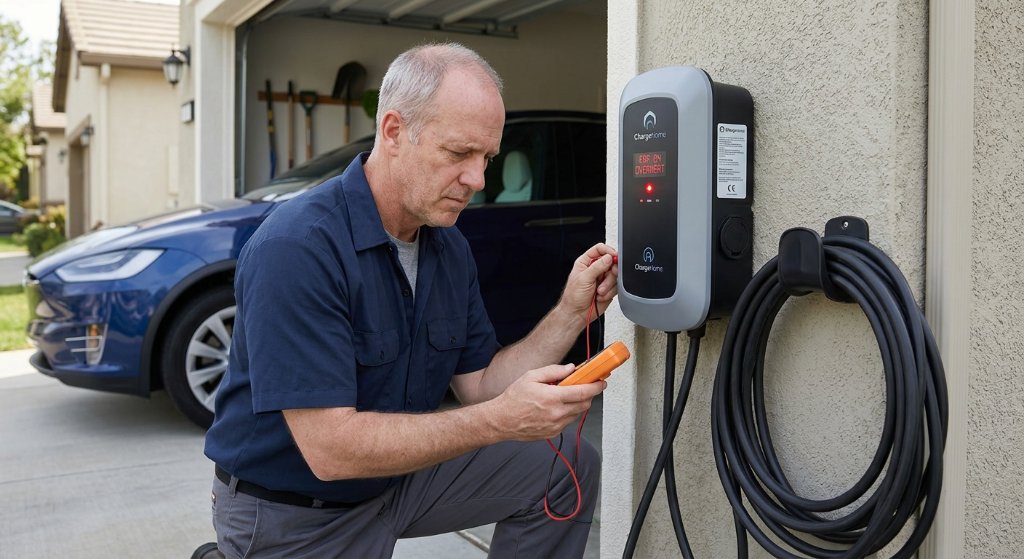
For the past decade, the conversations around electric vehicle longevity have been obsessively focused on one metric: battery degradation. EV buyers painstakingly monitor state-of-health, worry about cold-weather capacity losses, and debate the merits of lithium-iron-phosphate (LFP) chemistry. But as the first wave of modern EV adopters enters their second decade of ownership, a new, critical failure point is emerging right on their garage walls.
Early-generation home Level 2 Electric Vehicle Supply Equipment (EVSE) units are beginning to fail. From erratic telemetry drops to dangerous localized overheating, these "install-and-forget" boxes are proving that EV support infrastructure has a definitive shelf life. This issue is compounded by a shifting industry landscape—such as the sudden shutdown of major charging ecosystems like Enel X Way (JuiceBox) in North America—forcing owners to face a harsh reality: your home charger is not a permanent fixture; it is a consumable home appliance.
The Anatomy of an Aging Charger
At its core, a home EVSE is essentially a smart safety switch designed to safely negotiate high-voltage alternating current (AC) between your home's grid and your car’s onboard charger. However, over 5 to 10 years of daily use, the continuous physical stress of cycling 32 to 48 amps of current takes a heavy toll. Under daily load, several key vulnerabilities emerge:
- Thermal Fatigue: Internal relays and contactors expand and contract with heat during every charging session. Over time, this leads to micro-fissures, degradation of solder joints, and increased electrical resistance.
- Corrosion and Environmental Degradation: Units installed outdoors or in unconditioned garages deal with extreme temperature swings and humidity, degrading moisture seals and circuit boards.
- The Software "Dumb-Down" Effect: As older hardware loses manufacturer server support, smart features—like scheduled charging and utility grid integration—vanish, occasionally causing telemetry errors that disrupt the charge session altogether.
Recognizing the Warning Signs
Most EV owners assume their charger works perfectly until it completely stops delivering power. However, EVSE degradation is usually a slow, subtle process. Savvy owners should actively monitor their hardware for several telltale warning signs:
- Unexpected Power Derating: If your car normally charges at 7.7 kW (32A) but you notice it cycling down to 3.8 kW (16A) mid-session, the EVSE's internal thermal management is likely throttling power to prevent dangerous overheating.
- Physical Heat and Odors: While EV plug connections naturally warm up during a session, a handle, cable, or wall unit that is hot to the touch—or emits a faint, sweet plastic-burning smell—demands immediate decommissioning.
- Erratic Telemetry and Fault Codes: Frequent Wi-Fi disconnections, red fault lights on the unit, or "charging interrupted" notifications from your car are clear indicators of hardware or firmware fatigue.
Why This Matters:
This is a critical transition moment for the EV ecosystem, shifting our understanding of ownership costs. For years, the industry marketed home charging as a one-time infrastructure investment. This recent hardware-fatigue data shatters that myth, establishing that home EVSEs have a realistic lifespan of 8 to 10 years under optimal conditions, and potentially less in harsh outdoor climates.
The big winners here will be the manufacturers who prioritize rugged, modular engineering over cheap, hyper-connected smart gizmos. Brands like Grizzl-E, which focus on heavy-duty, aluminum-enclosed "dumb" chargers, are proving to be the gold standard for long-term reliability. Conversely, companies relying heavily on proprietary cloud software—as seen by the massive disruption when Enel Group pulled the plug on JuiceBox support in late 2024—leave consumers stranded with bricked or degraded hardware.
For consumers, this is a call to upgrade their safety protocols. It is no longer enough to plug in and walk away. Anticipating a $500 to $900 replacement cycle for your wall connector every decade is now a mandatory line item in the total cost of EV ownership.
Conclusion
Ultimately, the transition to electric mobility requires a holistic view of the entire technology stack, starting right at the wall outlet. As early-generation chargers age out of their safe operating windows, recognizing the symptoms of telemetry failure and thermal fatigue is paramount to protecting both your home and your vehicle. The "install-and-forget" era of EVSE is officially over; the era of proactive infrastructure management has begun.