The Unsung Hero of the EV Road Trip: Why Gas Stations are Becoming EV Charging Havens
A recent revelation from a seasoned Hyundai Ioniq 5 owner has sent ripples through the EV community, underscoring a critical, often overlooked, aspect...
Editorial Team
World Of EV
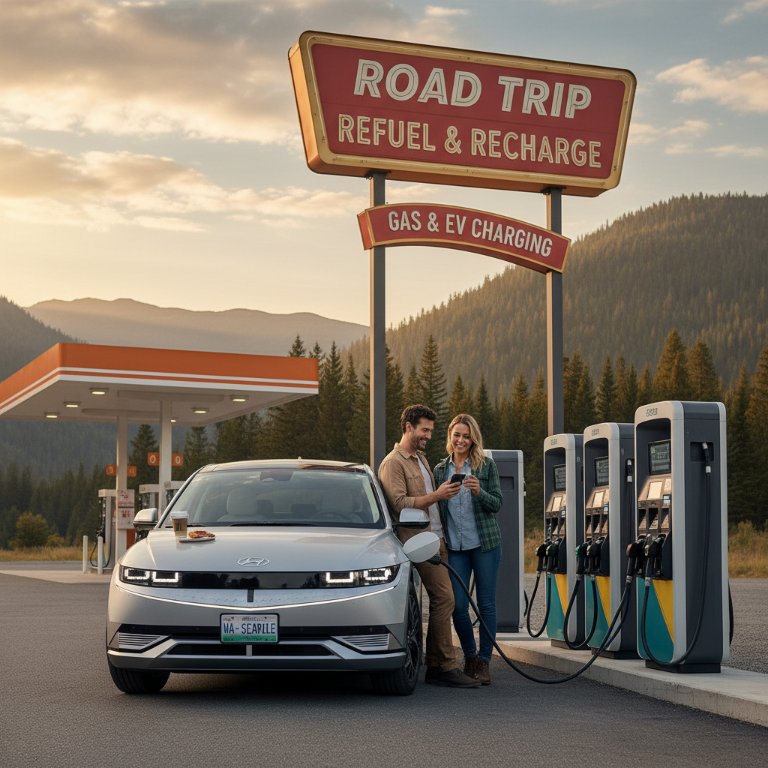
A recent revelation from a seasoned Hyundai Ioniq 5 owner has sent ripples through the EV community, underscoring a critical, often overlooked, aspect of long-distance electric travel: sometimes, the most reliable and convenient charging stops aren't dedicated EV hubs, but the familiar gas station. This insight challenges preconceived notions about the burgeoning EV charging landscape and offers a potent lesson for infrastructure developers and automakers alike.
A Decade of Journeys, A Consistent Truth
Our subject, an experienced Hyundai Ioniq 5 driver, undertook no fewer than ten round trips between Seattle and Calgary. These aren't casual commutes; they are significant inter-state and international journeys, demanding consistent and reliable charging. Through these extensive travels, a clear winner emerged for the most dependable and user-friendly charging stop: a particular gas station along the route. This isn't an isolated incident but a consistent pattern observed over hundreds of hours on the road, highlighting a stark reality of current charging infrastructure.
For context, the Hyundai Ioniq 5, built on the advanced E-GMP platform, boasts an 800V architecture capable of ultra-fast charging, reaching 10-80% in as little as 18 minutes under optimal conditions. This makes it one of the most capable EVs for road-tripping. Yet, even with such cutting-edge technology, the physical location and amenities surrounding the charger proved to be the deciding factor for a positive experience, rather than just the raw speed of the charger itself. Many EV drivers have grown accustomed to seeking out standalone charging stations, often located in desolate parking lots with minimal amenities, or worse, encountering unreliable or slow chargers. This driver's experience flips that script entirely, pointing to a more holistic understanding of a good charging experience.
Why the Gas Station Advantage?
So, what makes a traditional gas station a superior charging stop for a modern EV? It boils down to a confluence of established infrastructure and consumer convenience. Gas stations are strategically located along major highways and arterial roads, designed for accessibility and high traffic. Crucially, they offer:
- Existing Amenities: Restrooms, convenience stores for snacks and drinks, coffee, and often quick-service food options are standard. These amenities significantly enhance the waiting experience during a charging session.
- Reliability: Many gas station chains partner with major charging networks (like Electrify America or EVgo in North America) that tend to deploy newer, well-maintained, and higher-power DC fast chargers. The business model often encourages consistent uptime and prompt maintenance.
- Familiarity and Visibility: Drivers are accustomed to looking for fuel stations, making them intuitive stops. Their prominent signage and established presence reduce the cognitive load of finding a charging spot in unfamiliar territory.
In contrast, many standalone EV charging stations, particularly those in less developed areas, often lack basic facilities, leaving drivers stranded with little to do while their vehicle charges. Furthermore, the reliability of these standalone units can be a lottery, with broken screens, payment issues, or simply non-functional stalls a common complaint among EV owners.
Why This Matters:
This Ioniq 5 owner's repeated experience isn't just an interesting anecdote; it's a profound indicator of the current state of EV infrastructure and a roadmap for its future development. Here’s why it matters:
- For EV Owners: This insight is golden. It advises prospective and current EV owners to broaden their search parameters for reliable charging. Don't dismiss traditional fuel stops; they might offer the most comfortable and dependable charging experience, mitigating significant 'range anxiety' by providing predictable amenities and reliable power.
- For Charging Networks: This is a clear signal to prioritize partnerships with established travel centers and gas station chains. The existing real estate, infrastructure, and customer flow offer an unparalleled opportunity to rapidly expand reliable high-speed charging in locations drivers already know and trust. It's a shortcut to convenience that purpose-built, isolated EV charging hubs often struggle to match.
- For Automakers: While pushing vehicle technology, automakers must also advocate for a holistic charging experience. This means pressuring charging partners to focus not just on raw charger speed, but on the entire ecosystem surrounding the charger – amenities, reliability, and ease of use. A cutting-edge EV is only as good as the infrastructure that supports its long-distance capabilities.
- For Gas Station Operators: This is a wake-up call and a massive business opportunity. Investing in high-speed, reliable EV charging can future-proof their businesses, attracting a new, growing customer base and transforming their operations from mere 'fueling stations' into essential 'energy hubs' for the next generation of vehicles. The winners in this evolving landscape will be those who adapt swiftly and effectively.
This testimonial signals that the future of long-haul EV travel may not involve an entirely separate ecosystem, but rather a seamless integration into existing, amenity-rich travel infrastructure. This blending could be the key to accelerating mainstream EV adoption by making the transition feel less daunting and more familiar.
Ultimately, this real-world account highlights a crucial truth: for EV adoption to truly flourish, the charging experience must be as convenient, predictable, and comfortable as its gasoline counterpart. The surprising emergence of the humble gas station as a charging beacon offers a clear, pragmatic path forward.