The Uptime Crisis: Why NYC's New $450K Initiative is the Blueprint for Fixing Broken EV Chargers
Range anxiety is officially dead, replaced by a much more frustrating reality: charger anxiety. For years, the conversation around electric vehicles f...
Editorial Team
World Of EV
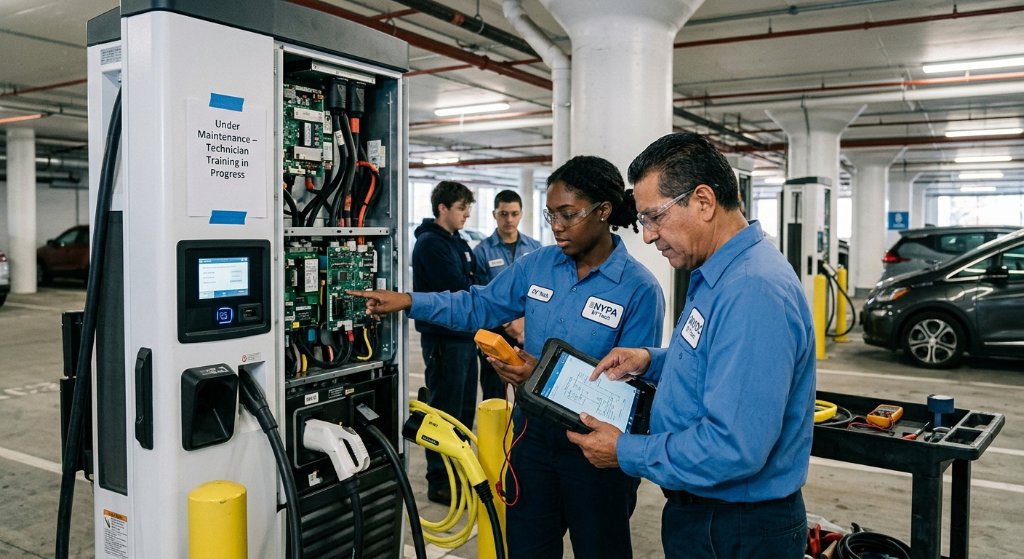
Range anxiety is officially dead, replaced by a much more frustrating reality: charger anxiety. For years, the conversation around electric vehicles focused heavily on building as many charging stations as possible. But as millions of new EVs hit the road, a glaring bottleneck has emerged. It’s not a lack of plugs, but a severe shortage of qualified technicians to keep them running.
To tackle this operational nightmare, the Brooklyn Navy Yard Development Corporation (BNYDC), backed by a $450,000 grant from the New York Power Authority (NYPA), is launching a pioneering, specialized training program. Developed in partnership with clean energy workforce specialist SmarterHelp, the initiative represents a targeted strike on the industry’s most critical vulnerability: a lack of hands-on expertise to service the rapidly expanding charging grid.
The High-Voltage Talent Shortage
The physical expansion of public EV charging networks has been historic, supercharged by the federal government's $5 billion National Electric Vehicle Infrastructure (NEVI) program. However, maintaining these highly complex, software-integrated machines has proved to be a massive industry-wide oversight.
Standard commercial electricians are highly skilled, but they are not automatically equipped to diagnose proprietary EV charging software, manage digital monitoring tools, or repair complex hardware-to-cloud communications. This lack of specialized expertise has led to notoriously long repair backlogs, leaving desperate drivers stranded with non-functional screens, severed cables, and handshake errors.
Inside the Brooklyn Navy Yard Blueprint
Rather than relying on theory-heavy coursework, the BNYDC program is taking an applied, practical approach inside a newly established "Smart Lab" outfitted with live EV charging units.
Key features of this program include:
- Specialized EVSE Focus: Training centers strictly on the diagnosis, maintenance, and repair of EV charging hardware and software, rather than general electrical trade skills.
- Real-World "Smart Lab" Testing: Students will troubleshoot and work directly with real charging equipment under simulated real-world failure scenarios.
- Accessible, Part-Time Structure: Designed specifically for working adults and individuals from underserved communities, allowing participants to gain credentials without sacrificing current income.
- Direct Path to High-Paying Careers: Graduates will earn industry-recognized credentials, positioning them for roles like EVSE field technicians, which boast median wages of around $76,000 in New York State.
Why This Matters:
This move marks a fundamental transition from the "land grab" phase of EV infrastructure to the "operational maturity" phase. For years, charging network operators prioritized getting plugs in the ground to claim territory. But the federal government’s NEVI funding comes with a catch: chargers must maintain a strict 97% uptime rate. Without an army of specialized technicians, networks risk losing millions in government subsidies and suffering terminal brand damage from frustrated drivers.
Who wins? Current and prospective EV owners, who will finally see a drop in broken-charger anxiety. Local workforces also win, gaining access to resilient, high-paying green-collar careers that cannot be outsourced.
Who loses? Charging network operators that continue to neglect their maintenance pipelines. If networks do not partner with or build programs like NYC’s, their operational costs will soar, their uptime will plummet, and they will face total obsolescence.
Ultimately, this $450,000 blueprint is a warning shot to the rest of the nation. Installing a charger is only half the battle; keeping it running is the real frontier of the EV revolution.
As the transition to electric mobility matures, reliability is the new battleground. Programs like the Brooklyn Navy Yard's partnership with SmarterHelp prove that the solution to broken chargers isn't just better hardware—it's the skilled hands that keep them running.