The Used EV Revelation: Volkswagen ID.4 Emerges as an 'Incredible Bargain,' Reshaping Market Dynamics
For years, the electric vehicle market has been characterized by premium pricing, often placing these advanced machines out of reach for a significant...
Editorial Team
World Of EV
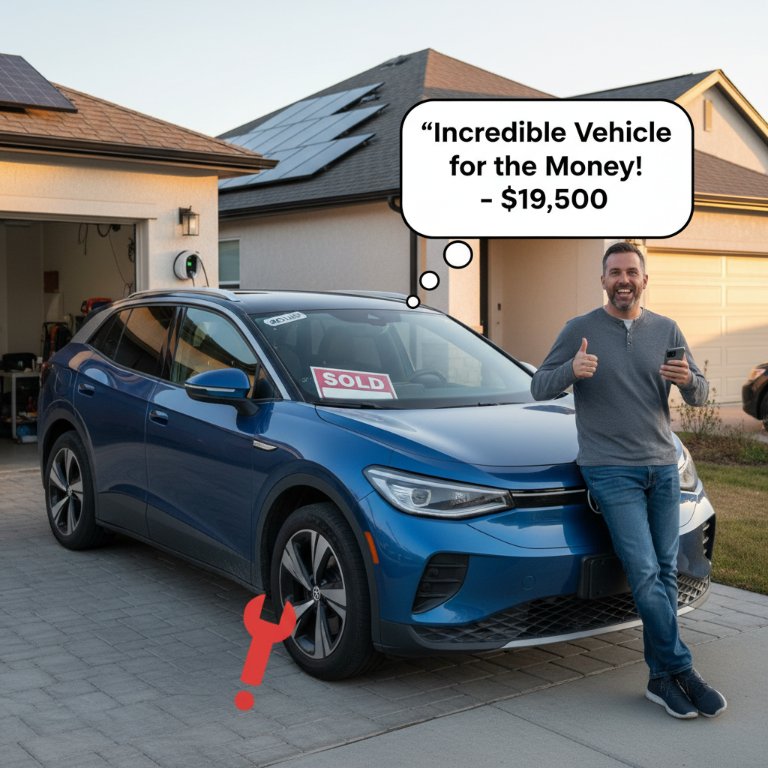
For years, the electric vehicle market has been characterized by premium pricing, often placing these advanced machines out of reach for a significant portion of the car-buying public. This narrative, however, is rapidly shifting, as evidenced by a recent testimonial praising a used Volkswagen ID.4 as an 'incredible vehicle for the money'. Purchased for under $20,000, this ID.4 has already accumulated 10,000 miles in just five months with its new owner, highlighting a pivotal moment for EV accessibility and challenging long-held perceptions about electric car ownership.
The Unexpected Value of a Pre-Owned ID.4
An owner's recent testimonial signals a crucial shift in the electric vehicle landscape: unprecedented affordability. Driving a used Volkswagen ID.4, acquired for a fraction of its original MSRP, the owner declared it an "incredible vehicle for the money" after an impressive 10,000 miles of driving over five months. This user experience stands in stark contrast to the initial perception of EVs as luxury items, reserved for early adopters with ample budgets.
To provide critical context, the ID.4, launched as Volkswagen's flagship electric SUV, was designed to be a mass-market EV. Yet, its new vehicle pricing, even with incentives, remained a significant barrier for many. Its rapid depreciation, while initially painful for original owners, is now creating a robust and highly appealing used market segment, democratizing access to modern EV technology.
Behind the Bargain: Market Forces at Play
Rapid Technological Advancements: The continuous evolution of EV technology means that newer models frequently boast superior range, faster charging capabilities, and more advanced features. This constant innovation naturally makes earlier models less competitive at their original price points, accelerating depreciation. This is a common pattern in nascent, fast-developing tech sectors.
Evolving Incentives Landscape: Federal and local tax credits are predominantly structured to encourage new EV purchases. While vital for initial market stimulation, this often inadvertently suppresses the resale value of used EVs, which typically do not qualify for such substantial incentives.
Initial High MSRPs: Many early EVs, including the ID.4, carried premium price tags at launch. As the market matures, competition intensifies, and production scales, those initial values are undergoing sharp adjustments. This creates a unique window for savvy buyers to acquire capable EVs like the ID.4 at prices previously unimaginable.
The Elephant in the Room: An Unspecified Glitch?
While the owner's praise for the ID.4's value is resounding, the report subtly "hinted at one unspecified problem". For an industry built on trust and reliability, such a vague reference demands attention from analysts and prospective buyers alike. Common early EV challenges that could contribute to such an observation often include:
Software Infelicities: First-generation EV platforms, such as Volkswagen's MEB architecture on which the ID.4 is built, can sometimes experience initial software bugs or user interface quirks that are often improved through subsequent over-the-air updates.
Charging Infrastructure Frustrations: Despite significant growth, the public charging network can still present inconsistencies in reliability and speed, leading to user frustrations that are often attributed to the vehicle rather than the external infrastructure.
Minor Reliability Concerns: As with any new vehicle generation or platform, early production runs can occasionally manifest minor component issues, which are typically addressed and refined in later model years.
Identifying and transparently addressing these "unspecified problems" will be crucial for the sustained growth and consumer confidence in the rapidly expanding used EV market.
Why This Matters:
This phenomenon, where highly capable used EVs like the Volkswagen ID.4 become available at sub-$20,000 price points, represents a pivotal moment for broader EV adoption. It signifies a crucial shift from niche luxury to mass-market accessibility.
Who Wins? Budget-conscious consumers are the clear beneficiaries. The dream of EV ownership, once financially out of reach for many, is now a tangible reality, accelerating overall EV adoption rates. Environmentally, this transition supports a faster move away from internal combustion engines. Long-term, Volkswagen also benefits; a strong, affordable used market builds brand loyalty and a larger customer base for future VW EVs, even if it comes at the expense of early adopters' immediate resale value.
Who Loses? Early adopters who purchased new ID.4s at peak prices have experienced significant depreciation, a challenging reality. Additionally, the influx of affordable, technologically advanced used EVs places considerable pressure on the resale values of comparable internal combustion engine vehicles.
This trend signals a maturing EV market, fundamentally moving beyond early adopter luxury to true mass-market availability. It underscores the critical importance of long-term software stability, robust battery health, and comprehensive dealer support for used EVs. Manufacturers must recognize that a healthy used market is as vital as new sales for sustainable growth and maintaining brand reputation. The 'unspecified problem' serves as a critical reminder that while affordability is key, unwavering reliability and a seamless ownership experience remain paramount for widespread acceptance.
The Volkswagen ID.4's emergence as an "incredible bargain" in the used market is more than just a noteworthy deal; it's a testament to the rapidly evolving landscape of electric mobility. This trend promises to democratize EV ownership, making zero-emission driving accessible to millions more individuals. However, as the market shifts and consumer expectations grow, the industry must proactively address any potential pain points. Ensuring that these affordable used EVs deliver on their promise of reliable, long-term transportation will be crucial. The future trajectory of EV adoption may very well hinge on the continued success stories of these pre-owned pioneers.