Toyota's Redesigned 2026 RAV4 Plug-In Hybrid Crushes Expectations: First Owner Report Reveals 65-Mile EV Range and Unmatched Refinement
While purists continue to debate the timeline for a full battery-electric transition, Toyota is quietly perfecting the bridge. For 2026, the automotiv...
Editorial Team
World Of EV
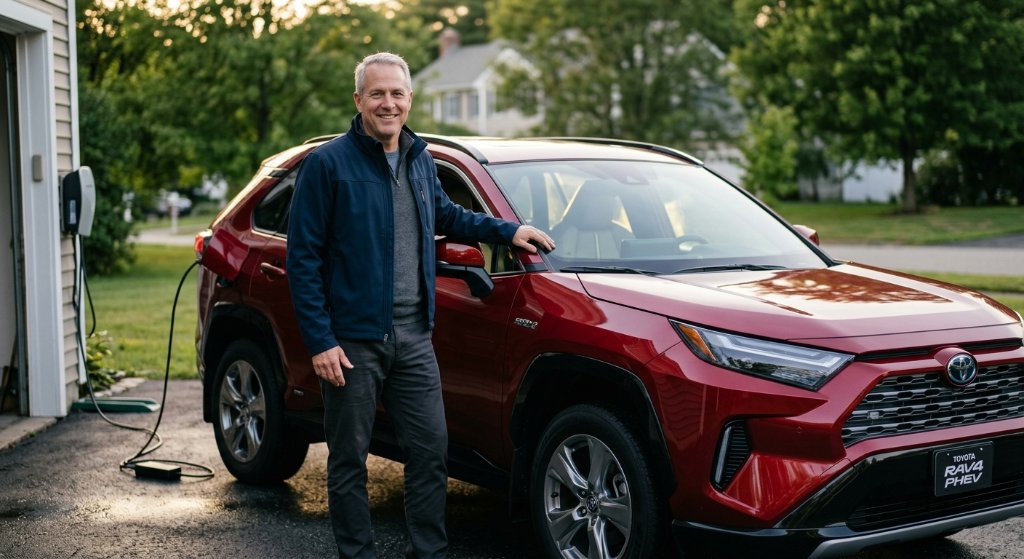
While purists continue to debate the timeline for a full battery-electric transition, Toyota is quietly perfecting the bridge. For 2026, the automotive giant has completely overhauled its best-selling SUV, dropping the "Prime" moniker in favor of the more globally unified "RAV4 Plug-In Hybrid." Built on Toyota's updated 6th-generation hybrid platform, this redesign isn’t just a cosmetic facelift; it’s a thorough re-engineering designed to silence critics who dismissed the previous generation’s highway noise and soft handling dynamics.
Early indicators show that Toyota’s engineering gamble has paid off handsomely. Massachusetts driver Kevin Donovan, who recently traded in his first-generation 2021 RAV4 plug-in for the redesigned 2026 XSE model, has shared a glowing hands-on owner experience that highlights substantial improvements in real-world efficiency, driving dynamics, and premium refinement.
Addressing the NVH and Handling Gap
To understand why the 2026 redesign matters, one must look at the legacy of the outgoing RAV4 Prime. While celebrated for its raw straight-line speed, the previous model often drew flak for its wind-swept cabin noise and soft, floaty handling on winding roads. Toyota addressed these pain points systematically for the 2026 model year by introducing targeted noise, vibration, and harshness (NVH) reduction and a sport-tuned suspension on the high-end XSE trim.
Donovan’s real-world experience immediately validates these changes:
- Whisper-Quiet Cabin: Thanks to revised acoustic insulation and enhanced sound-damping materials throughout the firewall and door cavities, the new cabin is significantly quieter, turning highway commutes into a serene experience compared to the buzzy nature of the 2021 model.
- Carving Corners with Confidence: Equipped with 20-inch sport wheels and low-profile tires, the 2026 XSE delivers excellent cornering stability. The upgraded chassis and wider footprint minimize body roll, giving the SUV a planted, confidence-inspiring feel that was sorely lacking in its predecessor.
Shattering Electric Range Estimates
Perhaps the most stunning revelation from early owner testing is the sheer capability of the overhauled 6th-generation PHEV system.
- Massive 22.7 kWh Battery: Toyota packed a larger battery into the 2026 model (a nearly 30% capacity jump over the previous generation), paired with a combined 324-horsepower dual-motor setup. At 22.7 kWh, this pack is larger than the battery of some early full-EVs like the original Nissan Leaf (24 kWh) and thoroughly outclasses contemporary PHEV rivals like the Hyundai Tucson PHEV (13.8 kWh).
- 65+ Miles of Real-World Range: While the official EPA estimate sits at a highly respectable 52 to 54 miles of pure-electric range, Donovan reports regularly exceeding 65 miles per charge in everyday Massachusetts driving. This completely bridges the gap for daily commuting, effectively turning the vehicle into a pure EV for most owners without any public charging anxiety.
- Level 3 DC Fast Charging: For the first time, XSE and Woodland owners can utilize CCS1 DC fast charging, replenishing the battery from 10 to 80 percent in roughly 35 minutes—a game-changer for mid-trip battery top-ups.
Why This Matters:
This is a masterstroke for Toyota and a massive warning shot to legacy automakers struggling with pure EV adoption rates. By extending the real-world EV range to over 65 miles, Toyota has effectively eliminated the "PHEV compromise."
- Who Wins: Consumers who want the day-to-day running costs and environmental benefits of an EV but require the long-distance safety net of a hybrid. It’s also a win for Toyota’s bottom line, reinforcing their multi-pathway decarbonization strategy.
- Who Loses: Pure EV startups and competitors with sub-par PHEVs. Vehicles like the Hyundai Tucson PHEV and Kia Sportage PHEV, which linger with vastly inferior all-electric ranges (under 35 miles) and slow onboard chargers, now look thoroughly obsolete.
- Market Signal: The 2026 RAV4 Plug-In Hybrid signals that the PHEV is no longer a stopgap measure with weak performance—it's a premier, dominant powertrain option that can handle 90% of daily driving on clean electricity.
With the 2026 RAV4 Plug-In Hybrid, Toyota has taken its best-selling platform and ironed out every major wrinkle. By combining sports-car-rivaling acceleration, a whisper-quiet cabin, standard all-wheel drive, and a real-world electric range that rivals some short-range compliance EVs, the Japanese automaker has built what might be the most complete, practical daily driver on the market today. For buyers on the fence about going fully electric, the choice just got a whole lot easier.