Unlock Your Ideal EV Experience: Essential Guidance for 2026 First-Time Buyers
As the electric vehicle market matures at an unprecedented pace, 2026 stands as a pivotal year for countless prospective buyers considering their firs...
Editorial Team
World Of EV
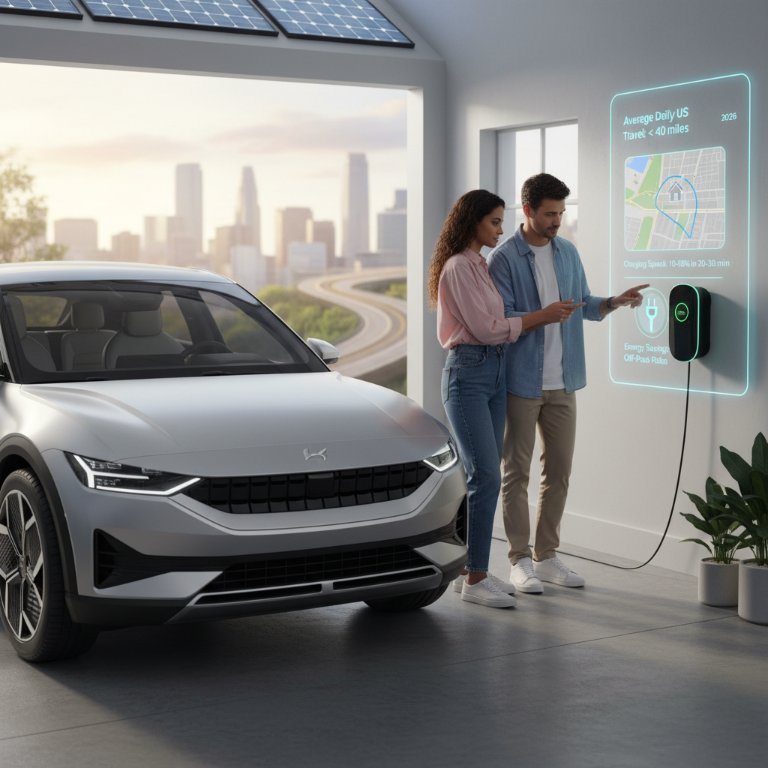
As the electric vehicle market matures at an unprecedented pace, 2026 stands as a pivotal year for countless prospective buyers considering their first plunge into EV ownership. The sheer volume of new models, evolving charging infrastructure, and a constant stream of technological advancements can be overwhelming, making informed decisions more crucial than ever. At World Of EV, we're cutting through the marketing hype to provide essential, expert-backed guidance for a truly positive EV experience, ensuring your first electric car perfectly aligns with your real-world needs and budget.
Range Anxiety is Overrated: Focus on Your Daily Drive
For years, 'range anxiety' haunted the nascent EV market, driven by early models with modest battery capacities. However, as we look to 2026, this concern is largely a relic of the past for the vast majority of drivers. Our analysis consistently shows that most U.S. commuters travel less than 40 miles daily, a figure comfortably within the capabilities of even entry-level modern EVs. Overbuying range isn't just unnecessary; it's a costly pitfall.
- Real-World Usage: Average daily commutes rarely exceed 40 miles, making extreme range figures often superfluous.
- Cost Implications: Larger batteries equate to higher purchase prices and increased vehicle weight, potentially impacting efficiency for your actual needs.
- Charging Habits: The focus should shift from maximum range to efficient, convenient charging at home and readily available public fast chargers.
Charging Speed Trumps Raw kWh: The Real-World Metric
While battery capacity grabs headlines, an often-overlooked yet far more critical metric for daily usability is charging speed, particularly on DC fast chargers. In the fast-evolving landscape of 2026, prospective buyers must prioritize models capable of replenishing 10-80% of their battery in a brisk 20-30 minutes. This rapid turnaround time significantly enhances convenience, making longer journeys comparable to a quick pit stop at a traditional fuel station, rather than an extended break.
- Time is Money: A vehicle that charges rapidly minimizes downtime on the road, crucial for road trips and busy schedules.
- Optimal Range Window: The 10-80% benchmark reflects the most efficient charging window for lithium-ion batteries and avoids excessively slow top-offs.
- Network Compatibility: Ensure the vehicle's charging architecture (e.g., 400V vs. 800V) aligns with the fastest public chargers in your area.
Beyond the Sticker Price: Unlocking True EV Savings
The initial purchase price of an EV can sometimes appear higher than a comparable internal combustion engine (ICE) vehicle, but this superficial comparison misses the profound financial advantages that unfold over ownership. For 2026 buyers, the real savings come from substantially lower operating costs. Charging at home, especially utilizing off-peak electricity rates, dramatically undercuts gasoline expenses. Furthermore, the inherent simplicity of EV powertrains translates directly into reduced maintenance requirements.
- Fuel Cost Reduction: Home charging, optimized with off-peak tariffs, can cut your 'fuel' bill by 50-70% compared to gasoline.
- Minimal Maintenance: EVs eliminate oil changes, spark plug replacements, and complex exhaust systems, leading to fewer service visits and lower repair costs.
- Government Incentives: Don't forget potential federal, state, and local tax credits or rebates that can further reduce the effective purchase price.
City Driving: The EV's Natural Habitat
Contrary to popular belief, EVs truly shine in stop-and-go city driving scenarios, a stark contrast to their gasoline counterparts. This efficiency stems from regenerative braking, a core EV technology that recovers kinetic energy typically lost as heat during deceleration and feeds it back into the battery. This not only enhances range in urban environments but also reduces wear on friction brakes, another maintenance saving.
Why This Matters:
This isn't merely a checklist for buying an EV; it's a critical recalibration of consumer expectations in a rapidly maturing market. For years, manufacturers chased headline-grabbing range figures, often at the expense of other crucial user experience elements. Now, as the industry moves past the early adopter phase, the emphasis shifts dramatically towards practical utility and total cost of ownership. This discerning consumer base wins by making smarter, more cost-effective purchases tailored to their actual lives, avoiding unnecessary expenditures on features they won't fully utilize.
Manufacturers who genuinely embrace these principles – focusing on rapid, consistent charging, optimizing efficiency for diverse driving conditions, and transparently communicating long-term savings – will solidify their market leadership. Brands like Hyundai and Kia, with their 800V architectures enabling ultra-fast charging, or Tesla, with its robust Supercharger network, are well-positioned. Conversely, those still relying on outdated charging speeds or pushing excessive, impractical range without addressing overall value risk falling behind, as consumers become increasingly savvy.
Ultimately, this signals a crucial turning point: the EV market is no longer solely about technological novelty but about integrated, practical solutions. For manufacturers, it’s a do-or-die moment to prove their vehicles are not just electric, but intelligently designed for the everyday driver of 2026 and beyond.
As you embark on your 2026 EV journey, remember that the most rewarding ownership experience stems from informed choices, not just impressive spec sheets. By prioritizing real-world needs like charging speed and daily range, and understanding the long-term financial benefits, you'll unlock the true potential of electric mobility. The future of driving is here, and it's more convenient and cost-effective than ever – provided you choose wisely.