Unlocking the EV Cheat Code: Why Hive’s Home Charger Proves Public Charging is a Financial Trap
The electric vehicle revolution has a glaring open secret: if you rely solely on public rapid chargers, running an EV can be nearly as expensive as fu...
Editorial Team
World Of EV
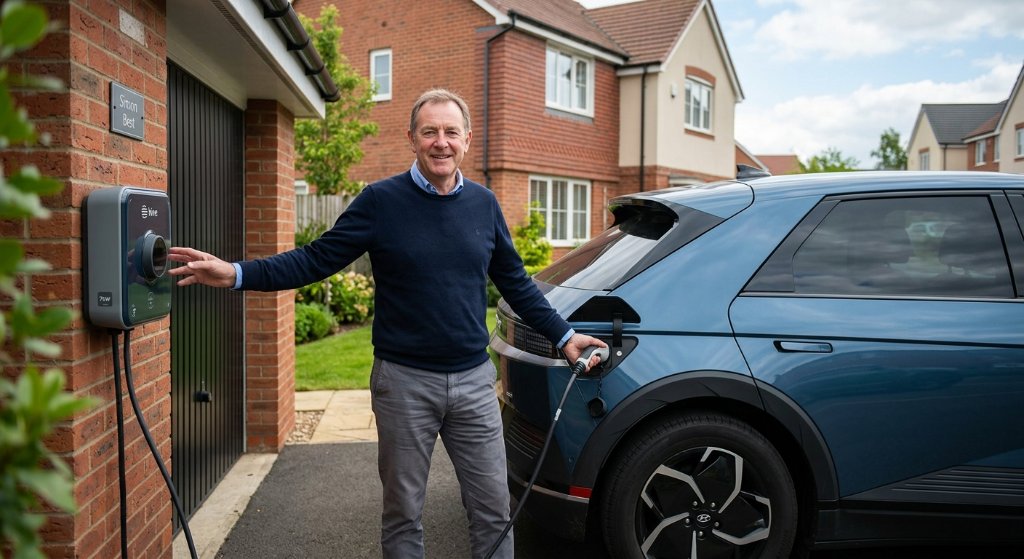
The electric vehicle revolution has a glaring open secret: if you rely solely on public rapid chargers, running an EV can be nearly as expensive as fueling a traditional combustion-engine vehicle. However, real-world experiences—like those of journalist Simon Best during his recent Hive home charger installation—demonstrate that the true economic magic of EV ownership is unlocked the moment you plug into your own garage wall.
For years, the EV narrative focused heavily on battery range. But as the market matures, the conversation has shifted from how far a car can go to how efficiently it can be replenished. While public DC fast-charging networks charge premium rates to cover their massive infrastructure costs, home smart charging is rapidly becoming the ultimate financial differentiator for prospective buyers.
The 7kW Sweet Spot: Why Bigger Isn't Always Better
When installing a home charger, buyers are often tempted to chase the highest kilowatt rating possible, assuming faster is always better. However, industry experts and real-world usage patterns confirm that a standard 7kW AC home charger is the undisputed sweet spot for residential use.
Here is why the 7kW standard remains the gold standard for daily driving:
- Single-Phase Power Limits: Most residential properties are limited to single-phase electricity, which naturally caps AC charging at 7.4kW. Upgrading a home to a three-phase system (to support 22kW charging) is highly expensive and entirely unnecessary for the vast majority of drivers.
- Overnight Efficiency: A 7kW charger adds roughly 25 to 30 miles of range per hour. For an average EV with a 60kWh battery, a full charge takes around 8 hours—perfectly matching the typical overnight sleep cycle.
- The Daily Mileage Reality: Experts urge prospective EV buyers to calculate their actual daily mileage before over-investing in charging speed. With the average daily commute well under 30 miles, a simple overnight trickle on a 7kW unit easily restores daily depleted range with zero hassle.
The Economics: Home Tariffs vs. The Public Grid
The financial contrast between public and private charging is stark. While public rapid chargers (50kW to 350kW+) provide convenience on long-distance road trips, their high commercial rates can quickly erode any EV running-cost savings.
By transitioning to a dedicated home charger like the Hive system, drivers can integrate their vehicles directly into smart domestic energy ecosystems:
- Dynamic Tariffs: When paired with specialized EV home energy tariffs (such as those offered by British Gas/Hive), overnight electricity rates can drop to a fraction of standard peak prices.
- Substantial Annual Savings: Transitioning daily charging from public networks to a smart home charger can save drivers hundreds of pounds annually, effectively paying off the hardware and installation costs within the first year of ownership.
- Automated Scheduling: Modern smart chargers allow users to "plug and forget," automatically pulling power only when grid demand is lowest and energy is cheapest.
Why This Matters:
The push for home charging optimization represents a critical pivot point in the EV transition.
The Winners: Homeowners with dedicated off-street parking and smart energy providers. Companies like Centrica (Hive’s parent company) are positioning themselves as the new "oil majors" of the 21st century, bundling hardware, installation, and cheap energy tariffs to lock in long-term customer loyalty.
The Losers: Public charging operators who rely on high margins, and more importantly, EV drivers without driveways. As the financial gulf between home and public charging widens, we risk creating a "two-tier" EV society. Renters and urban dwellers who must rely on expensive public curbside charging are financially penalized, while homeowners reap massive rewards.
The Strategic Takeaway: For automakers, this highlights a critical marketing challenge. To sell more EVs, manufacturers must move beyond boasting about 0-60 mph times and start partnering directly with home charging installers to offer seamless, "out-of-the-box" home energy solutions at the point of sale.
Looking Ahead
The transition to electric mobility is no longer just an automotive shift; it is a home energy integration. Seamless installations like the Hive charger prove that when EV ownership is paired with smart domestic infrastructure, the financial and logistical benefits are unmatched. As grid integration becomes smarter and vehicle-to-home (V2H) tech matures, your car will no longer just consume home energy—it will actively help power your life.