Unplugged and Ticketed: A Viral Boston Incident Exposes the EV Charging Industry's Hidden Security Flaw
An everyday charging routine turned into a costly nightmare for a Chevrolet Bolt EUV owner in Boston, triggering a viral firestorm that exposes a crit...
Editorial Team
World Of EV
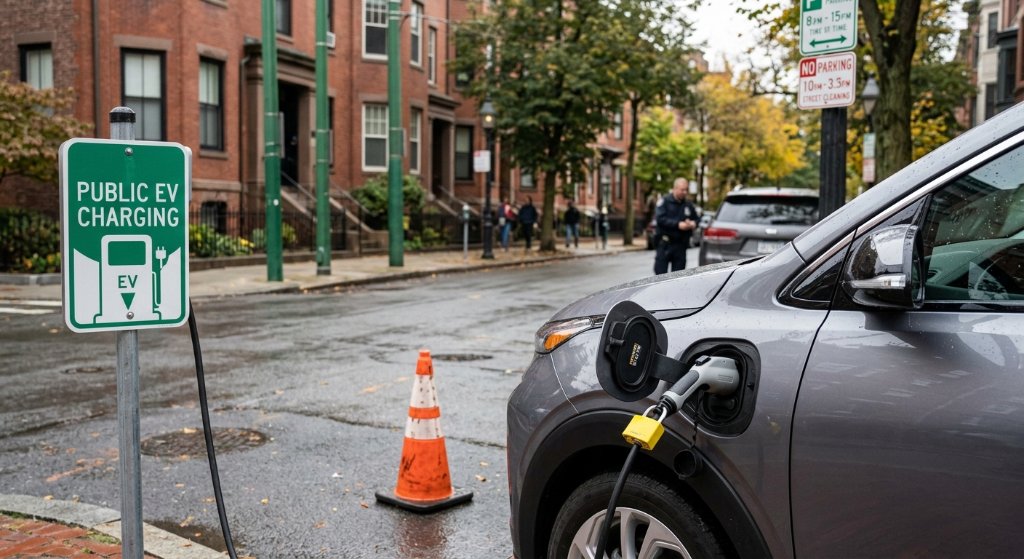
An everyday charging routine turned into a costly nightmare for a Chevrolet Bolt EUV owner in Boston, triggering a viral firestorm that exposes a critical security flaw in North American electric vehicle infrastructure. After parking in a municipal lot in Jamaica Plain and plugging into a public Level 2 charger, the driver returned to find her charging session maliciously hijacked by another motorist—and a $40 parking ticket slapped on her windshield for "not actively charging."
This incident highlights a major policy-and-hardware disconnect. As municipalities across the country rapidly convert standard parking stalls into dedicated EV-only charging spaces, enforcement has become ruthless. Many cities enforce strict time limits and penalties for vehicles occupying EV spots without drawing current, designed to prevent parking abuse. However, because local parking authorities rely on automated systems or quick visual sweeps, they fail to distinguish between a negligent driver and a victim of charging session theft.
The Anatomy of a Charging Hijack
According to security footage from a neighboring business, a driver in a black SUV casually walked up to the parked Bolt EUV, unplugged the active Level 2 charger, and plugged it into their own vehicle. Because the Bolt EUV sat unplugged, it exceeded the local two-hour limit for non-charging vehicles, prompting a parking officer to issue a ticket.
This frustrating scenario is far more common than many new EV buyers realize, and it stems from a fundamental design decision shared by several prominent EV manufacturers:
- The J1772 AC Standard Lack of Locking: Standard North American Level 2 (J1772) connectors rely on a simple manual latch. Unless an EV is equipped with an internal motorized locking pin that holds the latch down, anyone can walk up, press the trigger, and remove the cable.
- The DC Fast Charging Contrast: In contrast, DC Fast Chargers (using CCS1 or NACS) utilize heavy-duty, software-controlled mechanical interlocks. Because these systems handle high-voltage direct current, they physically lock the connector into the port to prevent dangerous electrical arcing during active sessions.
- The Cost-Cutting Legacy: Legacy vehicles like the Chevrolet Bolt EV and EUV—built on GM's older, pre-Ultium platform—celebrated low entry barriers but cut corners by omitting a motorized AC lock pin. This stands in stark contrast to Europe’s Type 2 standard, which has required automated, double-ended cable locking for over a decade. Even as the market shifts toward Tesla's NACS (SAE J3400) standard, the lack of standardized, secure AC lock actuators across all price tiers remains an industry-wide headache.
How to Protect Your Charge
While the EV industry slowly wakes up to this vulnerability, owners are forced to rely on aftermarket hacks and software workarounds to protect their sessions. If you charge in public, consider these vital countermeasures:
- Enable Charge Cord Alarms: Many vehicles, including the Chevrolet Bolt EUV, feature a built-in "Charge Cord Theft Alert" in their infotainment settings. Once activated, the car's horn will blare continuously if the charging cord is unplugged while the vehicle is locked.
- Utilize J1772 Flange Locks: For drivers utilizing adapters (such as Tesla owners using J1772 public plugs, or vice versa), inexpensive 3D-printed locking rings slip over the adapter. This physical collar blocks the manual release trigger from being depressed, keeping the cable locked to the car until the port is unlocked via the key fob.
- Padlock Integration: Some aftermarket and public charging handles feature a small hole in the trigger mechanism specifically designed to fit a luggage padlock, physically preventing the latch from opening.
Why This Matters:
This viral incident is a warning shot to an industry rushing to build out public infrastructure without thinking through the realities of urban charging. It signals a "do-or-die" design mandate for automakers and charging network operators alike.
The Big Losers: Everyday Consumers
As cities crack down on "squatting" at public chargers, everyday drivers are caught in a double-whammy: they lose the range they paid for, and they get penalized by predatory municipal parking enforcement. This friction directly feeds into the public's lingering "charging anxiety," discouraging mainstream ICE drivers from making the electric transition.
The Policy Failure
Municipalities are writing parking policies for a perfect world, not the real one. Enforcing "actively charging" tickets without verifying why a vehicle stopped charging—such as integrating with charging network API logs like ChargePoint or EVgo—is lazy governance. Cities must integrate real-time session validation before ticketing vehicles.
The Standard Transition Opportunity
With North America rapidly consolidating around Tesla’s NACS (SAE J3400) standard, automakers have a golden opportunity to rectify this oversight. Future vehicles utilizing the NACS port must standardize motorized, software-controlled port locks for both AC and DC charging. This is not a luxury feature; in a world of shared public curbs, security is a basic necessity.
Conclusion
Ultimately, the Boston incident proves that physical security is just as critical to the EV user experience as battery chemistry or charging speed. Until automakers treat AC charging ports with the same level of security as a gasoline tank cap, public charging will remain a gamble.