Unshakable: 94.3% of EV Owners Vow Never to Buy Gas Again, Shattering the "EV Slowdown" Narrative
Despite a relentless wave of negative media headlines predicting an "EV winter" and a volatile political landscape that has seen the scaling back of f...
Editorial Team
World Of EV
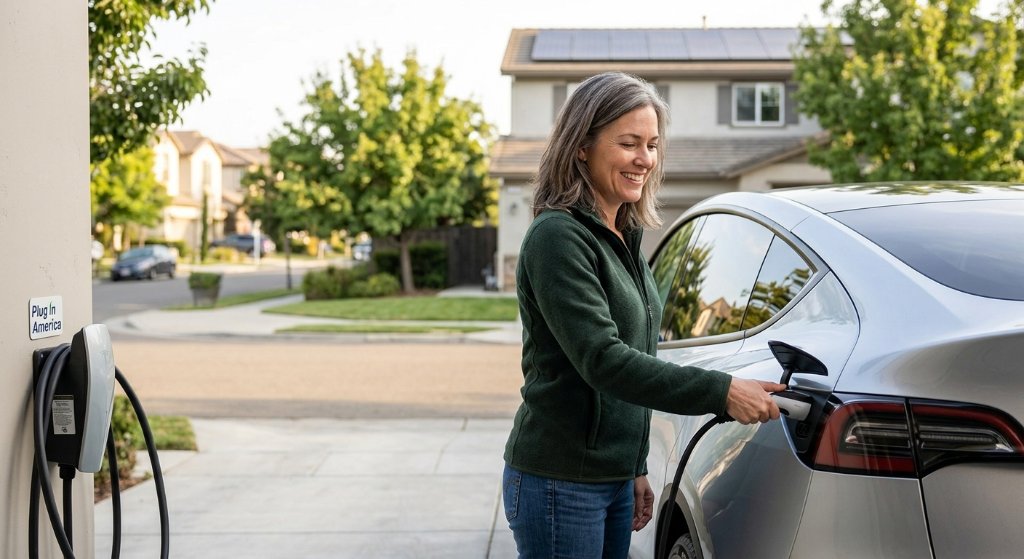
Despite a relentless wave of negative media headlines predicting an "EV winter" and a volatile political landscape that has seen the scaling back of federal consumer tax credits, the actual people who own and drive electric vehicles are sending an unmistakable message: they are never going back to internal combustion engines.
According to Plug In America’s sixth annual EV Driver Survey released today, electric vehicle drivetrain loyalty has surged to an all-time high of 94.3%. For years, legacy automakers have hedged their bets by pumping the brakes on full battery electric vehicle (BEV) programs, often citing a supposed dip in consumer demand. However, this comprehensive survey of over 4,200 drivers reveals that the transition to electric is effectively a one-way street. Once a driver crosses the threshold, the superior economics and driving dynamics create an ironclad bond.
The Unbreakable Bond of 'Drivetrain Loyalty'
The marquee takeaway from this year’s data is the staggering strength of "drivetrain loyalty." In an era where brand loyalty in the automotive space is generally declining due to aggressive pricing wars and inventory fluctuations, EV retention is moving in the opposite direction:
- The 94.3% Pledge: Nearly 19 out of 20 EV drivers state they are likely or very likely to acquire another EV for their next vehicle, up from 92% in 2025.
- Resilience to Policy Changes: Despite the survey being conducted in a challenging climate of shifting federal subsidies, drivers' commitment did not crack.
- Subsidies Are No Longer the Driver: When asked what they would buy today if they had to replace their EV immediately, nearly 90% of respondents said they would choose another EV—even without federal tax credits on the table.
Hard Economics Trump Media Skepticism
Mainstream critics frequently target the upfront costs of EVs, but the day-to-day economic reality of ownership tells a completely different story. Real-world users are experiencing profound financial relief that far outweighs initial purchase concerns:
- 91% Experience Cost Savings: More than nine in ten EV drivers agree they save substantial money by driving electric compared to their former gas-powered cars.
- Cheaper to Fuel and Maintain: Nearly 95% of respondents confirm that their EVs are cheaper to fuel and significantly easier to maintain than internal combustion engine (ICE) cars.
- Reduced Grid Dependency: Thanks to modern battery capacities, less than one-third of EV drivers feel the need to charge their vehicles every day, taking advantage of cheap, convenient home setups instead.
Experience Erases Pre-Purchase Anxiety
The survey also highlights a critical psychological shift: the vast majority of consumer concerns are completely evaporated by real-world exposure. There is a massive gap between what prospective buyers fear and what actual owners experience:
- Range Anxiety Eradicated: Pre-purchase range anxiety concerns plummeted from 70.1% down to just 27.5% once drivers took delivery and established a charging routine.
- Infrastructure Confidence: Pre-purchase worries regarding public charging availability dropped from 50.8% to 35.4% post-purchase.
- The Go-To Daily Driver: In households that own both an EV and a gas-powered car, the EV is chosen for daily driving a staggering 75% of the time.
Why This Matters:
This data represents a massive wake-up call for the entire automotive industry, drawing a sharp line between media-driven hysteria and actual consumer behavior.
- The Winners: Pure EV Players and Charging Infrastructure. Pure-play EV manufacturers like Tesla, Rivian, and highly focused global OEMs are the ultimate victors here. They are building a captive, highly enthusiastic customer base that is permanently locked out of the ICE ecosystem. Furthermore, EV charging network providers can invest with confidence; the demand for charging infrastructure is not a passing fad, but a rapidly expanding necessity.
- The Losers: Legacy Automakers Hedging Too Hard on ICE. Legacy OEMs—particularly those that have historically drag-heeled their BEV transitions (such as Mazda with its short-lived MX-30, or brands overly relying on stop-gap hybrids)—are playing a highly dangerous game. By scaling back electric programs to chase short-term ICE and hybrid profits, they risk missing out on a massive, highly loyal demographic of buyers. When these 94.3% of loyal EV owners go to upgrade, they won't even look at showrooms that lack competitive, dedicated EV platforms. This is a "do-or-die" moment: adapt now or lose customers forever.
- The Market Signal: Drivetrain loyalty is the ultimate "one-way door" metric. Once a consumer experiences the lower running costs, instant torque, and convenience of home charging, their relationship with gasoline is severed permanently. The narrative of "declining demand" is officially debunked; the real bottleneck is merely educating non-owners and getting them behind the wheel for the first time.
In conclusion, Plug In America's latest survey proves that EV adoption is not a fragile bubble inflated by temporary government handouts; it is a permanent technological transition driven by superior economics and sheer owner satisfaction. As the initial friction of transition continues to fade, automakers who fully commit to an all-electric future will reap the rewards of an incredibly loyal, captive market. Those who continue to drag their feet, clinging to the dying embers of the internal combustion engine, will find themselves left behind in an empty showroom.