Untouchable Moat: Tesla Crushes Legacy Giants with 64% Customer Loyalty in 2026
Tesla has once again silenced the critics, claiming the absolute top spot in S&P Global Mobility's newly compiled 2026 customer loyalty rankings. A st...
Editorial Team
World Of EV
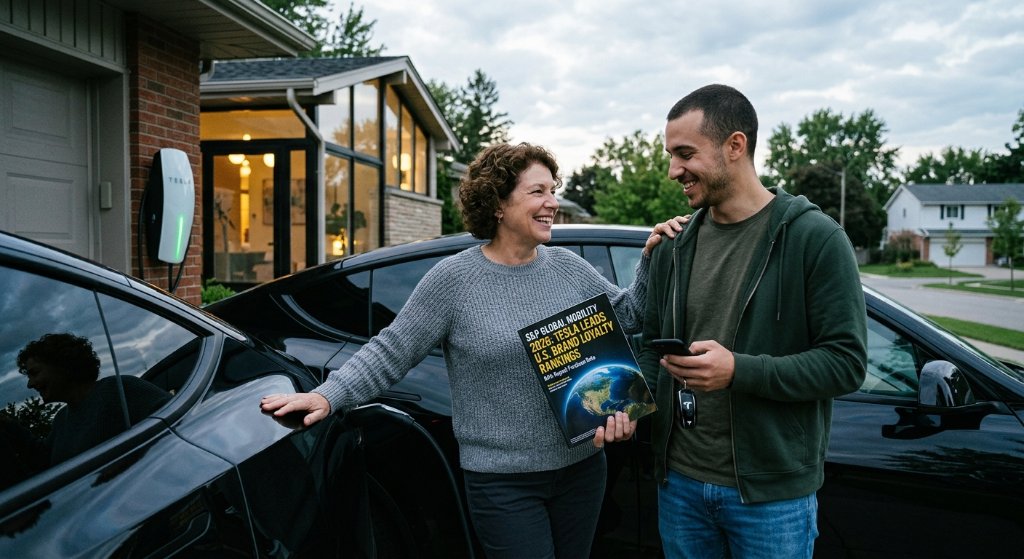
Tesla has once again silenced the critics, claiming the absolute top spot in S&P Global Mobility's newly compiled 2026 customer loyalty rankings. A staggering 64% of Tesla owners in the U.S. chose to buy another Tesla when it came time to replace their vehicle. This isn't just a minor victory; it is a profound testament to the brand's impenetrable customer ecosystem, leaving legacy automotive giants gasping for air in their own backyard.
For years, skeptics argued that Tesla's customer retention was a temporary bubble—a captive audience of early EV adopters who had no other choice. But as traditional manufacturers flooded the U.S. market with multi-billion-dollar electric portfolios, from Ford's Mustang Mach-E to GM's Ultium-platform SUVs, the playing field was supposed to level out. Instead, the opposite occurred. Tesla has actually widened its lead, proving that its direct-to-consumer, vertically integrated model is an absolute customer-retaining machine.
Decoding the 2026 Loyalty Leaderboard
S&P Global Mobility’s latest dataset highlights a stark contrast between Tesla’s ironclad retention and the rest of the industry. The national average sits at a mere 52.7%, meaning nearly half of all car buyers are actively defecting to other brands. Tesla, however, sits comfortably at the peak:
- Tesla: 64.0%
- Ferrari: 61.0% (a structural luxury anomaly)
- Toyota: 60.0% (long-revered for reliability)
- Subaru: 59.0% (historically sticky, but losing ground)
- National Average: 52.7%
While legacy titans like Toyota have spent decades cultivating reputations for bulletproof mechanical reliability, Tesla has built its loyalty around an entirely different playbook: the seamless user experience.
The 'Ecosystem Effect' That Keeps Owners Locked In
Why are Tesla owners so transition-resistant? The secret lies in a deeply integrated ecosystem that traditional dealer networks and legacy platforms simply cannot replicate.
- The Charging Moat: Even as Tesla opens its Supercharger network to competitors via NACS adapters, the seamless, native integration of pre-conditioning and plug-and-play charging remains the golden standard.
- Continuous Evolution via OTA: While traditional OEMs struggle with software glitches and bricked vehicles during updates, Tesla continuously improves its fleet's value post-purchase. To a Tesla owner, a three-year-old car still feels fresh.
- Unmatched Low Defection: Tesla boasts one of the lowest 'one-and-done' rates in the industry. When buyers transition to Tesla, they rarely slide back into internal combustion or hybrid alternatives.
Why This Matters:
Who Wins: Tesla is the undisputed victor. This data proves that its focus on software-defined vehicles and robust infrastructure has created an 'Apple-like' iOS lock-in effect. It sends a clear signal to Wall Street that Tesla’s customer acquisition cost is incredibly efficient because once a buyer enters the ecosystem, they rarely leave.
Who Loses: Legacy Detroit and foreign volume manufacturers. Despite throwing billions at marketing and styling, brands like Ford, GM, and Hyundai are failing to capture the same emotional and practical stickiness. They are playing a defensive game, watching their traditional buyer bases slowly erode as EV curiosity turns into Tesla conversions.
The Market Signal: This is a wake-up call for the entire industry. Brand loyalty is no longer built solely on hardware or mechanical reliability. In the modern automotive era, loyalty is won through seamless software, digital experiences, and charging confidence. Legacy automakers bringing old-school dealership experiences and fragmented software to this fight are fundamentally mismatched.
Conclusion
As we march through 2026, Tesla’s 64% loyalty rate serves as a stark reminder of the massive gap between building a car and building an ecosystem. For legacy brands, the lesson is clear: copying Tesla's styling or matching its battery range isn't enough. Until traditional OEMs can deliver a friction-free ownership and software experience, they will continue to watch their customers defect to the company that redefined what it means to own a vehicle.