VW and Elli Weaponize EV Batteries: New V2G Service Pays Owners Up to €720 Annually to Power Germany's Grid
For years, the narrative surrounding electric vehicles has focused on upfront price premiums and the anxiety of where to charge. Volkswagen and its en...
Editorial Team
World Of EV
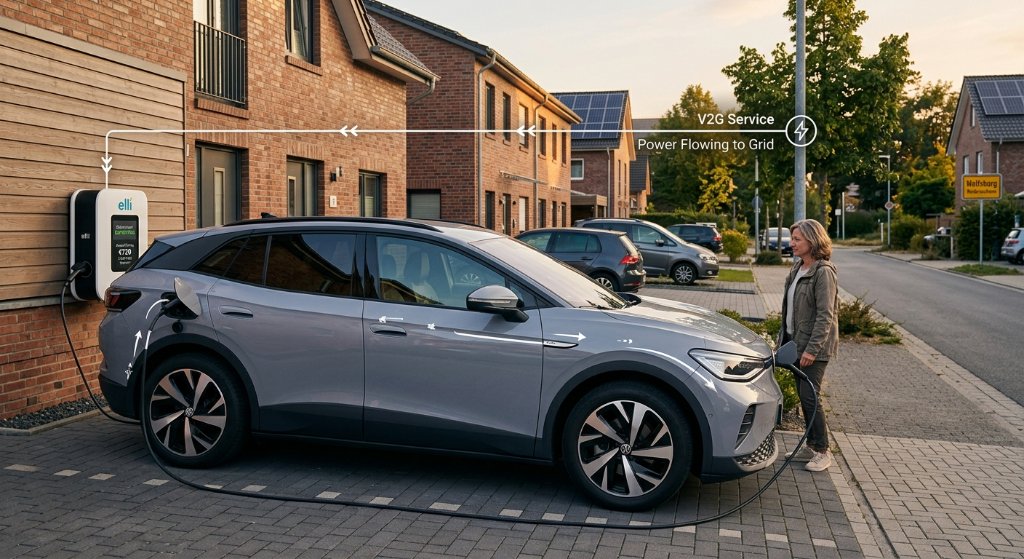
For years, the narrative surrounding electric vehicles has focused on upfront price premiums and the anxiety of where to charge. Volkswagen and its energy arm, Elli, are flipping that script on its head. With the official rollout of their fully integrated Vehicle-to-Grid (V2G) bidirectional charging service in Germany, your EV is no longer just a depreciating asset sitting in your garage—it is a decentralized power plant that can earn you up to €720 ($800 USD) annually.
This move comes at a critical juncture. Following the abrupt end of Germany's EV subsidies and a subsequent cooling of the electric car market, Volkswagen needed a compelling hook to reignite interest in its MEB-platform ID. family. By transforming the EV into a revenue-generating tool, VW isn't just selling a car; they are pitching a structural reduction in the total cost of ownership. Since 2023, VW's MEB platform has been quietly "bidi-ready." Now, they are finally flipping the switch.
A Seamless "Turnkey" Energy Ecosystem
While aftermarket bidirectional solutions have existed in pilot projects for years, VW and Elli are the first to bring a highly integrated, mass-market solution to private driveways. Pre-registrations are already underway, with the full commercial launch slated for the fourth quarter of 2026.
Rather than forcing consumers to cobble together parts from different utility providers, VW is offering a seamless, one-stop shop. The V2G product package includes:
- The Vehicle: Compatible ID. family models, Cupra EVs, and Volkswagen Commercial Vehicles (all MEB vehicles with 77 kWh batteries have been built "bidi-ready" since 2023).
- Elli BiDi Charger: A dedicated, bidirectional DC wallbox.
- Volkswagen Naturstrom V2G Flow: A dynamic, grid-integrated electricity tariff.
- Smart Meter & Installation: Installed by certified professionals to manage fluctuating energy prices.
- Elli BiDi App: The digital cockpit that automates when to store cheap energy and when to sell it back to the grid.
Slashing the Cost of EV Ownership
So, how does the vehicle actually earn its keep? The system operates on arbitrage—charging the vehicle when renewable energy is abundant and grid prices are low (or negative), and discharging power back to the public grid during peak demand hours.
According to Elli, an owner keeping their car plugged in for an average of 250 hours per month—easily achievable for those who plug in overnight or during the workday—can expect an annual return of up to €720. For the average European commuter with short daily travel distances, this effectively subsidizes their entire yearly charging bill, rendering their local mobility virtually cost-free. Crucially, Volkswagen's engineering team has addressed the elephant in the room: battery health. The company guarantees that the gentle, controlled cycles of V2G operation will not have a significant impact on battery degradation, calming a major consumer anxiety.
Stabilizing a Strained Grid
Beyond the individual wallet, the macroeconomic implications of this launch are staggering. Germany's aggressive push into wind and solar energy has highlighted a massive storage deficit. Due to a lack of grid capacity, Germany recently curtailed (wasted) an estimated 9,500 gigawatt-hours of clean energy—enough to power three million EVs for a full year.
By linking thousands of ID. vehicles together, Elli is effectively constructing a giant virtual power plant (VPP). If scaled across Europe, V2G technology could shave €25 billion off total energy system costs by 2040 by smoothing out demand peaks and preventing clean energy from going to waste.
Why This Matters:
This is a defining moment in the EV transition, marking a shift from EV 1.0 (cars with batteries) to EV 2.0 (wheels on the energy grid).
- Who Wins: Volkswagen and Elli. While Tesla has spent years building a massive Supercharger network, they have been sluggish to deploy mass-market, home-based bidirectional charging. By launching an integrated, consumer-friendly V2G package, VW has secured a massive head start in the energy-integration race. It transforms the ID. series from standard electric vehicles into active financial assets.
- Who Loses: Traditional, slow-moving utility giants that rely on predictable peak-demand pricing. As thousands of EVs begin shaving down demand peaks, the traditional grid business model must evolve or risk obsolescence.
- What This Signals to the Market: Total Cost of Ownership (TCO) is the new battleground. As battery prices fall and EV ranges homogenize, automakers can no longer compete solely on range or horsepower. The future belongs to the OEMs that can integrate seamlessly into the customer's home energy bills. For VW, this is a must-win gambit to prove that their massive investment in the MEB platform was ahead of its time.
Volkswagen and Elli's V2G launch is a blueprint for the future of sustainable mobility. By erasing the artificial boundary between transportation and energy, VW is giving consumers a real, financial reason to make the switch to electric. As this program expands from Germany to the rest of Europe, expect other automakers to rush to copy the playbook. The electric car is no longer just a way to save the planet; it’s finally a way to save your wallet.