When Award-Winning Tech Fails: Inside a Dual-EV Household's Kia and Hyundai Reliability Nightmare
For the past few years, Hyundai Motor Group (HMG) has been the darling of the automotive press. Its dedicated E-GMP electric architecture—the backbone...
Editorial Team
World Of EV
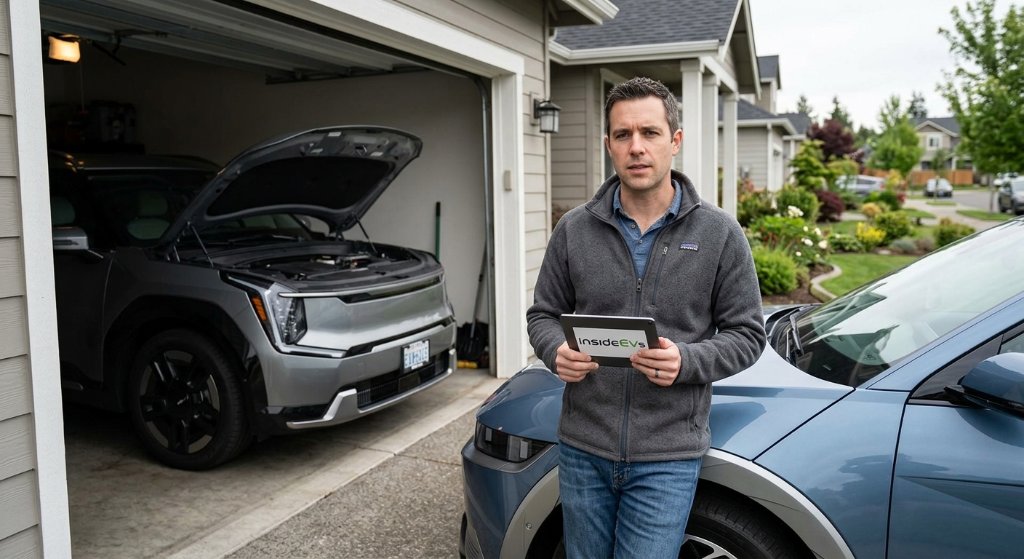
For the past few years, Hyundai Motor Group (HMG) has been the darling of the automotive press. Its dedicated E-GMP electric architecture—the backbone of the Hyundai Ioniq 5, Ioniq 6, and the three-row Kia EV9—has swept the World Car of the Year awards and established the South Korean conglomerate as a formidable challenger to Tesla. But as early-adoptive leases mature, a stark divide is opening up between glowing initial road tests and the grueling realities of long-term ownership.
Take the experience of veteran automotive journalist Ty Duffy. In 2024, Duffy made what seemed like the ultimate "expert" play: he transitioned his household to 100% electric by leasing a 2024 Hyundai Ioniq 5 SEL AWD and a flagship 2024 Kia EV9 GT-Line. Two years later, the dream of a seamless, high-tech EV lifestyle has devolved into a frustrating saga of dead batteries, unresponsive electronics, and frantic research into state lemon laws. It is a cautionary tale that exposes a critical bottleneck in the legacy auto industry's EV transition.
A Catastrophic Battery Failure on the Flagship Kia EV9
The Kia EV9 was hailed as the "Telluride of EVs"—a spacious, bold, three-row family hauler designed to conquer the American suburban driveway. Duffy’s top-tier GT-Line, however, stumbled right out of the gate. Before he could even install a child’s car seat, the vehicle's motorized second-row "relaxation" seats froze completely in place—a symptom traced back to a dead 12V battery that required a dealership jump before delivery.
Unfortunately, that initial glitch was merely a prelude to a far more severe powertrain failure. Duffy’s EV9 eventually suffered a complete failure of its primary traction battery, requiring a total battery pack replacement. The repair process was anything but smooth, culminating in:
- Catastrophic Traction Battery Failure: A complete replacement of the primary high-voltage battery pack.
- Frozen Interior Features: Second-row motorized relaxation seats locked in place, completely disabling cabin versatility.
- Extended Dealership Stays: Multiple month-long visits to the service center as technicians struggled to diagnose and repair the vehicle.
- Proximity Anxiety: A total loss of vehicle trust, replacing traditional highway "range anxiety" with the fear of driving anywhere outside of rideshare range from home.
The E-GMP's Achilles' Heel: 12V Gremlins and ICCU Failures
Duffy’s struggles weren't isolated to the Kia. His family’s second EV, the Hyundai Ioniq 5, developed a chronic, highly annoying issue with its 12V starter battery. For EV enthusiasts, this is a familiar and deeply frustrating flaw. While the automotive world obsessively tracks main battery degradation, it is often the lowly 12V lead-acid battery—and the complex software systems designed to keep it topped off—that leaves owners stranded.
This dual-EV nightmare points directly to a broader engineering struggle within the E-GMP platform. Over the past couple of years, HMG has faced intense scrutiny and federal investigations over its Integrated Charging Control Unit (ICCU). When the ICCU fails, it stops charging the 12V battery while driving, leading to:
- Sudden loss of motive power on the highway.
- Rapidly draining 12V batteries that lock owners out of their vehicles.
- Repetitive recalls and software patches that have yet to fully eradicate the issue for many owners.
The Ultimate Bottleneck: The Legacy Dealership Experience
Perhaps the most damning aspect of Duffy’s long-term ownership review is not the hardware failures themselves, but the agonizing service experience. Traditional Kia and Hyundai dealerships were built on a high-volume, low-margin business model, historically catering to budget-conscious and sub-prime buyers of cheap combustion cars.
Now, these same dealers are expected to service highly complex, 800-volt, $75,000 rolling supercomputers. The result is a massive skill gap. Dealership service bays are frequently overwhelmed, lacking the specialized master technicians and diagnostic infrastructure needed to handle battery replacements and intricate software bugs quickly. Consequently, what should be a straightforward warranty repair turns into weeks—or months—of a vehicle sitting idle in a dealer lot.
Why This Matters:
This real-world ownership saga represents a massive "do-or-die" challenge for Hyundai and Kia as they push further into the premium EV space with vehicles like the newly launched Hyundai Ioniq 9 and Kia’s upcoming PV5 commercial fleet.
- The Winners: Direct-to-consumer EV brands like Tesla and Rivian. Despite their own assembly-quality critiques, their centralized service networks, mobile technicians, and over-the-air diagnostic capabilities are vastly superior to the fragmented, legacy dealer model.
- The Losers: Mainstream consumer confidence in the EV transition. When even seasoned automotive journalists—who understand the technology and actively advocate for EVs—feel compelled to swap their electric fleets for hybrids due to reliability and service headaches, it sends a chilling signal to the average car buyer.
- The Strategic Shift: For legacy automakers, the EV battleground is shifting from specs (who has the fastest charging or the longest range) to ecosystem reliability. If Hyundai and Kia cannot retrain their dealer networks and resolve deep-seated component integration issues (like the ICCU and 12V charging algorithms), they risk squandering the massive lead they worked so hard to build.
Ultimately, the transition to electric mobility was never going to be completely seamless. However, as pioneers like Ty Duffy are discovering, a great EV on paper can easily become a driveway ornament without the robust reliability and service infrastructure to back it up. Hyundai and Kia have proven they can build world-class, award-winning electric cars. Now, they must prove they can actually support them when the neon lights of the auto show fade and the gritty reality of family life begins.