Why the UK's Stalling EV Technician Training Could Leave Second-Hand Buyers Stranded
As the UK’s second-hand electric vehicle (EV) market begins to surge—propelled by a massive wave of early-adoption fleet vehicles coming off their thr...
Editorial Team
World Of EV
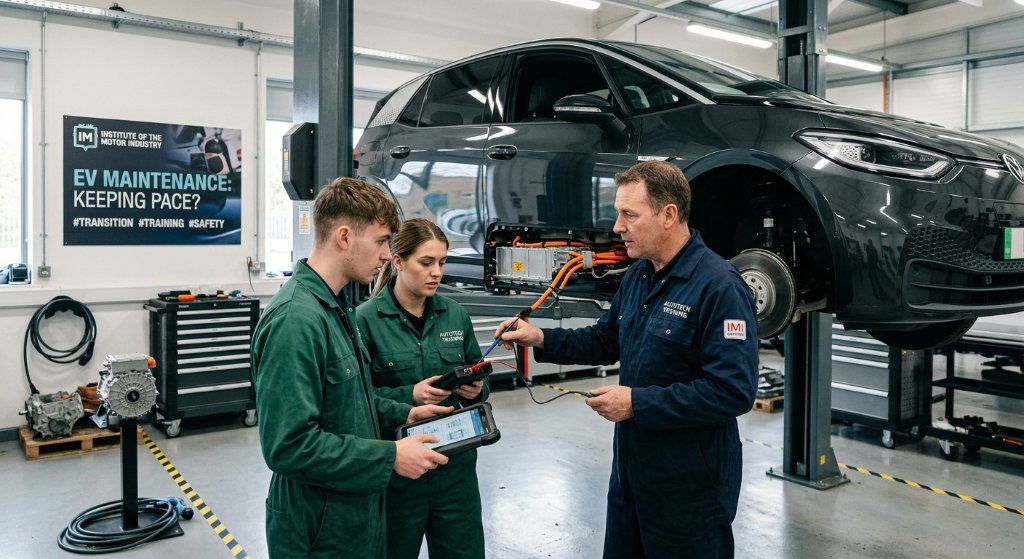
As the UK’s second-hand electric vehicle (EV) market begins to surge—propelled by a massive wave of early-adoption fleet vehicles coming off their three-year leases—the transition to zero-emission driving faces an unexpected and dangerous bottleneck. It is not a lack of public chargers or high vehicle prices threatening to derail consumer confidence this time. Instead, it is a severe, systemic shortage of qualified technicians capable of servicing these high-voltage machines.
The latest quarterly figures from the Institute of the Motor Industry (IMI) reveal that EV training growth has hit a troubling plateau, with qualifications rising by just 6% compared to the previous quarter. For an industry operating under the UK's strict Zero Emission Vehicle (ZEV) mandate—which requires 80% of new car sales to be fully electric by 2030—this widening skills gap represents a quiet crisis brewing within the automotive aftermarket.
The Slowdown: What the IMI Data Reveals
To understand the gravity of the situation, we must look past the superficial year-on-year growth. While the raw number of certified technicians continues to tick upward, the pace of training has fallen dangerously out of sync with the volume of EVs entering the UK fleet. Industry specialist Autotech Training recently raised concerns, warning that local workshops are on the verge of being left behind by the rapid pace of electrification.
Key takeaways from the latest IMI TechSafe Technician Forecast paint a stark picture:
- The 6% Deceleration: EV qualifications grew by only 6% quarter-on-quarter, indicating a sharp slowdown in training uptake just as EV sales require the exact opposite.
- The 35% Safe-Zone: Currently, only around 35% of the UK’s active automotive technician workforce is qualified to work safely on high-voltage EV components.
- The Projected Deficit: The IMI projects a massive shortfall of more than 43,000 EV-qualified technicians by 2035 if training rates do not dramatically accelerate immediately.
- A Regional Postcode Lottery: Training access is highly unequal across the UK, creating localized 'service deserts' where drivers will struggle to find any nearby independent garages capable of repairing their cars.
The Aftermarket Struggle: High Costs and Lost Productivity
Independent garages desperately want to adapt, but they face a triple threat of technician shortages, rising complexity, and the sheer operational cost of upgrading their businesses. Unlike franchise dealerships backed by deep corporate pockets, local mechanics must fund their own transformation.
- Heavy Capital Investment: Equipping a workshop with the specialized insulated tools, advanced diagnostic software, and safety barriers required for high-voltage work typically costs between £10,000 and £30,000 per site.
- Disrupted Operations: Traditional off-site training models require garage owners to send their scarce staff away for days at a time, halting daily business and choking revenue.
- Insurer Ultimatums: In a worrying trend, commercial insurers are beginning to tighten terms. Some insurers are refusing to cover independent garages that do not have a certified EV technician on-site, effectively forcing them to turn EV customers away.
Why This Matters:
This skills shortage is more than an operational headache for garage owners—it is a major structural risk for the entire EV ecosystem.
If independent garages cannot repair electric vehicles, we will see the rapid emergence of a 'two-tier' automotive market. Franchise dealerships, which typically charge double the hourly labor rates of independent shops, will hold a virtual monopoly on EV repairs. For the budget-conscious second-hand buyer, the financial appeal of switching to an EV quickly evaporates if a minor, out-of-warranty electrical issue results in an exorbitant dealership repair bill.
- The Winners: OEM-franchised dealership networks and heavily capitalized fast-fit chains. They will capture and monopolize the highly profitable EV repair sector, dictating repair costs to consumers.
- The Losers: Independent family-run garages that risk eventual obsolescence, and second-hand EV buyers. If trusted local mechanics cannot service these vehicles, buyers in rural or semi-urban areas will face long wait times, high travel costs, and a total collapse in ownership confidence.
- The Market Signal: This is a clear do-or-die moment for the aftermarket, and a warning to policymakers. Pushing aggressive ZEV targets without supporting the infrastructure of human capital is a recipe for failure. To keep the transition on track, the government must shift focus from subsidizing new car purchases to offering targeted tax breaks or training grants for independent workshops.
Looking Ahead
If the UK is to successfully democratize electric vehicles, it must treat the aftermarket workforce as critical national infrastructure. As Autotech Training emphasizes, EV confidence extends far beyond finding a working fast charger; it requires knowing that when a vehicle needs maintenance, local and affordable expertise is readily available. Without a coordinated, flexible training push designed to meet independent workshops on their own terms, the UK's green transition risks grinding to a painful halt.