Xiaomi's SU7 Max: A Premium EV Masterpiece That US Buyers Can't Touch (Yet)
The global electric vehicle landscape just witnessed a significant tremor, and its epicenter is firmly rooted in China. Renowned tech reviewer Marques...
Editorial Team
World Of EV
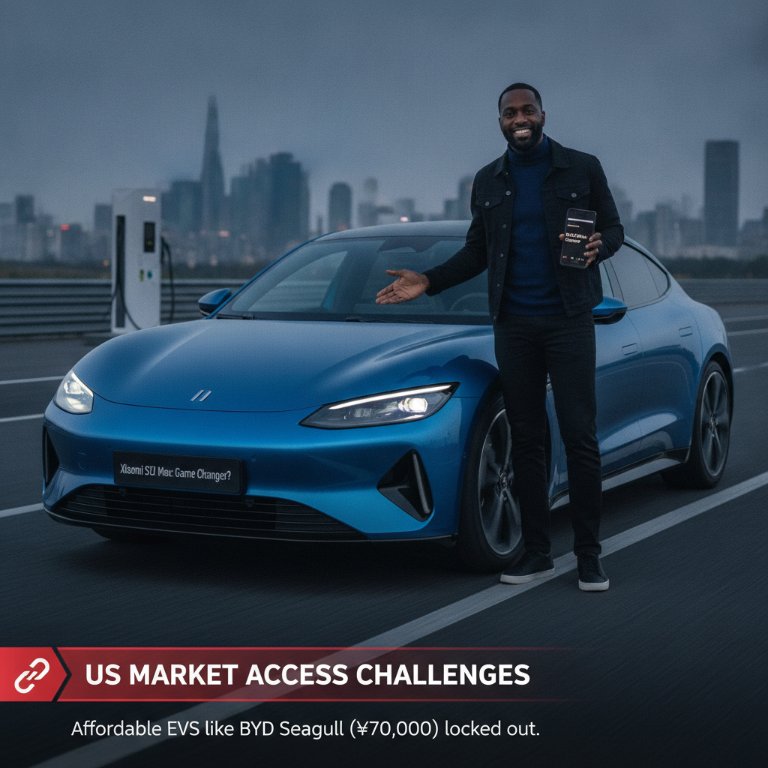
The global electric vehicle landscape just witnessed a significant tremor, and its epicenter is firmly rooted in China. Renowned tech reviewer Marques Brownlee's glowing assessment of the Xiaomi SU7 Max has sent ripples across the automotive world, showcasing a level of refinement, aggressive pricing, and seamless software integration that challenges established norms. This isn't just another EV; it's a testament to the rapid ascension of Chinese automotive engineering, yet one that remains tantalizingly out of reach for American consumers.
For years, Western automakers have enjoyed a perceived technological and quality lead, but the SU7 Max, particularly its dual-motor All-Wheel Drive variant, shatters that illusion. Boasting a large battery, cutting-edge 800V fast-charging architecture, sophisticated air suspension, and supercar-level acceleration, the vehicle also promises a staggering nearly 500 miles of China Light-Duty Vehicle Test Cycle (CLTC)-rated range. While many enthusiasts hoped for such innovation from legacy players, Xiaomi, primarily known for its consumer electronics, has delivered a product that redefines value in the premium EV segment.
Xiaomi's SU7 Max: A Game-Changing Contender
Brownlee’s review highlighted several critical areas where the SU7 Max excels, painting a picture of a truly polished product:
- Exceptional Refinement: A build quality and material selection often reserved for far more expensive vehicles.
- Aggressive Pricing: Undercutting many competitors while offering a feature-rich package.
- Seamless Software Integration: Leveraging Xiaomi's deep expertise in consumer electronics to create an intuitive and responsive user experience.
- Potent Performance: Dual-motor All-Wheel Drive delivering exhilarating acceleration.
- Advanced Charging: 800V architecture enabling ultra-rapid charging times.
- Premium Ride: Air suspension providing a comfortable and dynamic driving experience.
- Impressive Range: Nearly 500 miles of CLTC-rated range, addressing a key concern for many EV buyers.
The Broader Chinese EV Invasion
Xiaomi’s foray into high-performance EVs isn't an isolated incident; it's part of a broader, more aggressive push by Chinese automakers. From the ultra-affordable $10,000 BYD Seagull – a vehicle that could revolutionize urban mobility – to increasingly sophisticated and luxurious offerings, China's EV manufacturers are demonstrating an unparalleled ability to combine advanced technology with competitive pricing. This represents a significant shift from a decade ago, when Chinese vehicles were often dismissed for their quality and design. Today, they are innovators, leveraging their robust supply chains and rapid development cycles to bring cutting-edge products to market at an astonishing pace.
US Barriers and the Roadblock Ahead
Despite the clear competitive advantages and consumer appeal of vehicles like the SU7 Max and BYD Seagull, stringent US policies and substantial trade barriers currently prevent their widespread availability in the American market. These measures, often cited for national security and economic protection, effectively shield domestic automakers from direct competition. While understandable in principle, these barriers deny American consumers access to some of the most innovative and value-driven electric vehicles on the planet, potentially slowing the overall transition to electric mobility within the US and limiting consumer choice.
Why This Matters:
This unfolding narrative signifies a monumental shift in the global automotive power dynamic. The emergence of vehicles like the Xiaomi SU7 Max is a stark warning to legacy automakers in the West, particularly those struggling with cost-effective EV production and software integration. They risk being outmaneuvered not just by established players like Tesla, but by an entirely new wave of nimble, tech-first companies from China. This isn't merely about feature sets; it's about a fundamental redefinition of value and the speed of innovation.
- Who Wins? Global consumers outside the US gain access to highly competitive, feature-rich, and often more affordable EVs. Chinese manufacturers solidify their position as global leaders in EV technology and production. The pace of EV development worldwide accelerates due to intense competition.
- Who Loses? American consumers lose out on compelling, affordable, and technologically advanced options. Western legacy automakers, particularly those slow to adapt or burdened by high manufacturing costs, face immense pressure to compete with Chinese pricing and innovation, potentially risking market share and profitability if they cannot respond effectively. The US automotive market risks falling behind in terms of accessible, cutting-edge EV technology.
- What Does This Signal? This signals a clear and present danger to the established automotive order. It suggests that the future of mobility will be increasingly influenced by software prowess and cost-efficient manufacturing, areas where Chinese companies are demonstrating significant leadership. For the US, it necessitates a critical re-evaluation of trade policies; while protectionism may shield domestic industries in the short term, it could stifle innovation and deny consumers better products in the long run.
As the world races towards an electric future, the Xiaomi SU7 Max stands as a potent symbol of what’s possible when tech innovation meets automotive ambition. While American roads remain clear of these Chinese contenders for now, the pressure on global automakers to innovate, compete on price, and deliver compelling software experiences has never been higher. The question isn't if these vehicles will change the market, but when, and for American buyers, if they will ever get the chance to experience them firsthand.